China Gi Steel Walkway Grating Exporter
Galvanized iron (GI) steel walkway grating consists of load-bearing bars welded or pressed perpendicular to cross rods, forming a rigid open‑grid platform. The hot‑dip galvanizing coating provides a
Request a QuoteChina GI Steel Walkway Grating Exporter
Product Overview
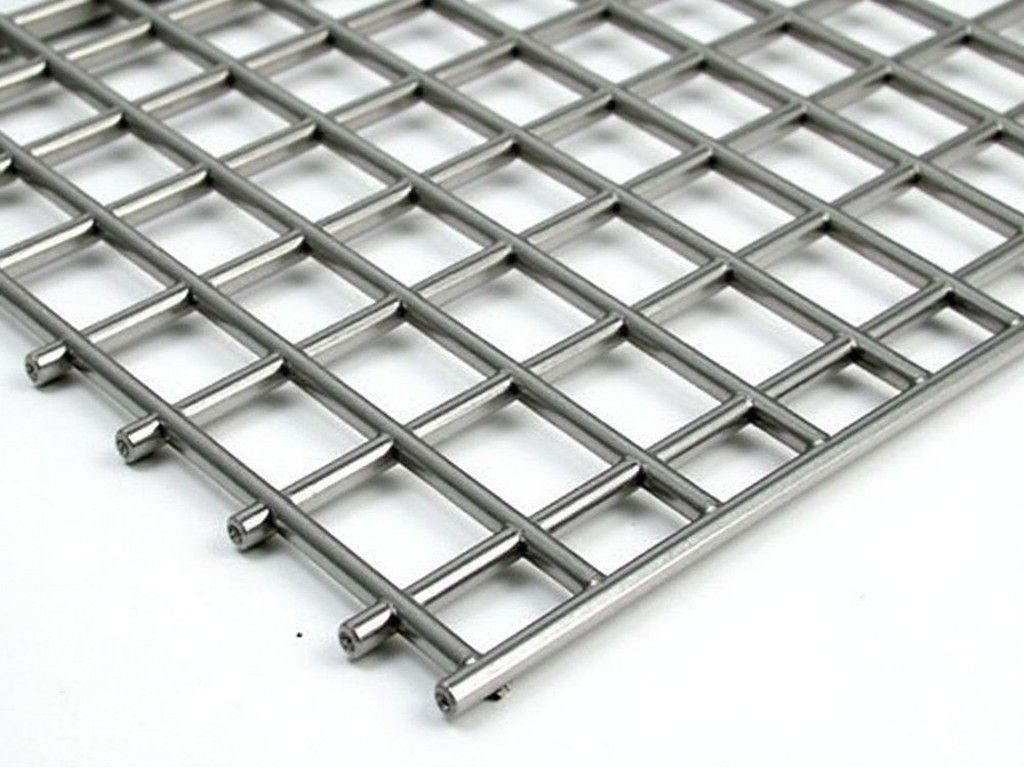
Galvanized iron (GI) steel walkway grating consists of load-bearing bars welded or pressed perpendicular to cross rods, forming a rigid open‑grid platform. The hot‑dip galvanizing coating provides a zinc layer typically 55 µm to 85 µm thick, which protects the underlying steel against atmospheric corrosion in indoor and outdoor environments. Standard bar thicknesses range from 2 mm to 5 mm, with bar spacing (pitch) adjustable from 20 mm to 40 mm to suit specific load and drainage requirements.
Material Composition
The base material is low‑carbon structural steel, commonly grades Q235 or S235JR, offering a yield strength of approximately 235 MPa and tensile strength between 340 MPa and 470 MPa. After hot‑dip galvanizing, the coating adheres metallurgically to the steel, providing sacrificial protection that extends service life in environments with relative humidity up to 80 % and occasional exposure to mild chemicals.
Structural Design & Load Capacity
Load capacity depends on bar size, spacing, and support span. For a typical 30 mm × 2 mm bearing bar with 30 mm pitch simply supported over a 600 mm span, the uniform distributed load (UDL) capacity is approximately 1.5 kN/m² before reaching deflection limits of L/200. Increasing bar thickness to 3 mm raises UDL capacity to roughly 2.8 kN/m² under the same span. Design tables are available upon request to match specific project loads, including point loads from equipment or pedestrian traffic.
Surface Treatment & Corrosion Resistance
Hot‑dip galvanizing follows ISO 1461 standards, producing a uniform zinc‑iron alloy layer. In temperate climates, the expected time to first maintenance (white rust) exceeds 15 years; in marine or industrial atmospheres with chloride exposure, maintenance intervals may reduce to 5–8 years. Optional passivation or sealing treatments can further inhibit white rust formation during storage and transport.
Standard Dimensions & Customization Options
Common panel widths are 600 mm, 750 mm, 900 mm, and 1000 mm; lengths can be cut to any multiple of 100 mm up to 6000 mm for ease of handling. Bar thickness options include 2 mm, 2.5 mm, 3 mm, 4 mm, and 5 mm, with corresponding cross rod diameters typically 6 mm to 10 mm. Customization extends to:
- Stair treads with nosing bars
- Serrated or plain surface finishes
- Special openings for pipework or cable trays
- Stainless steel or aluminum alternatives for specific corrosive media
Applications in Industrial Environments
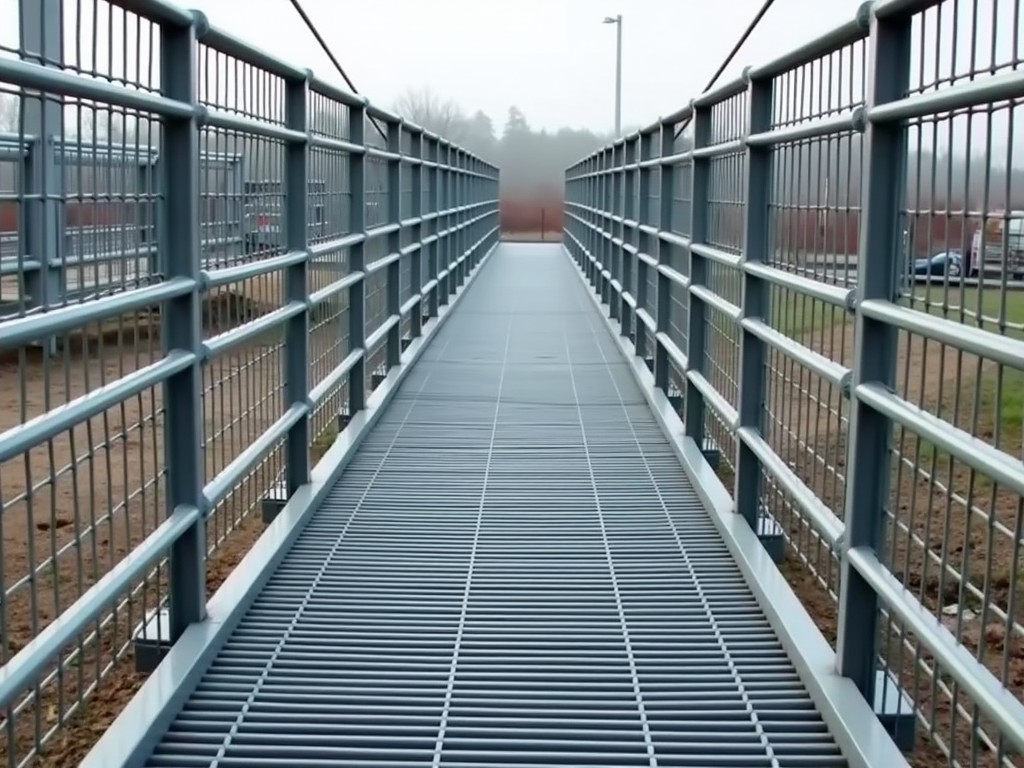
Walkway grating provides slip-resistant, self‑draining surfaces essential for areas where liquids, oils, or debris accumulate. In petrochemical plants, it supports maintenance walkways above process vessels, allowing quick drainage of spills and reducing slip hazards. In power generation facilities, grating serves as platforms for turbine inspection, where its open design minimizes wind loading and facilitates easy cleaning of dust and ash. Food processing plants benefit from the non‑absorbent surface that withstands frequent wash‑downs with hot water and sanitizing agents, meeting hygiene standards.
Quality Assurance & Testing
Each batch undergoes visual inspection for coating uniformity, followed by adhesion testing per ASTM D4541 to verify zinc‑steel bond strength (> 30 MPa). Dimensional checks confirm bar spacing and panel squareness within ±2 mm tolerance. Load testing on representative samples validates that deflection under design load remains below L/200, ensuring serviceability. Mill test certificates and galvanizing compliance documents accompany every shipment.
Packaging & Logistics
Panels are stacked on wooden pallets with protective corner guards and secured with steel strapping. Each pallet is wrapped in UV‑stabilized polyethylene film to prevent moisture ingress during transit. Standard pallet dimensions are 1100 mm × 1100 mm × 1200 mm, accommodating up to 2000 kg of grating. For ocean freight, containers are loaded with longitudinal bracing to minimize shifting; inland truck shipments use similar blocking and bracing techniques.
Frequently Asked Questions
Can dimensions be customized to match existing structures?
Yes. Panel width, length, bar thickness, and pitch can be adjusted according to site‑specific drawings. Provide clear opening dimensions and support spacing, and we will produce shop drawings for approval before fabrication.
What information is required before quotation?
Required data includes: intended load (UDL or point load), span between supports, environmental conditions (indoor/outdoor, exposure to chemicals or chloride), preferred bar size and spacing, and any special features such as stair nosing or cut‑outs. Supplying a sketch or CAD file accelerates the quoting process.
How is quality inspected before shipment?
Inspection includes coating thickness measurement (magnetic‑induction), visual assessment for defects, dimensional verification, and mechanical testing of a sample lot. All results are documented in the inspection report attached to the shipping paperwork.
What packaging methods are available?
Standard packaging uses palletized bundles with stretch film. For extra protection, wooden crates or corrugated cardboard edge protectors can be added upon request. All packaging complies with ISPM 15 standards for wood treatment.
How are export shipments protected against corrosion during transit?
The galvanized coating provides inherent protection. Additional measures include desiccant packs inside the wrapping and ensuring the film is sealed tightly. For long‑term storage, we recommend keeping panels in a covered, ventilated area away from direct ground contact.
What is the typical production lead time?
Lead time varies with order size and customization level. Standard grating panels typically ship within 2–3 weeks after drawing approval. Custom features such as serrated surfaces or special cut‑outs may extend lead time to 4–5 weeks.
How are samples arranged?
Free sample sections (up to 300 mm × 300 mm) are available upon request. The recipient covers shipping costs, or we can arrange freight collect via your preferred carrier.
Get a Quote
To receive a detailed quotation, please share your project specifications via the contact form or email. Our technical team will review the requirements, confirm load calculations, and return a formal proposal with lead time and pricing within one business day.
Contact Us for a Quote