tennis court chain link fence material specifications and performance analysis
Securing a professional athletic space requires a balance between transparency, durability, and containment. For tennis facilities, the perimeter is not just a boundary but a functional component that prevents ball loss and manages player flow without obstructing the view of the match.
The selection of materials for these boundaries has shifted toward high-tensile, corrosion-resistant solutions that can withstand constant impact and varying weather conditions. The engineering behind a sports enclosure involves calculating wind loads, impact force, and the longevity of the protective coatings used on the wire.
Whether you are designing a municipal complex or a private residence, choosing the right tennis court chain link fence involves understanding the technical trade-offs between gauge, coating, and mesh size to ensure a long-term investment.
Functional Requirements for Court Perimeters

A tennis court fence must serve three primary roles: containment, security, and visibility. Unlike residential fences, sport-specific enclosures must withstand the kinetic energy of high-velocity tennis balls without sagging or warping over time. This requires a specific tensioning system and high-grade steel wire.
Furthermore, the fence must act as a windbreak without creating significant turbulence that could affect the flight of the ball. This is why the open-diamond pattern of chain link is preferred over solid barriers, allowing air to flow through while maintaining a physical boundary.
Material Specifications and Coating Logic
The base material for most professional courts is carbon steel, but the longevity of the system depends entirely on the surface treatment. Hot-dip galvanizing is the industry standard, creating a metallurgical bond between the zinc and the steel to prevent oxidation. In coastal areas or high-humidity environments, a secondary PVC coating is often applied over the galvanization to provide an extra layer of chemical resistance and aesthetic flexibility.
Wire gauge is another critical variable. A thinner gauge may be cheaper and easier to install, but it lacks the structural rigidity to resist impact. Conversely, an excessively heavy gauge may be overkill for a standard court and increase the cost of the support posts. Balancing the gauge with the mesh size ensures the fence remains taut across long spans.
Modern manufacturing, such as the processes utilized at Anping Tangren Wire Mesh Products Co., Ltd., focuses on precision welding and coating uniformity. By integrating professional powder coating workshops, manufacturers can ensure that the protective layers are free of pinholes, which is where corrosion typically begins in lower-quality installations.
The Impact of Mesh Geometry on Performance
The geometry of the mesh—specifically the diamond aperture size—directly influences the fence's ability to contain balls and resist deformation. A smaller aperture provides better containment but can slightly increase wind resistance and reduce visibility. Most standard courts utilize a 2-inch diamond mesh, which is considered the optimal balance for sports.
The structural stability of a sports fence is not merely a result of the wire thickness, but the synergy between the tensioning hardware and the weave's ability to distribute impact energy across multiple nodes.
When evaluating alternatives, some facilities look toward welded wire mesh for specific areas, such as high-traffic entrances. While chain link is flexible, welded mesh offers a more rigid structure that can be more resistant to cutting and intentional damage, making it a viable hybrid solution for multi-sport complexes.
Comparative Durability Analysis
Different coating and material combinations result in varying lifespans and maintenance requirements. While basic galvanized steel is sufficient for dry climates, the addition of polymer coatings significantly extends the time between necessary repairs. The following index evaluates these materials based on relative performance in critical categories.
Facility managers must weigh the initial capital expenditure against the long-term operational costs. High-performance coatings reduce the need for rust-treatment and repainting, which can be costly once the fence is fully installed and integrated into the landscape.
Figure 2. Material Performance Relative Index
Installation and Environmental Factors
The effectiveness of a tennis court fence is heavily dependent on the quality of the installation. Improper tensioning can lead to "belly" or sagging in the mesh, which not only looks unprofessional but also reduces the effectiveness of ball containment. Proper post-spacing and the use of heavy-duty tension bars are non-negotiable for a professional-grade finish.
Environmental exposure also dictates the selection. In urban areas with high pollution or acidic rain, the alkalinity of the coating must be higher to resist chemical degradation. Furthermore, the soil chemistry around the post-bases should be considered; using concrete footings with a sufficient protective layer prevents underground corrosion from compromising the entire structural line.
Integration with Security Fencing Trends
There is a growing trend to integrate sport fencing with higher security standards. For instance, some facilities are now implementing a hybrid approach where the main court uses standard chain link, but the surrounding perimeter employs 3D fences or anti-climb mesh to prevent unauthorized access to the athletic grounds.
This shift is driven by the need for better facility management and the protection of expensive court surfaces. By combining the flexibility of sports mesh with the rigidity of security fencing, owners can create a tiered security zone that maintains the open feel of a sports club while securing the assets.
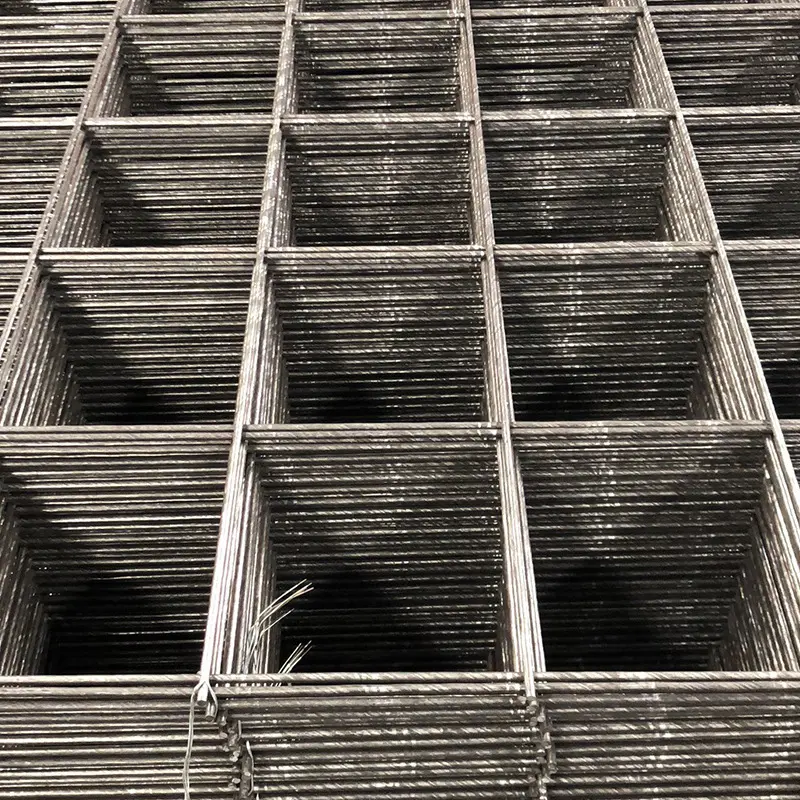
Additionally, the use of reinforced mesh for the foundation of court boundaries is becoming more common. Utilizing steel welded concrete reinforcement mesh during the construction of the perimeter curbs ensures that the fence posts remain stable even under extreme wind loads or physical impacts.
Selection Framework for Facility Managers
When specifying a fencing system, decision-makers should move beyond price and focus on a total-cost-of-ownership model. This involves evaluating the expected lifespan of the coating, the cost of future tensioning adjustments, and the impact of the material on the overall user experience.
A rigorous selection process considers the intersection of climate, usage intensity, and security needs. A private residential court may prioritize aesthetics and low cost, whereas a professional academy requires maximum durability and minimum downtime for maintenance.
The following table provides a comparative framework to help determine the most suitable configuration based on the specific needs of the project.
| Project Type | Recommended Coating | Key Priority | Relative Suitability |
|---|---|---|---|
| Residential Court | Galvanized / PVC | Aesthetics & Cost | High |
| Municipal Park | Hot-Dip Galvanized | Vandal Resistance | Medium |
| Pro Academy | PVC / Powder Coated | Maximum Longevity | Very High |
| Coastal Facility | Stainless / Heavy PVC | Corrosion Resistance | Critical |
| Multi-Sport Hub | Hybrid Welded/Chain | Security & Flow | High |
| Temporary Event | Light Galvanized | Rapid Install | Medium |
Questions & Answers
The most widely accepted standard is a 2-inch (50mm) diamond mesh. This size is large enough to maintain excellent visibility for spectators and players while being small enough to effectively contain tennis balls of all standard sizes. Smaller mesh sizes may increase wind resistance, while larger ones risk allowing balls to pass through, defeating the purpose of the enclosure.
Hot-dip galvanizing provides a strong, metallurgical bond that prevents rust from the inside out. PVC coating is an additional polymer layer applied over the galvanized wire. While galvanizing is the primary defense, PVC adds an extra barrier against saltwater, chemicals, and UV radiation, and allows for color customization (usually green or black) to blend the fence with the surroundings.
Yes, but it serves a different purpose. Welded wire mesh is more rigid and resistant to cutting, making it better for security boundaries. However, it lacks the flexibility and impact-absorption of chain link. For the actual court perimeter, chain link is preferred because it "gives" when hit by a ball, whereas welded mesh is more static and can be more prone to permanent deformation under high-impact loads.
Sagging is usually caused by inadequate initial tensioning, the use of undersized tension bars, or the degradation of the fabric due to poor material quality. Over time, the repeated impact of balls and the effects of thermal expansion and contraction can loosen the mesh. Regular inspections and the use of professional tensioning tools during installation are the best ways to prevent this.
Stainless steel is generally reserved for extreme environments, such as courts located directly on a beach or in industrial areas with high acidity. For most inland applications, high-quality galvanized steel with a PVC coating offers a similar lifespan at a significantly lower price point. The decision should be based on the specific salt-spray or chemical exposure of the site.
Maintenance involves three key steps: periodic tension checks to ensure the mesh remains taut, cleaning the surface to remove salt or corrosive deposits, and touching up any scratched PVC coatings with compatible sealant. Ensuring that vegetation is kept clear of the fence line also prevents organic acids from accelerating the corrosion of the metal wire.
Final Thoughts
Designing a tennis court enclosure is a technical exercise in balancing openness with strength. By focusing on the intersection of material gauge, coating quality, and precise installation, facility owners can ensure their courts remain functional and visually appealing for decades.
As athletic facilities evolve toward multi-functional hubs, the integration of high-performance mesh solutions—from basic chain link to advanced welded security systems—will continue to be a cornerstone of efficient sports infrastructure management.