Welded Wire Mesh Manufacturers Technical Performance Analysis

Selecting the right security barrier often comes down to a balance between structural rigidity and installation efficiency. For industrial and civil engineering projects, the stability provided by fusion-welded intersections is far superior to traditional woven methods, making the role of specialized manufacturers critical in ensuring long-term durability.
The global shift toward high-security infrastructure has increased the demand for precision-engineered mesh that can withstand significant lateral pressure and environmental corrosion. From reinforced concrete supports to perimeter security, the technical specifications of the wire and the quality of the weld determine whether a barrier will last for a decade or fail within a few years.
Navigating the options provided by various welded wire mesh manufacturers requires an understanding of material grades and coating technologies. This guide examines the technical selection criteria and industrial applications of welded steel solutions to help procurement managers make informed decisions.
The Structural Logic of Welded Mesh
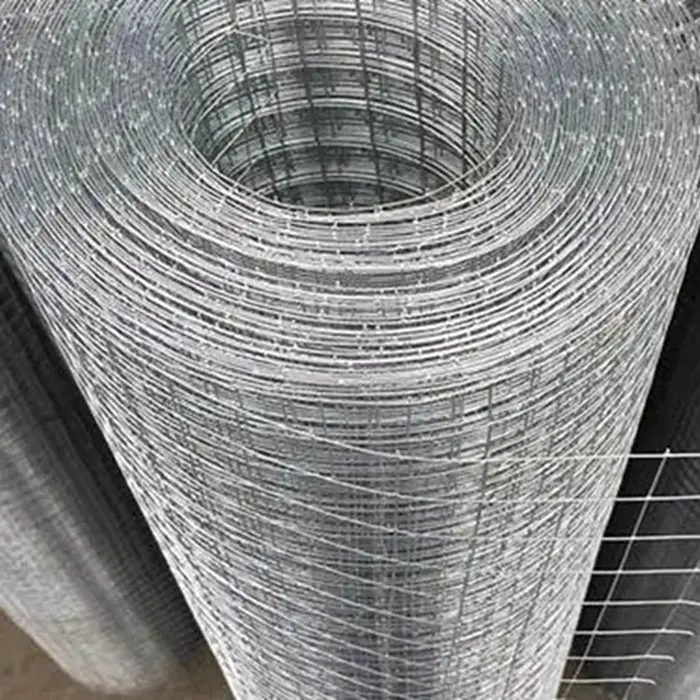
Unlike woven wire, which relies on the mechanical interlacing of wires, welded mesh is formed by fusing longitudinal and transverse wires at every intersection. This process eliminates the possibility of the mesh "shifting" or opening up under tension, creating a rigid grid that maintains its dimensions even under heavy loads.
For infrastructure projects, this rigidity is essential. Whether used as Reinforcing Mesh in concrete slabs or as a Security Fencing Wire for high-risk perimeters, the consistency of the aperture size ensures that the barrier remains predictable and effective against intrusion or structural failure.
Critical Technical Evaluation Factors
The quality of a welded mesh product is primarily judged by the integrity of its weld points and the consistency of the wire gauge. A weak weld can lead to a cascading failure of the entire panel when subjected to impact, while variations in wire diameter can create structural weak spots and uneven tension across the installation.
Professional technical teams focus on the "shear strength" of the weld. This is the force required to break the bond between the vertical and horizontal wires. In high-security applications, such as 358 Anti Climb Mesh Fence, the precision of the welding must be absolute to prevent the creation of footholds or finger-holds.
Furthermore, the customization of the grid size—ranging from tight construction mesh to wide-aperture cattle fences—must be balanced with the wire diameter. A larger aperture requires a thicker gauge to maintain the same level of rigidity, a calculation that distinguishes experienced manufacturers from generic suppliers.
Material Science and Corrosion Resistance
The environment dictates the material choice. While standard iron wire is sufficient for indoor temporary partitions, outdoor industrial environments require advanced protection. The most common solutions include hot-dip galvanizing, electroplating, and PVC coating, each offering a different level of longevity against oxidation.
Corrosion resistance is not just about the outer coating; it is about the bond between the zinc layer and the steel substrate. A thick, uniform zinc layer prevents rust from migrating beneath the surface, which is the primary cause of premature fence failure in coastal or high-humidity regions.
For extreme conditions, stainless steel wire provides the highest level of inertness. However, for most commercial projects, PVC-coated galvanized wire offers the best cost-to-performance ratio, combining the structural strength of steel with a weatherproof plastic barrier that resists UV degradation and chemical exposure.
Performance Metrics by Application
Different applications prioritize different performance indicators. In civil engineering, the focus is on tensile strength and bond with concrete. In contrast, security fencing prioritizes "climb-resistance" and impact absorption. Understanding these priorities allows buyers to optimize their budget without compromising safety.
By analyzing typical requirements, we can see a clear trend: as the security level increases, the reliance on specialized coatings and tighter mesh geometries grows. This is evident when comparing basic livestock enclosures to high-security government installations.
Figure 2. Relative Performance Index of Mesh Types
Industrial Deployment Scenarios
In a typical industrial setting, such as a chemical plant or a power substation, the perimeter must serve as both a physical barrier and a visual deterrent. Here, products like Double Wire Mesh Fence or Razor Wire Fence are often integrated. The critical factor is the seamless transition between different mesh types to ensure no gaps are left for unauthorized entry.
For transportation infrastructure, the focus shifts to safety and noise reduction. Barrier Bridge Guardrails and Noise Barriers utilize specialized welded mesh to prevent debris from falling onto roadways while managing acoustic impact. These applications require strict adherence to municipal safety codes and high-load bearing capacities.
Evolution of Security Fencing Standards
The industry is moving away from simple "barrier" thinking toward "integrated security" systems. This means the mesh is no longer just a fence, but a component of a larger system involving sensors, cameras, and anti-climb geometries. The shift is driven by the need for higher detection times and lower maintenance costs.
Technological advancements in powder coating and automated welding have allowed for tighter tolerances. This has enabled the creation of the "anti-climb" standard, where the gaps are too small for a human finger to grip, effectively neutralizing the most common method of perimeter breach.
Looking forward, the integration of sustainable materials and smarter coating processes will likely reduce the environmental footprint of metal fence production without sacrificing the structural integrity required for critical infrastructure.
Vendor Selection Framework
When evaluating welded wire mesh manufacturers, procurement teams should look beyond the price per meter. The true cost of ownership includes the installation speed, the frequency of corrosion-related repairs, and the reliability of the supply chain.
A reliable partner, such as Anping Tangren Wire Mesh, provides more than just the product; they provide the technical documentation (Certificates of Analysis/Conformance) and the customized engineering support needed for complex projects. This ensures that the chosen mesh is fit-for-purpose for the specific environmental stress of the site.
The following framework provides a comparative look at how different mesh selection factors impact the overall project outcome.
| Selection Factor | Agriculture/Rural | Industrial Park | High-Security Site | Infrastructure |
|---|---|---|---|---|
| Priority | Cost/Coverage | Durability | Anti-Intrusion | Load Bearing |
| Recommended Mesh | Cattle/Hexagonal | 3D Panel/Welded | 358 Anti-Climb | Reinforcing Mesh |
| Coating Choice | Galvanized | PVC Coated | Hot-Dip Galv | Epoxy/Galv |
| Life Expectancy | Low-Mid | Mid-High | Very High | High |
| Install Speed | Fast | Moderate | Slow (Precise) | Moderate |
| Maintenance | Periodic | Low | Very Low | Minimal |
Questions & Answers
Welded wire mesh is created by fusing wires together at each intersection using heat and pressure, resulting in a rigid, stable structure that does not shift. Woven mesh is created by interlacing wires over and under each other. While woven mesh is more flexible, welded mesh is significantly stronger and maintains a precise aperture size, making it ideal for security and structural reinforcement.
Galvanized mesh is treated with a zinc layer to prevent rust and is highly effective for general outdoor use. PVC coating is applied over the galvanized layer, providing an additional barrier against UV rays and chemical corrosion. For environments with high humidity, salt air (coastal), or chemical exposure, PVC-coated mesh is recommended to extend the lifespan of the fence.
Anti-climb fences, such as the 358 mesh, use a very tight aperture (typically 76.2mm x 12.7mm) and high-tensile wire. This specific geometry ensures that the gaps are too small for fingers or toes to grip and too narrow for most climbing tools to penetrate, significantly increasing the time and effort required for an intruder to scale the barrier.
Yes, reinforcing mesh (or rebar mesh) is a specialized form of welded wire mesh designed to provide tensile strength to concrete slabs and walls. It is manufactured with heavy-gauge steel wires and precisely welded to ensure the grid remains stable during the concrete pouring process, preventing cracks and structural failure.
For mass production, the typical lead time is approximately 20-30 days after the deposit is received and final specifications are approved. Samples usually take around 7 days. Lead times can vary based on the complexity of the customization, the total volume of the order, and the specific material coatings required.
Quality is verified through shear tests, where a specific force is applied to the weld point to ensure it does not break below the design threshold. Additionally, visual inspections check for weld "burn-through" or under-welding, and coating thickness is measured using magnetic gauges to ensure the zinc or PVC layer meets the specified microns for corrosion protection.
Final Thoughts
The efficacy of a security or structural barrier is fundamentally linked to the precision of its manufacture. By prioritizing weld integrity, material grade, and environmental compatibility, project managers can ensure that their investment in welded wire mesh provides lasting protection and stability.
As industrial requirements evolve, the transition toward high-tensile, anti-climb, and corrosion-resistant solutions is no longer optional but necessary for risk mitigation. Partnering with a source factory that combines technical expertise with rigorous quality control is the most reliable path to achieving these standards.