Types of Wire Mesh for Concrete Technical Performance Analysis

Selecting the correct reinforcement strategy is often the difference between a concrete slab that lasts decades and one that develops structural cracks within the first few years of service. The integration of steel reinforcement into concrete is not merely about adding strength, but about managing the inherent tensile weaknesses of cementitious materials.
Engineers and contractors must navigate a variety of mesh configurations, gauges, and coatings to match the specific load-bearing requirements and environmental exposures of a project. From residential driveways to heavy-duty industrial flooring, the choice of reinforcement directly impacts the longevity and safety of the infrastructure.
Understanding the diverse types of wire mesh for concrete allows stakeholders to optimize material usage while ensuring compliance with structural safety standards. This guide examines the technical distinctions and practical applications of modern concrete reinforcement solutions.
Structural Foundations of Concrete Mesh

At its core, the use of wire mesh in concrete is designed to control shrinkage cracking and provide tensile strength. Concrete is exceptionally strong in compression but fragile under tension. By embedding a grid of steel, the mesh absorbs the tensile stresses that would otherwise cause the concrete to split.
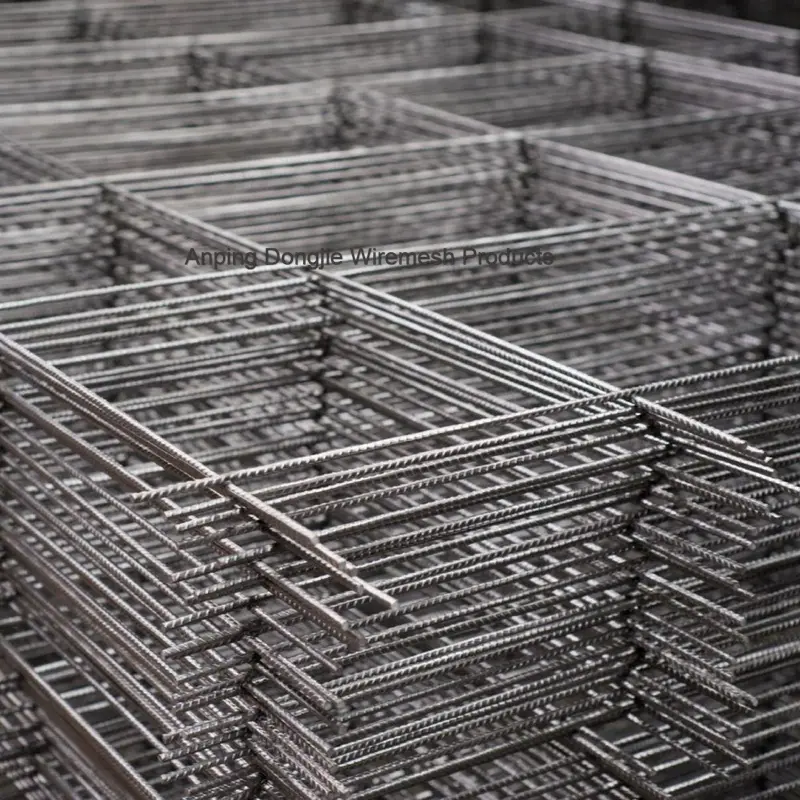
Modern construction mesh is typically produced through automated welding processes that fuse longitudinal and transverse wires at every intersection. This rigidity ensures that the mesh maintains its position during the pouring process, preventing the reinforcement from sinking to the bottom of the slab where it would be ineffective.
Technical Specifications and Design Logic
The efficiency of reinforcing mesh depends on three primary variables: wire diameter, mesh opening size, and the yield strength of the steel. A smaller mesh opening generally provides better crack control for thin slabs, while larger openings and thicker wires are reserved for heavy-duty industrial floors that must support high point loads from machinery.
The placement of the mesh within the slab—known as the "concrete cover"—is a critical design factor. If the mesh is placed too close to the surface, it is susceptible to oxidation and spalling. If it is too deep, it fails to provide the necessary tensile support against surface shrinkage.
Precision in manufacturing, such as that found in professional welding workshops, ensures that the mesh remains flat and square. This reduces labor costs during installation and eliminates the need for extensive manual adjustments on-site, which often lead to uneven reinforcement distribution.
Corrosion Mitigation and Surface Treatments
Environmental exposure is the greatest threat to the integrity of steel reinforcement. When water and oxygen penetrate the concrete, the steel oxidizes, expanding in volume and creating internal pressure that leads to "concrete cancer" or spalling.
Surface treatments like hot-dip galvanizing and PVC coating are not optional luxuries but essential requirements for infrastructure exposed to chlorides, saltwater, or industrial chemicals.
Hot-dip galvanizing provides a metallurgical bond of zinc that acts as a sacrificial anode, protecting the underlying steel. For extreme environments, PVC-coated wire mesh adds a physical polymer barrier, significantly extending the service life of the structure in wastewater treatment plants or coastal foundations.
Comparative Performance Analysis
Different mesh configurations perform differently based on the application. Welded wire mesh offers superior stability and precision, whereas traditional tied rebar is better suited for heavy structural beams. The choice often boils down to the balance between installation speed and absolute load capacity.
When evaluating different reinforcement types, we look at the relative effectiveness in crack mitigation, installation efficiency, and corrosion resistance. The following index illustrates how different mesh treatments perform across these key metrics.
Figure 2. Reinforcement Performance Index by Coating Type
Site-Specific Application Scenarios
In a typical residential setting, such as a garage floor or a walkway, light-gauge welded wire mesh is sufficient to prevent surface cracking. The primary goal here is cost-efficiency and ease of installation, often utilizing rolls that can be quickly laid and secured.
Conversely, in industrial warehouses where heavy forklifts and pallet racks operate, the requirement shifts toward heavy-duty reinforcing mesh with thicker diameters and tighter spacing. In these scenarios, the mesh must act as a structural component capable of distributing massive point loads across a wider area of the concrete slab.
Evolution of Reinforcement Technology
The industry is shifting away from manual tying toward prefabricated welded systems. This evolution is driven by the need to reduce labor costs and eliminate human error in spacing. Prefabricated mesh sheets ensure that the structural design is replicated exactly on the construction site.
Furthermore, there is an increasing trend toward utilizing specialized coatings. Aluminum-coated wires are emerging as a viable alternative to traditional galvanizing, offering a high strength-to-weight ratio and excellent resistance to atmospheric corrosion in diverse climates.
Integration with BIM (Building Information Modeling) is also allowing engineers to specify the exact mesh density for different zones of a single slab, reducing material waste while maximizing structural efficiency.
Selection Framework for Project Managers
Choosing the right mesh requires a systematic evaluation of the environment, the expected load, and the budget. A mistake in selection can lead to premature failure or unnecessary over-spending on materials that exceed the project's needs.
The trade-off between initial cost and lifecycle value is central to this decision. While black steel is the cheapest option, the long-term costs of repairing a corroded slab often far outweigh the initial investment in galvanized or coated reinforcement.
The following table provides a comparative framework to assist in the selection process based on typical project requirements.
| Application Type | Recommended Mesh | Critical Factor | Relative Suitability |
|---|---|---|---|
| Residential Driveway | Light Welded Mesh | Crack Control | High |
| Industrial Warehouse | Heavy Reinforcing Mesh | Point Load Capacity | High |
| Coastal Foundations | Hot-Dip Galvanized | Chloride Resistance | Essential |
| Wastewater Plants | PVC Coated Mesh | Chemical Barrier | Essential |
| Agricultural Pads | Standard Welded Mesh | Cost-Effectiveness | Medium |
| Urban Pavements | Electro-Galvanized | Atmospheric Corrosion | Medium |
Questions & Answers
Welded mesh consists of wires fused together at every intersection, providing a rigid, stable grid that is faster to install and maintains consistent spacing. Tied rebar involves manually binding individual bars with wire. Welded mesh is typically preferred for slabs and walls due to its installation speed and uniformity, whereas tied rebar is used for heavy structural elements like columns and beams where higher load-bearing capacity is required.
The gauge is determined by the anticipated load and the thickness of the concrete slab. Residential applications usually utilize thinner gauges (e.g., 6mm to 8mm) to manage temperature-induced shrinkage. Industrial projects requiring high load-bearing capacity utilize thicker gauges (10mm and above). A structural engineer typically calculates the required "steel area" per square meter, which then dictates the specific wire diameter and mesh spacing needed.
It depends on the environment. Galvanizing provides excellent general-purpose corrosion protection through a zinc layer. However, PVC coating provides a thick, impermeable plastic barrier that is superior in highly aggressive environments, such as those containing strong acids, salts, or chemicals. For standard outdoor concrete, galvanizing is usually sufficient; for specialized industrial or marine projects, PVC or epoxy coatings are preferred.
In many slab-on-grade and wall applications, yes. Wire mesh is designed specifically for these surfaces. However, it cannot replace rebar in primary structural members like load-bearing columns or heavy foundation footings where extreme concentrated tension is present. In most modern buildings, a combination is used: rebar for the primary skeletal structure and welded mesh for the floors and surface panels.
If the mesh sinks to the bottom, it fails to provide the necessary tensile strength to the top surface of the slab, where shrinkage cracks typically originate. This results in a slab that is prone to "spider-web" cracking and surface failure. To prevent this, contractors use "chairs" or spacers to hold the mesh at the correct mid-depth or upper-third position during the pouring process.
The opening size determines the frequency of the reinforcement. Smaller openings distribute the tensile load more evenly and are more effective at stopping small cracks from propagating. Larger openings are used when the primary goal is overall structural stiffness rather than fine crack control. The choice is a balance between the amount of steel used and the desired level of surface stability.
Final Thoughts
The selection of the appropriate reinforcing mesh is a fundamental decision that dictates the lifecycle of any concrete structure. By aligning the technical specifications—such as wire gauge, weld precision, and surface treatment—with the specific demands of the site, project managers can ensure both structural safety and economic efficiency.
As the industry moves toward more durable and sustainable infrastructure, the role of high-quality, precision-engineered mesh becomes even more critical. Investing in the right reinforcement today prevents the costly and disruptive repairs of tomorrow.