galvanized welded wire mesh Technical Performance Analysis
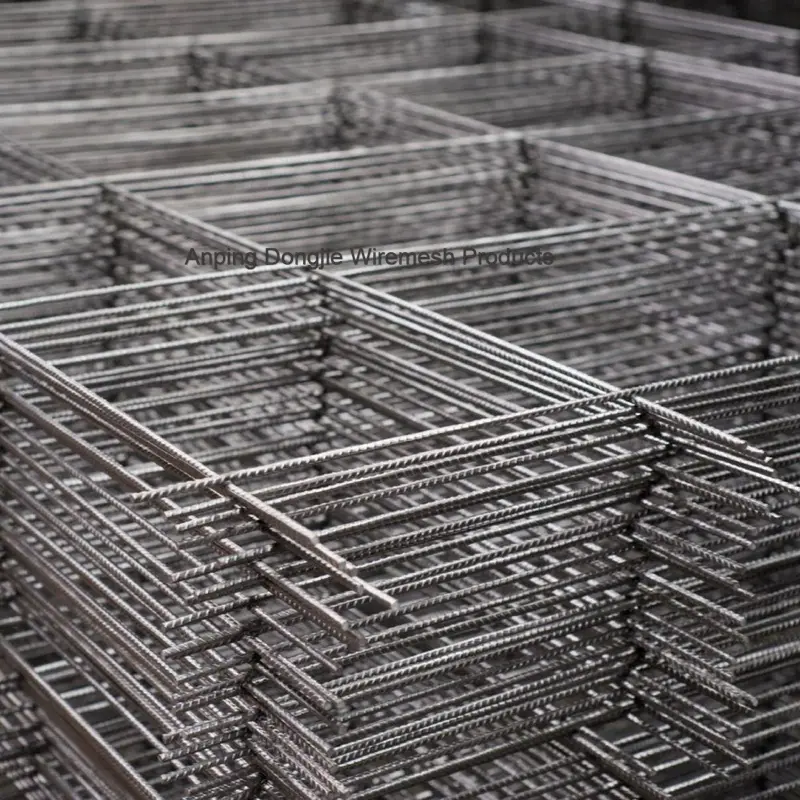
Concrete structural integrity depends heavily on the quality of internal reinforcement, where the choice of steel mesh determines the long-term viability of the build. When facing corrosive environments or high-load requirements, standard steel often falls short, necessitating a more resilient approach to structural bonding.
The adoption of specialized coatings and precision welding has transformed how engineers approach slab reinforcement and wall stabilization. By integrating anti-corrosion layers with high-strength steel grids, construction projects can significantly reduce the risk of cracking and seismic failure.
Exploring the technical nuances of galvanized welded wire mesh reveals why this material has become a benchmark for efficiency in modern civil engineering, from highway bridges to industrial foundations.
The Mechanics of Reinforced Steel Mesh

At its core, welded reinforcement mesh is engineered from cold-rolled ribbed or smooth round steel bars, fused together through a high-pressure welding process. Unlike traditional tied rebar, the welded intersections prevent the shifting of steel during the concrete pouring process, ensuring that the reinforcement remains exactly where the structural calculations require.
This rigid geometry is essential for improving the bearing capacity and ductility of concrete walls. By creating a consistent grid, the material effectively manages tension and shear forces, which are the primary causes of structural cracking in reinforced concrete columns and slabs.
Engineering Factors in Mesh Selection
Selecting the appropriate mesh requires a balance between wire diameter, grid spacing, and the overall grade of the steel. Wire diameters typically range from 5mm to 18mm, with larger diameters reserved for heavy-duty industrial foundations and bridge supports where the load-bearing requirement is extreme.
Grid spacing is equally critical; the distance between wires determines the mesh's ability to arrest cracks. Standard spacing usually falls between 100mm and 200mm. A tighter mesh, such as a 100mm x 100mm configuration, provides higher structural density and is often utilized in areas prone to high seismic activity or intense vibration.
Furthermore, the manufacturing process—specifically the quality of the weld—determines the efficiency of the energy consumption and ductility coefficient. Professional workshops, such as those operated by Anping Tangren Wire Mesh Products Co., Ltd., utilize advanced machinery to ensure weld consistency, which is vital for preventing premature failure at the joints.
Corrosion Resistance and Structural Longevity
Steel's natural vulnerability to oxidation is the primary cause of "concrete cancer," where rusting reinforcement expands and cracks the surrounding concrete. Galvanization provides a sacrificial zinc layer that prevents this process, extending the lifespan of the structure by decades, especially in coastal or humid environments.
The integration of anti-corrosion treatments into welded mesh not only preserves the steel's tensile strength but also enhances the overall seismic performance by preventing the degradation of the bond between the metal and the concrete matrix.
Beyond basic galvanization, the choice of steel—whether cold-rolled ribbed or smooth—affects how the mesh interacts with the concrete. Ribbed bars provide a mechanical interlock, which, when combined with the stability of a welded grid, creates a reinforced composite that is highly resistant to fall-off and structural shifting.
Performance Index by Mesh Configuration
The effectiveness of a reinforcement grid can be measured by its relative suitability for different structural roles. For instance, meshes with tighter spacing (Type D) excel in crack prevention, while those with wider spacing (Type A) are optimized for material economy in large-scale flooring.
By analyzing the relationship between wire gauge and spacing, engineers can optimize the "steel-to-concrete" ratio, reducing unnecessary material costs without compromising the safety or reliability of the build.
Figure 2. Relative Suitability Index by Mesh Type
Practical Deployment Scenarios
In highway and bridge construction, the use of galvanized welded wire mesh is indispensable for managing the dynamic loads and environmental exposure. Tunnel linings, for example, require high-precision grids that can be easily transported and installed in confined spaces, reducing labor costs while ensuring uniform structural support.
For industrial warehouses, the focus shifts to the floor slab's ability to resist heavy machinery loads. In these settings, customized mesh layouts are often employed to reinforce high-traffic zones, demonstrating the versatility of the product when tailored to specific engineering demands.
Evolving Standards in Metal Reinforcement
The construction industry is moving away from traditional manual rebar tying toward prefabricated solutions. The primary driver is the need for "grid layout accuracy," where factory-produced welded mesh eliminates human error on-site, significantly shortening the construction period and increasing overall quality.
Modern standards now emphasize the "ductility coefficient"—the ability of the structure to deform without catastrophic failure. This is achieved through a combination of high-strength steel and precise weld points, ensuring that the mesh can absorb seismic energy effectively.
As sustainability becomes a priority, the efficiency of material usage is scrutinized. Prefabricated mesh allows for the precise calculation of steel requirements, reducing waste and lowering the carbon footprint of large-scale infrastructure projects.
Comparative Analysis: Standard vs. Custom Mesh
While standard national specifications (Types A through F) cover the vast majority of general construction needs, complex engineering projects often require customized parameters. The decision between standard and custom mesh usually hinges on the specific stress points of the design.
Standard mesh offers the advantage of immediate availability and guaranteed compliance with national codes. However, custom mesh allows for the optimization of wire diameter and spacing based on real-time construction scene requirements, which can lead to significant cost savings in steel usage.
When evaluating these options, procurement managers must consider the trade-off between the speed of delivery and the precision of the structural fit. A customized approach is typically reserved for prestige projects or those with unique environmental challenges.
| Selection Factor | Standard Type (e.g. Type D) | Customized Mesh | Primary Application |
|---|---|---|---|
| Availability | Immediate / Stock | Lead-time Required | Project Scheduling |
| Specification | Fixed (100x100mm) | Variable/Site-specific | Design Precision |
| Cost Efficiency | Low Unit Cost | Optimized Material Use | Budget Management |
| Installation Speed | Very High | High (Tailored fit) | Labor Reduction |
| Compliance | National Standard | Project-specific Code | Regulatory Approval |
| Load Capacity | General Purpose | High-Stress Optimized | Structural Safety |
Questions & Answers
Ribbed bars feature surface deformations (ribs) that create a stronger mechanical bond with the concrete, preventing the mesh from slipping under tension. Smooth bars are typically used in specialized applications where a lower bond strength is required or for specific decorative/light-duty structural roles. Most high-strength reinforcement mesh utilizes ribbed bars to maximize the ductility and load-bearing capacity of the reinforced concrete.
Galvanization does not stop concrete from cracking due to load, but it prevents "spalling." When non-galvanized steel rusts, the iron oxide occupies more volume than the original steel, creating internal pressure that forces the concrete to crack from the inside out. By providing a zinc barrier, galvanized welded wire mesh prevents oxidation, ensuring the internal pressure remains stable and the structural integrity of the concrete remains intact over time.
For seismic zones, meshes with smaller grid spacings, such as Type D (100mm x 100mm), are generally preferred. Tighter grids distribute stress more evenly across the concrete slab, reducing the likelihood of large-scale structural failure during an earthquake. Additionally, ensuring a high ductility coefficient through quality welding—as seen in professional factory production—allows the structure to absorb and dissipate energy without immediate collapse.
In most slab, wall, and pavement applications, welded mesh is a superior alternative due to its speed of installation and layout accuracy. However, for extremely heavy concentrated loads (like skyscraper columns) or complex 3D reinforcement cages, traditional heavy-gauge rebar tying is still necessary. The choice depends on whether the structural requirement is for a distributed surface reinforcement (mesh) or a concentrated point reinforcement (rebar).
Customized mesh may have a higher initial unit cost due to the lack of mass-production scaling and the need for specific machine setups. However, it often reduces the "total project cost" by optimizing the amount of steel used—preventing over-engineering. By tailoring the wire diameter and spacing to the exact load requirements, contractors can reduce material waste and labor hours during installation.
Quality is verified through a combination of tensile testing and shear tests at the weld points. In a professional production environment, samples are subjected to forces that attempt to pull the wires apart. A high-quality weld should ideally cause the wire itself to break before the weld joint fails. This ensures that the mesh acts as a single, cohesive structural unit rather than a collection of independent wires.
Final Thoughts
The transition toward prefabricated, galvanized reinforcement represents a broader shift in the construction industry toward precision and durability. By eliminating the variability of on-site manual labor and addressing the fundamental threat of corrosion, welded mesh provides a scalable solution for modern infrastructure.
Whether utilizing standard national specifications for rapid deployment or custom-engineered grids for specialized projects, the priority remains the same: creating a structural core that is earthquake-resistant, crack-resistant, and built for longevity.
