China Concrete Welded Wire Mesh Reinforcement Supplier
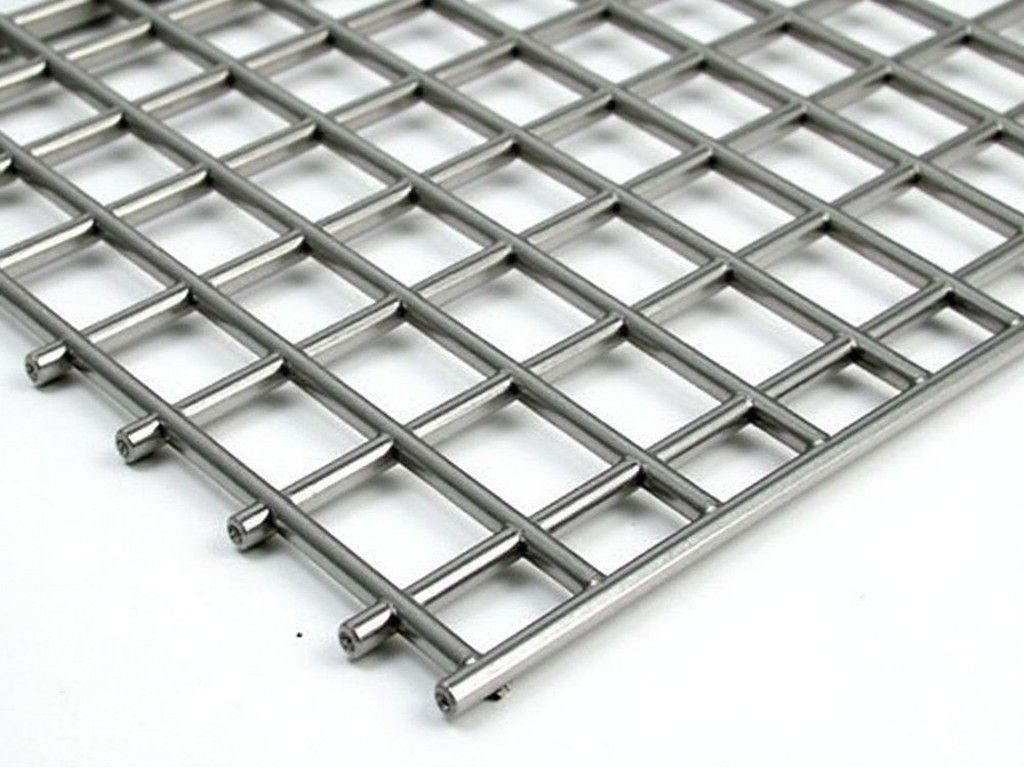
Welded wire mesh reinforcement consists of cold‑drawn steel wires arranged in a regular grid and joined at each intersection by electric resistance welding. This product provides distributed tensile
Request a QuoteConcrete Welded Wire Mesh Reinforcement – China Supplier
Welded wire mesh reinforcement consists of cold‑drawn steel wires arranged in a regular grid and joined at each intersection by electric resistance welding. This product provides distributed tensile capacity that controls cracking and improves load‑spreading in concrete slabs, walls, and precast elements.
Product Construction and Materials
The base wire is typically low‑carbon steel with a tensile strength ranging from 450 MPa to 550 MPa, depending on the chosen grade. Wire diameters are selectable from 3 mm to 12 mm, and the weld spacing (mesh opening) can be set between 50 mm and 200 mm in both directions. Surface treatments include plain, hot‑dip galvanized (Z275), or epoxy‑coated finishes to suit exposure conditions.
- Low‑carbon steel wire, tensile strength 450‑550 MPa
- Diameter range 3 mm‑12 mm
- Mesh opening 50 mm‑200 mm (square or rectangular)
- Coatings: plain, galvanized Z275, epoxy
Typical Dimensions and Mechanical Properties
| Property | Typical Value | Unit | Notes |
|---|---|---|---|
| Wire Diameter | 6 | mm | Common size for slab reinforcement |
| Mesh Opening | 100×100 | mm | Square grid, adjustable |
| Tensile Strength of Wire | 500 | MPa | Measured per ISO 6935‑1 |
| Yield Strength | 420 | MPa | 0.2 % offset |
Applications in Concrete Construction
The primary role of welded wire mesh is to limit crack width caused by shrinkage, temperature changes, and load‑induced tensile stresses. By providing a uniform reinforcement layer, the mesh improves flexural capacity and helps maintain serviceability of floor slabs, parking decks, and precast wall panels.
- Ground‑supported slabs where crack control is critical
- Elevated floor systems in commercial buildings
- Precast concrete elements such as beams and wall panels
- Pavements and industrial flooring subjected to heavy traffic
Quality Control and Testing
Each coil or panel undergoes visual inspection for weld uniformity and wire alignment. Mechanical testing includes tensile strength of the base wire, shear strength of the welds, and bend tests to confirm ductility. Galvanized coatings are measured for thickness using magnetic‑induction gauges, while epoxy coatings are inspected for holiday detection and adhesion.
Traceability is maintained through batch numbers that link raw material certificates, welding parameters, and final test reports. This systematic approach reduces the risk of non‑conforming reinforcement reaching the construction site.
Customization Options
Customers can specify wire diameter, mesh opening, panel dimensions, and surface finish to match design requirements. Custom lengths reduce on‑site cutting waste, while special edge treatments (e.g., bent hooks) facilitate lapping and tying.
- Wire diameter: 3 mm‑12 mm
- Mesh opening: 50 mm‑200 mm (square or rectangular)
- Panel size: up to 2.4 m × 6 m (customizable)
- Coatings: plain, galvanized Z275, epoxy, or PVC
Packaging and Logistics
Mesh is typically bundled with steel straps and placed on wooden pallets protected by waterproof shrink film. For overseas shipments, containers are loaded with dunnage to prevent shifting, and corrosion‑inhibiting interleaves are added for galvanized or epoxy‑coated products. This packaging preserves product integrity during transit and facilitates efficient unloading at the destination.
Frequently Asked Questions
- Can dimensions be customized? Yes, wire gauge, mesh opening, and panel size are adjusted per project specifications.
- What information is required before quotation? Desired wire diameter, mesh size, panel dimensions, coating type, quantity, and delivery destination.
- How is quality inspected? Visual weld inspection, tensile and shear testing of wires, coating thickness measurement, and bend tests.
- What packaging methods are available? Strapped bundles on pallets with shrink film; optional wooden crates or steel frames for heavy loads.
- What is the typical production lead time? Generally 2‑4 weeks after order confirmation, depending on complexity and current workload.
Request a Quote or Technical Support
For detailed specifications, pricing, or to discuss custom reinforcement solutions, please contact our technical team. We provide prompt responses and can arrange sample panels upon request.
Contact Supplier