B2B Concrete Welded Wire Mesh Factory
Concrete welded wire mesh functions as a distributed reinforcement system that improves tensile capacity and limits crack propagation in concrete members. The grid is formed by placing parallel
Request a QuoteB2B Concrete Welded Wire Mesh Factory
Concrete welded wire mesh functions as a distributed reinforcement system that improves tensile capacity and limits crack propagation in concrete members.
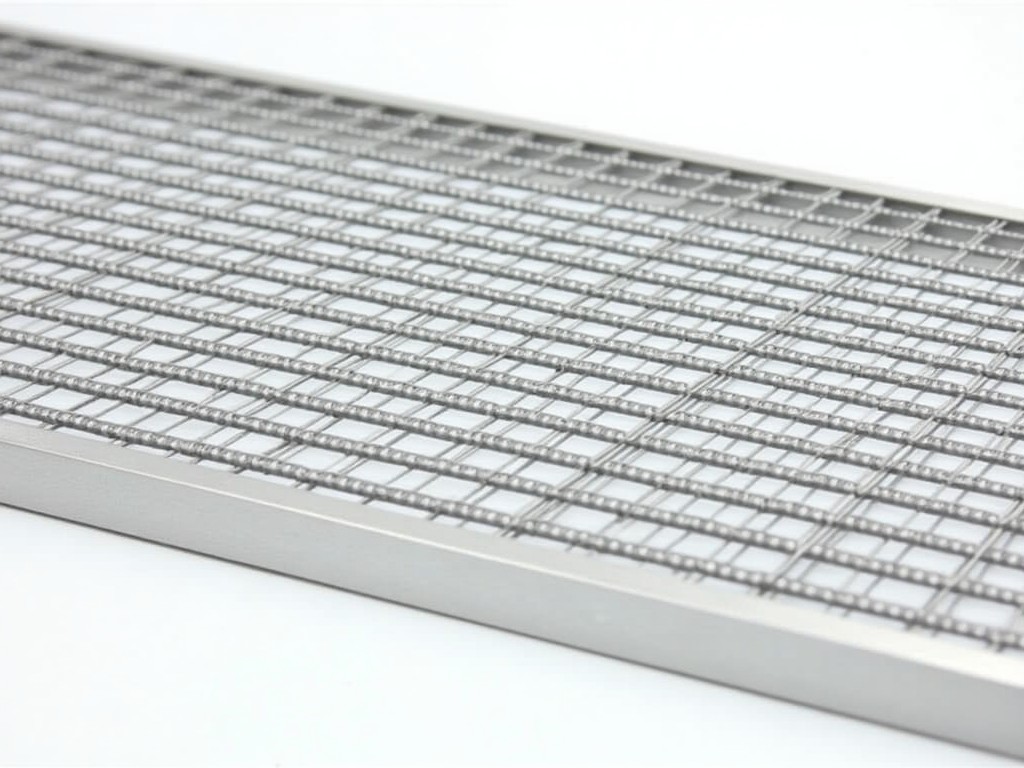
The grid is formed by placing parallel longitudinal wires at a set spacing, crossing them with transverse wires at right angles, and fusing each intersection through electric resistance welding.
Product Overview
Typical wire diameters range from 3 mm to 8 mm, with aperture sizes from 50 mm × 50 mm up to 200 mm × 200 mm, depending on the structural design.
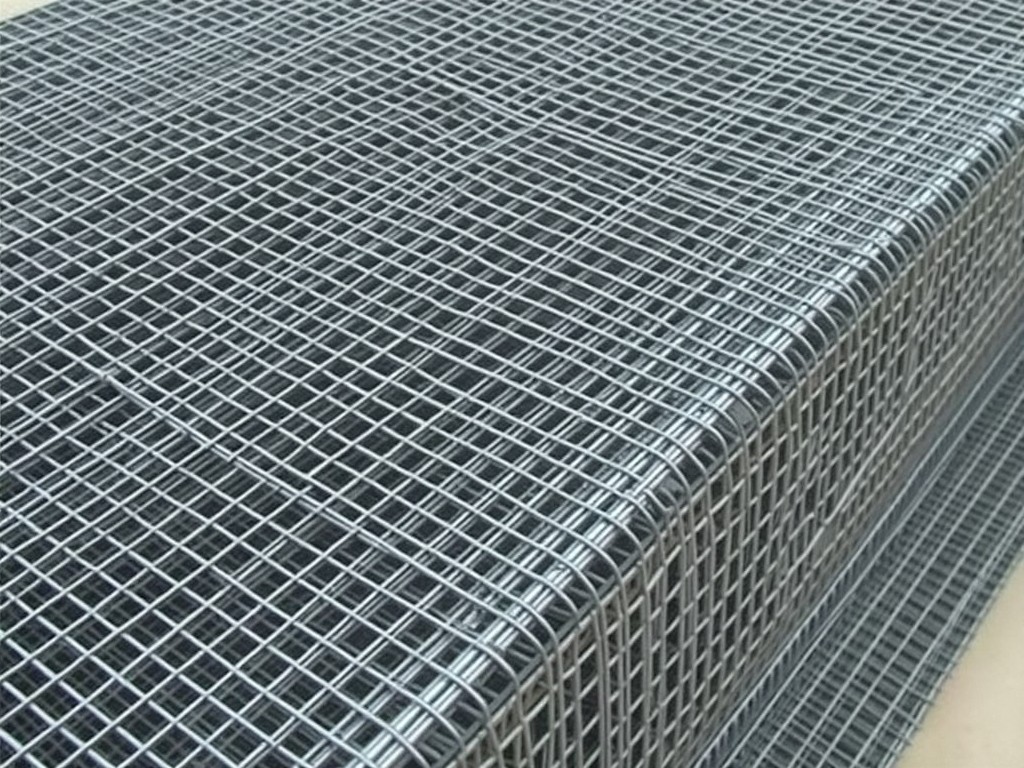
The mesh can be supplied as flat sheets cut to length or as continuous rolls, facilitating both manual placement and automated feeding in precast lines.
Technical Specifications
| Property | Typical Value | Unit | Notes |
|---|---|---|---|
| Wire Diameter | 3 – 8 | mm | Customizable per project |
| Aperture (Center‑to‑Center) | 50 – 200 | mm | Square or rectangular |
| Tensile Strength of Wire | 450 – 550 | MPa | Based on low‑carbon steel grade |
| Weld Shear Strength | ≥ 0.6 × wire tensile | – | Measured per ASTM A185 |
| Sheet Width | Up to 2.5 | m | Standard; wider available on request |
| Roll Length | Up to 50 | m | Depending on wire diameter |
Material Options
- Low‑carbon steel wire (ASTM A82) – suitable for general purpose concrete reinforcement.
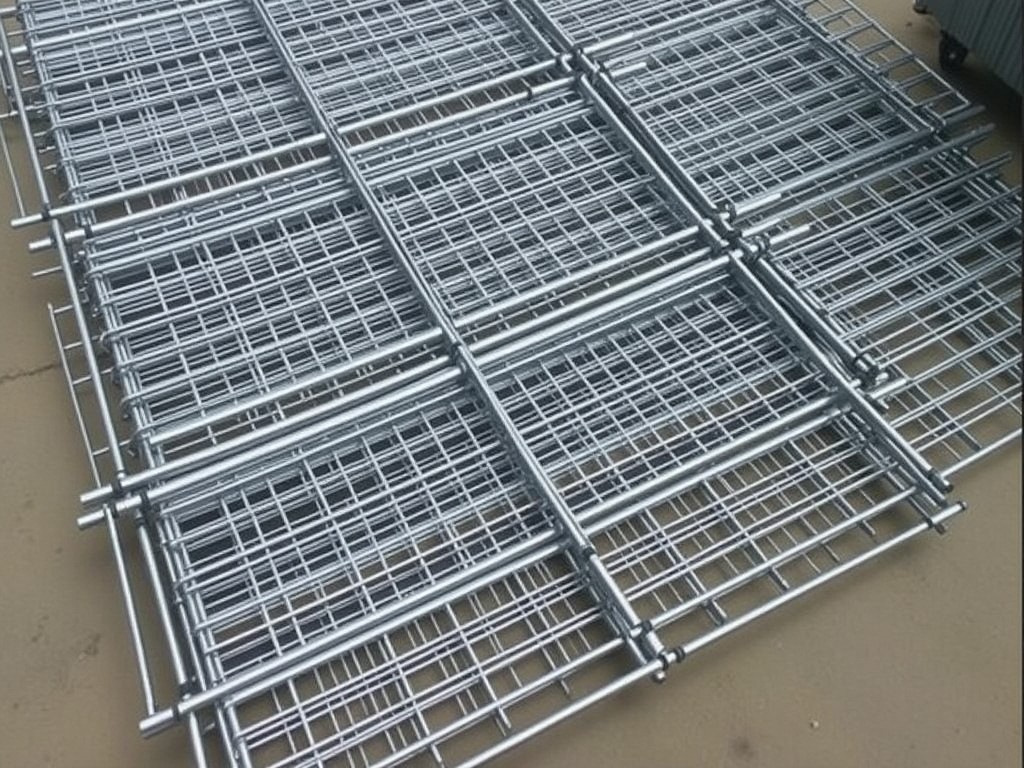
- Hot‑dip galvanized coating (Zn ≥ 55 g/m²) – provides corrosion resistance for exposed or humid environments.
- Stainless steel wire (AISI 304/316) – used where chloride exposure or aesthetic requirements demand higher durability.
Applications
In slab‑on‑grade floors, the mesh distributes loads from traffic and equipment, reducing the likelihood of shrinkage cracks that can lead to joint spalling.
For precast wall panels, the welded grid acts as a shear reinforcement layer, improving resistance to transverse forces during handling and erection.
In bridge deck overlays, the mesh controls crack width caused by thermal cycling, thereby extending service life and decreasing maintenance intervals.
Customization Capabilities
Aperture size, wire diameter, sheet dimensions, and coating type can be adjusted to match the structural design calculations and construction schedule.
The factory offers both flat sheets cut to exact lengths and continuous rolls equipped with edge protection to prevent deformation during transport.
Custom logos or identification marks can be applied via non‑intrusive inkjet printing upon request.
Quality Control & Testing
Each production lot undergoes tensile testing of wire samples to verify compliance with the specified strength grade.
Weld integrity is checked using a bend‑test method; a minimum of 95 % of welds must retain full cross‑section after bending to a 180° angle.
Dimensional inspection confirms aperture uniformity within ±2 mm and wire diameter tolerance of ±0.1 mm.
Visual inspection ensures the absence of loose wires, oxidation, or coating defects before packaging.
Packaging & Shipping
Flat sheets are stacked on wooden pallets, separated by corrugated cardboard layers, and secured with steel straps.
Rolls are wrapped in UV‑stable polyethylene film, placed on pallets, and protected with corner guards to prevent edge damage.
Standard container loading accommodates up to 24 tons of mesh per 40‑ft container, optimizing freight costs for overseas shipments.
Frequently Asked Questions
| Question | Answer |
|---|---|
| Can dimensions be customized? | Yes. Wire diameter, aperture, sheet width, and length are adjusted according to project specifications. |
| What information is required before quotation? | Required data include wire diameter, aperture size, sheet dimensions or roll length, coating type, and quantity. |
| What materials are available? | Low‑carbon steel, hot‑dip galvanized steel, and stainless steel (AISI 304/316) are standard options. |
| How is quality inspected? | Each lot undergoes tensile testing, weld bend‑test, dimensional checks, and visual inspection before release. |
| What packaging methods are available? | Flat sheets are palletized with cardboard interleaves; rolls are film‑wrapped and corner‑protected. |
| How are export shipments protected? | Pallets are strapped, corner‑guarded, and loaded into containers with moisture‑absorbent desiccants. |
| What is the typical production lead time? | Lead time ranges from 10 to 20 working days, depending on order complexity and current plant load. |
| How are samples arranged? | Sample pieces (up to 1 m²) can be dispatched upon request; shipping costs are borne by the requester. |
Contact for Inquiry
To obtain a detailed quotation or discuss technical requirements, please use the inquiry form.