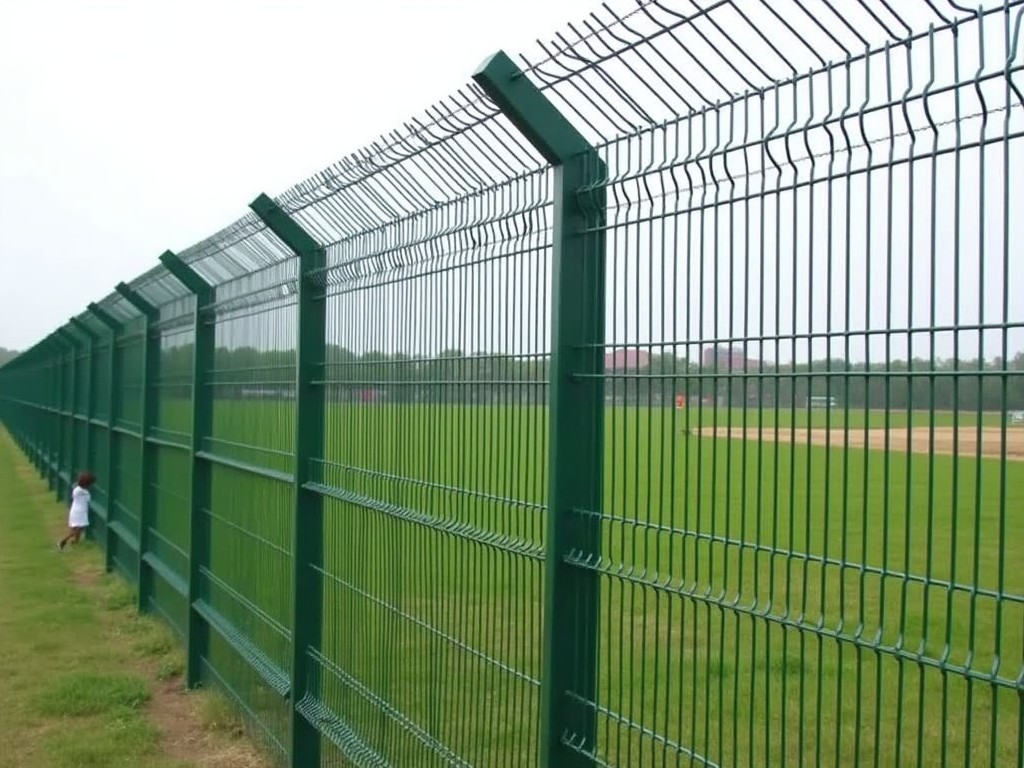
Wholesale High Tensile Fixed Knot Wire Fencing Exporter
High tensile fixed knot wire fencing is engineered for applications where long‑term barrier performance and resistance to impact are critical. The product combines cold‑drawn high‑carbon steel wire
Request a QuoteWholesale High Tensile Fixed Knot Wire Fencing
High tensile fixed knot wire fencing is engineered for applications where long‑term barrier performance and resistance to impact are critical. The product combines cold‑drawn high‑carbon steel wire with a fixed knot configuration that maintains uniform opening dimensions under load.
Technical Specifications
| Parameter | Typical Value | Notes |
|---|---|---|
| Wire Diameter | 2.0 mm – 4.0 mm | Customizable per project |
| Tensile Strength | ≥ 1700 MPa | Cold‑drawn high‑carbon steel |
| Knot Type | Fixed knot | Pre‑formed, non‑slipping |
| Roll Height | 0.9 m – 2.4 m | Standard increments |
| Roll Length | 50 m – 100 m | Custom lengths on request |
| Coating | Hot‑dip galvanized (Zn ≥ 200 g/m²) or PVC‑coated | Optional |
Material Composition
The wire is produced from high‑carbon steel (typically C 0.60‑0.80 %, Mn 0.30‑0.60 %, Si 0.10‑0.35 %). After drawing to the target diameter, the wire undergoes a hot‑dip galvanizing process that applies a uniform zinc coating, providing corrosion resistance suitable for outdoor exposure. For environments requiring additional protection, a PVC overcoat can be applied, adding a dielectric layer and UV stability.
Manufacturing Process
Production begins with wire drawing through a series of dies to achieve the specified tensile strength and diameter. The drawn wire is then fed into a knotting machine where each intersection is formed as a fixed knot, mechanically interlocking the vertical and horizontal strands without reliance on welding or twisting. Following knotting, the fabric passes through a tensioning station to ensure uniform aperture size, after which it is wound onto reels, inspected, and prepared for coating or direct shipment.
Applications
The fixed knot geometry provides consistent opening sizes that resist deformation under livestock pressure, making the fencing suitable for cattle, sheep, and goat enclosures. Its high tensile strength also enables use in perimeter security for industrial facilities, where impact resistance and low maintenance are required. In agricultural settings, the fence supports crop protection by deterring wildlife while allowing adequate airflow and light penetration.
- Livestock containment and rotational grazing systems
- Wildlife exclusion zones around croplands
- Perimeter security for warehouses, substations, and storage yards
- Temporary construction site barriers requiring high reusability
Quality Assurance
Each production lot undergoes dimensional verification of wire diameter, knot pitch, and roll width using calibrated gauges. Tensile strength is sampled per batch according to ISO 6892‑1, with results recorded and traceable. Visual inspection checks for coating uniformity, knot integrity, and absence of defects such as cracks or splits. Non‑conforming material is segregated and re‑processed or scrapped, ensuring only conforming product reaches the customer.
Customization Options
- Wire diameter from 2.0 mm to 4.0 mm (in 0.1 mm increments)
- Coating type: hot‑dip galvanized, Galfan, or PVC‑coated in various colors
- Roll height options ranging from 0.9 m to 2.4 m
- Roll length customizable to project logistics (typically 30 m‑150 m)
- Knot spacing adjustable to achieve specific aperture sizes (e.g., 50 mm × 50 mm, 75 mm × 75 mm)
Packaging and Export
Finished rolls are wrapped in UV‑stabilized polyethylene film to protect against moisture during transit. Each roll is placed on a pallet with corner protectors and secured with polyester strapping. Pallets are stacked according to weight distribution standards and loaded into 20‑foot or 40‑foot containers with appropriate bracing. Documentation includes material test reports, coating thickness certificates, and origin declarations to facilitate customs clearance.
Frequently Asked Questions
- Can the wire diameter and coating be customized?
- Yes, both wire diameter (2.0 mm‑4.0 mm) and coating (galvanized, Galfan, PVC) can be tailored to project specifications. Please provide the required values when requesting a quotation.
- What information is needed to prepare a quote?
- We require the desired wire diameter, coating type, roll height, roll length, quantity, and any special packaging or labeling instructions. Destination port details help us calculate accurate freight costs.
- How is product quality verified before shipment?
- Each lot undergoes tensile testing, dimensional inspection, and coating thickness measurement. Test reports are available upon request and accompany the shipment.
- What are the typical lead times?
- Standard production lead time is 2‑3 weeks after receipt of confirmed purchase order, subject to raw material availability and coating schedule. Expedited options are available for urgent projects.
- Are samples available for evaluation?
- Yes, we can provide sample sections (typically 1 m × 1 m) with the requested specifications. Sample shipping costs are borne by the requester.
Request a Quote
To obtain a detailed quotation, please contact our export department with your technical requirements. Our team will review the specifications, confirm lead times, and provide a formal proposal inclusive of freight and insurance options.



