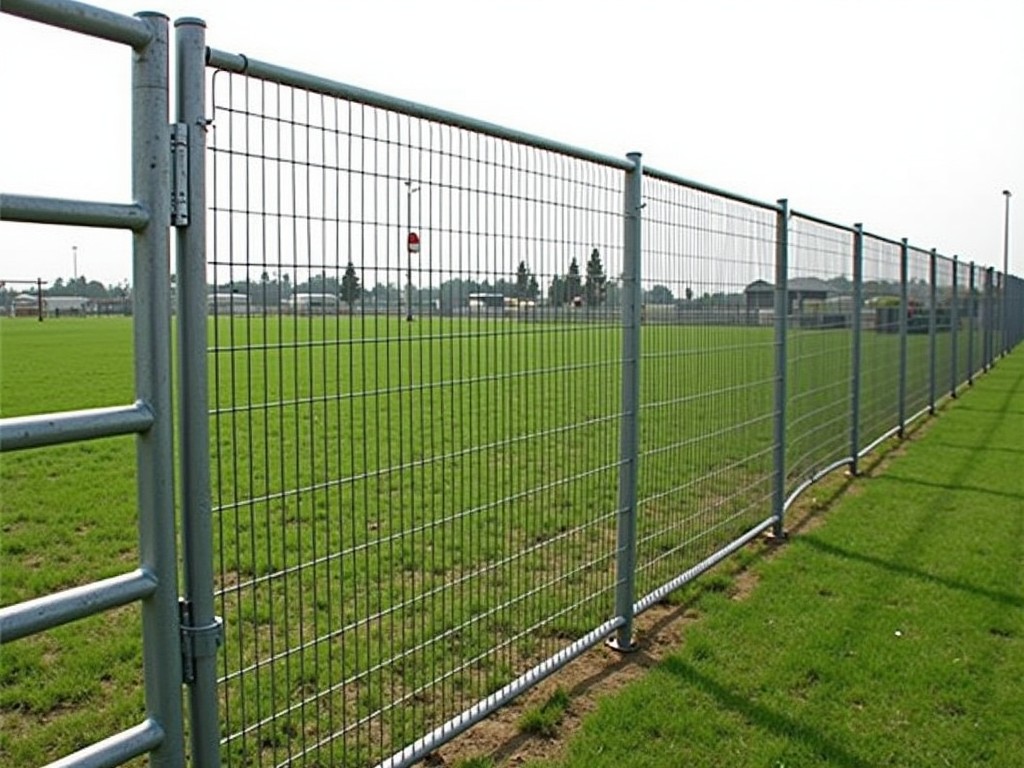
Wholesale Cattle Ranch Mesh Fencing Supplier
Cattle ranch mesh fencing is engineered to contain livestock while resisting corrosion, impact, and UV exposure in open‑range environments. The product consists of welded steel wire forming a uniform
Request a QuoteWholesale Cattle Ranch Mesh Fencing Supplier
Cattle ranch mesh fencing is engineered to contain livestock while resisting corrosion, impact, and UV exposure in open‑range environments. The product consists of welded steel wire forming a uniform grid, typically supplied in rolls that can be unrolled and tensioned between posts.
Typical Engineering Characteristics
Wire diameters commonly range from 2.0 mm to 4.0 mm, providing a balance between flexibility and load‑bearing capacity. Opening sizes are often 50 mm × 100 mm or 75 mm × 150 mm, which prevents hoof entrapment while allowing adequate airflow and visibility.
The steel core receives a hot‑dip galvanized coating of at least 60 g/m² per side, achieving a corrosion resistance rating suitable for semi‑arid to humid climates. For additional protection, a PVC over‑coat of 0.4 mm thickness can be applied, raising the overall durability to exceed 15 years in direct sunlight.
Applications in Livestock Operations
The mesh geometry distributes impact forces across multiple wires, reducing the likelihood of localized breakage when cattle push against the fence. This characteristic makes the fencing suitable for perimeter boundaries, pasture subdivision, and holding pens where animal pressure is frequent.
Because the openings are large enough to discourage climbing yet small enough to deter predators, the fencing also supports integrated wildlife management strategies without compromising livestock safety.
Material Options and Finishes
- Low‑carbon steel wire (ASTM A1064) – base material for welded mesh.
- Hot‑dip galvanized coating (ISO 1461) – standard corrosion barrier.
- PVC‑over‑coat (ASTM D2240) – optional UV‑stable outer layer, available in green, black, or brown.
- Stainless‑steel wire (Grade 304) – optional for high‑salinity or acidic environments.
Customization Parameters
Roll width can be adjusted from 1.0 m to 2.4 m to match post spacing, while roll length is typically 50 m but can be supplied in 25 m or 100 m increments upon request. Wire diameter and opening size are independently selectable, allowing engineers to tune the fence for specific load cases or animal species.
Post‑attachment features such as pre‑punched holes, integrated tension bars, or clip‑on brackets can be incorporated during manufacturing to reduce field installation time.
Quality Control Philosophy
Each production lot undergoes tensile testing of wire samples to confirm minimum yield strength of 350 MPa, ensuring the mesh can sustain expected livestock forces without permanent deformation. Coating thickness is verified using magnetic‑induction gauges at five points per roll, with acceptance criteria aligned to ISO 1461 requirements.
Visual inspection checks for weld consistency, ensuring that no more than 0.5 % of joints exhibit incomplete fusion. Rolls are then wound with a protective core and wrapped in UV‑stabilized polyethylene film to prevent surface damage during transit.
Specification Table
| Parameter | Typical Range | Notes |
|---|---|---|
| Wire Diameter | 2.0 mm – 4.0 mm | Selected based on load requirement |
| Opening Size | 50 mm × 100 mm or 75 mm × 150 mm | Prevents hoof entrapment |
| Tensile Strength (Wire) | ≥ 350 MPa | ASTM A370 test method |
| Galvanized Coating | ≥ 60 g/m² per side | Hot‑dip, ISO 1461 |
| PVC Over‑coat (Optional) | 0.4 mm thickness | UV‑stable, color options |
| Roll Width | 1.0 m – 2.4 m | Customizable to post spacing |
| Roll Length | 25 m – 100 m (standard 50 m) | Length tolerance ± 2 % |
Frequently Asked Questions
- Can dimensions be customized?
Yes, wire diameter, opening size, roll width, and length are adjustable per project specifications. - What information is required before quotation?
Required details include desired wire diameter, opening dimensions, roll dimensions, coating type, and delivery destination. - What materials are available?
Base options are low‑carbon steel with galvanized or PVC coating; stainless steel is available upon request. - How is quality inspected?
Each lot receives tensile testing, coating thickness measurement, and visual weld inspection before packaging. - What packaging methods are available?
Rolls are wrapped in UV‑stabilized polyethylene film and secured with recyclable strapping; palletized options exist for bulk orders. - How are export shipments protected?
Shipments include corner protectors, moisture‑barrier liners, and compliant ISPM‑15 wood pallets when required. - What is the typical production lead time?
Lead time ranges from 2 to 4 weeks depending on customization complexity and order volume. - How are samples arranged?
Sample sections (1 m × 1 m) can be dispatched upon receipt of a formal request; shipping costs are typically borne by the requester.
Next Steps
To obtain a detailed quotation or discuss specific configuration needs, please provide your project parameters through the contact form. Our engineering team will review the requirements and return a technical proposal within one business day.



