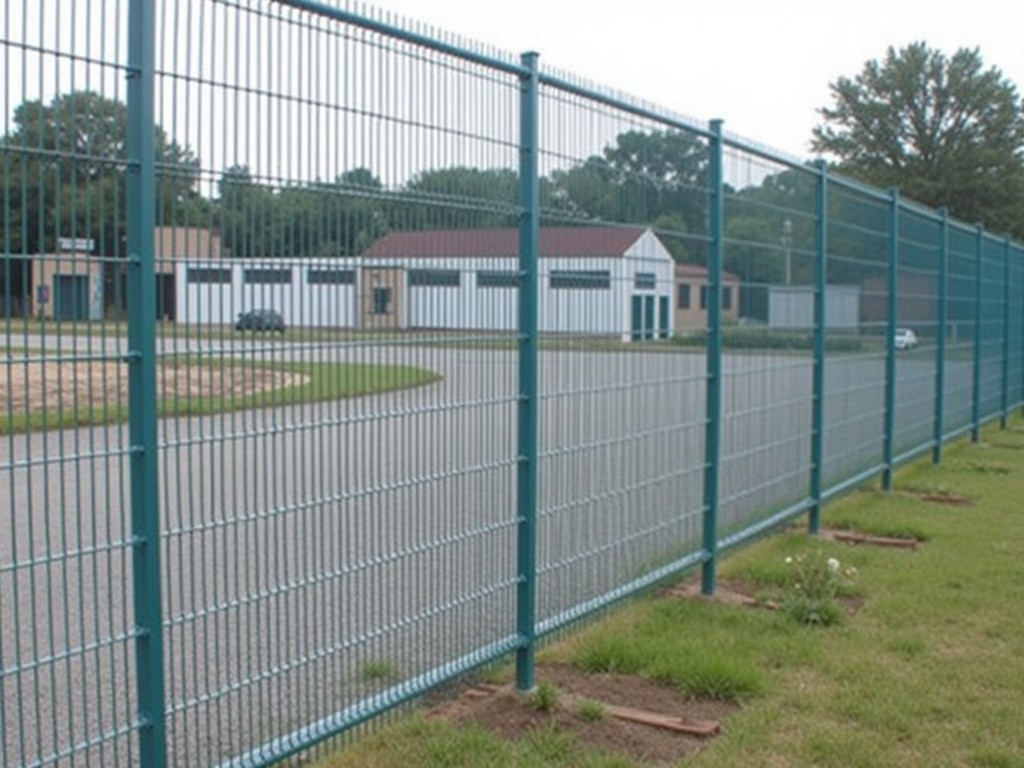
Factory Direct Heavy Duty Wire Mesh Fence Exporter
Heavy duty wire mesh fence is a perimeter barrier formed from welded or woven steel wire panels designed to withstand significant mechanical loads and environmental exposure. Typical constructions
Request a QuoteFactory Direct Heavy Duty Wire Mesh Fence Exporter
Heavy duty wire mesh fence is a perimeter barrier formed from welded or woven steel wire panels designed to withstand significant mechanical loads and environmental exposure. Typical constructions use wire diameters ranging from 4.0 mm to 6.0 mm with tensile strengths of at least 550 MPa, providing resistance to impact, cutting, and sustained wind pressure.
Sourcing directly from the factory eliminates intermediary handling, reduces lead times, and allows precise specification of dimensions, coatings, and gate integrations. Export‑ready production follows commonly referenced standards such as ISO 9001 for quality management and ASTM A123 for hot‑dip galvanizing, with documentation available upon request.
Technical Specifications
| Parameter | Typical Value | Unit | Notes |
|---|---|---|---|
| Wire Diameter | 4.0 – 6.0 | mm | Selected per load requirement |
| Tensile Strength | ≥550 | MPa | ASTM A370 test method |
| Mesh Opening | 50×50 or 75×75 | mm | Customizable to project needs |
| Panel Height | up to 3000 | mm | Standard lengths; longer panels available |
| Panel Width | up to 2500 | mm | Typical shipping width |
| Coating | Hot‑dip galvanized | — | Zn ≥ 60 g/m² (ASTM A123); PVC or powder coat optional |
| Corrosion Resistance | ≥500 | hours | Salt spray test (ASTM B117) |
| Wind Load Resistance | up to 1500 | Pa | Per project calculation |
Material Options
Low‑carbon steel wire (grade Q195) – economical, suitable for mild environments
High‑tensile steel wire (grade Q345) – higher yield strength for heavy‑load panels
Stainless steel wire (AISI 304 or 316) – excellent corrosion resistance in chemical or marine settings
Galvanized steel wire – pre‑galvanized core with additional hot‑dip zinc coating
PVC‑coated steel wire – polymer over‑coat for added abrasion protection and color coding
Customization Options
Mesh opening size – from 25 mm × 25 mm to 100 mm × 100 mm in 5 mm increments
Wire diameter – selectable between 3.0 mm and 8.0 mm
Panel dimensions – height up to 4000 mm, width up to 3000 mm (subject to transport limits)
Coating type – hot‑dip galvanizing, PVC coating, powder coating, or combination
Edge finishing – rolled edge, welded edge, or barbed top for added deterrence
Post system – square or round steel posts, adjustable spacing, base plates for concrete embedment
Gate integration – sliding, swing, or lift‑gate frames with matching mesh infill
Applications
Industrial facilities often require a perimeter barrier that can resist deliberate tampering, accidental impact from vehicles, and prolonged exposure to harsh weather. Heavy duty wire mesh fence meets these demands because its high tensile wire resists cutting and bending, while the welded joints maintain panel integrity under dynamic loads. The open mesh design provides visibility for surveillance cameras and reduces wind loading compared with solid panels.
Typical deployments include mining tailings dam perimeters, airport runway safeguards, livestock containment in large‑scale farms, and construction site security where panels must withstand repeated equipment contact. In each case, the fence’s ability to be customized in height, coating, and gate configuration allows engineers to align the barrier with specific risk assessments and site‑specific standards.
Quality Control
Before leaving the factory, each panel undergoes dimensional verification using laser‑scanned fixtures to confirm height, width, and mesh opening tolerances within ±2 mm. Wire diameter is checked with calibrated micrometers, and tensile strength is validated on a sample set per lot using a universal testing machine. Coating thickness is measured with a magnetic‑induction gauge to ensure the zinc layer meets the specified minimum weight per area.
Visual inspection checks for weld defects, coating uniformity, and any signs of mechanical damage. Packaged panels are subject to a drop‑test simulation to verify that edge protection and strapping remain intact during handling. All test results are recorded and made available to customers upon request.
Packaging & Shipping
Panels are stacked face‑to‑face with protective corrugated sheets between layers, then secured with steel straps and placed on sturdy wooden pallets. Corner protectors guard against impact, and the entire pallet is wrapped in stretch film to resist moisture and dust during transit. For export shipments, pallets are loaded into standard 20‑foot or 40‑foot containers, with fumigation certificates provided when required by destination regulations.
Frequently Asked Questions
Can the mesh opening and wire diameter be customized?
Yes. Both parameters are selected during the quotation stage based on load calculations and environmental conditions.
What information is needed to obtain a quotation?
Required details include desired panel height and width, mesh opening, wire diameter, coating type, quantity, and any special features such as gates or barbed tops.
Which coating options are available for corrosive environments?
Hot‑dip galvanizing is standard; PVC or powder coating can be added for extra protection in chemical or marine atmospheres.
How is product quality verified before shipment?
Each lot undergoes dimensional checks, tensile testing, coating thickness measurement, and visual inspection, with test reports available on request.
What are the typical lead times for factory‑direct orders?
Lead times depend on order size and customization but generally range from 3 to 6 weeks after receipt of technical specifications and deposit.



