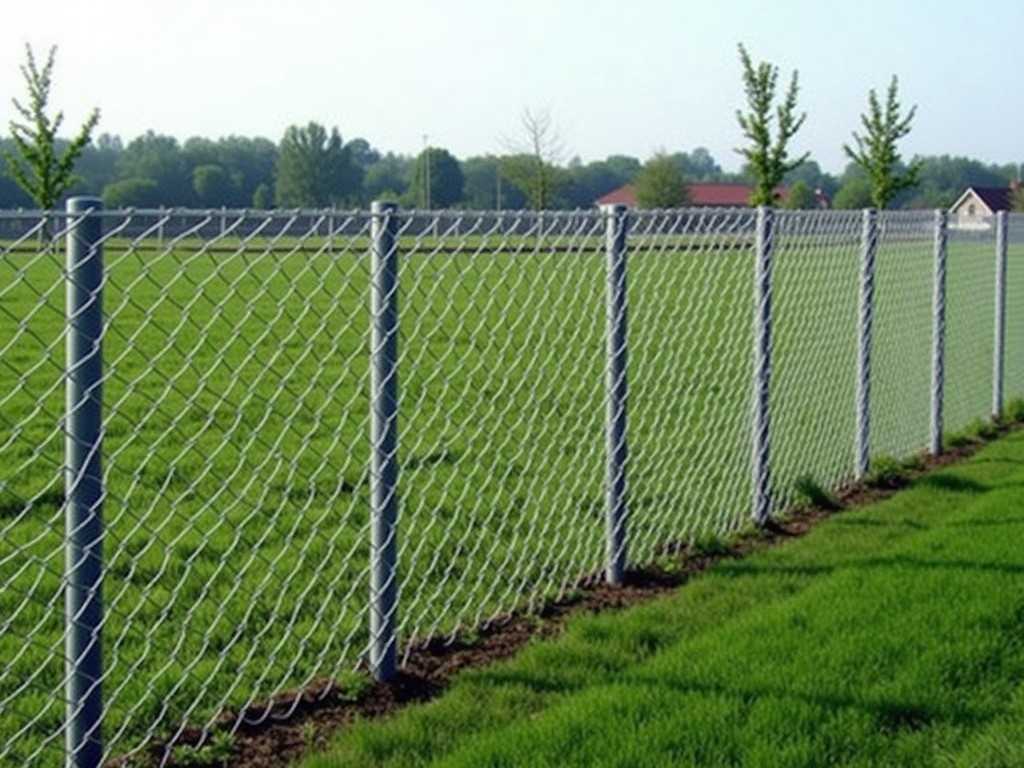
Direct Factory Galvanized Wire Fencing For Livestock Supplier
Galvanized wire fencing is a common barrier solution for containing cattle, sheep, goats and other farm animals. The fence consists of steel wires twisted or welded into a mesh, then coated with a
Request a QuoteDirect Factory Galvanized Wire Fencing for Livestock
Galvanized wire fencing is a common barrier solution for containing cattle, sheep, goats and other farm animals. The fence consists of steel wires twisted or welded into a mesh, then coated with a zinc layer to resist corrosion caused by moisture, soil and animal waste. Understanding the wire diameter, mesh opening, coating weight and post spacing helps buyers select a fence that balances containment strength with long‑term service life.
Material and Coating Characteristics
The base wire is low‑carbon steel, typically ranging from 1.8 mm to 2.5 mm diameter for livestock applications. After drawing, the wire is passed through a hot‑dip zinc bath where a metallurgical bond forms. Coating weight is expressed in grams per square meter (g/m²); common values for agricultural fencing fall between 180 g/m² and 270 g/m², providing a protective layer that delays rust initiation for 10‑15 years in temperate climates.
Zinc coating also provides sacrificial protection; if the coating is locally damaged, the surrounding zinc corrodes preferentially, preserving the underlying steel. This self‑healing behavior reduces the need for frequent touch‑up painting compared with untreated or poorly coated alternatives.
Typical Specifications
| Parameter | Typical Range | Notes |
|---|---|---|
| Wire Diameter | 1.8 mm – 2.5 mm | Thicker wire increases tensile strength and impact resistance. |
| Mesh Opening (Square) | 50 mm × 50 mm – 100 mm × 100 mm | Smaller openings deter smaller livestock and reduce wildlife intrusion. |
| Coating Weight | 180 g/m² – 270 g/m² | Higher weight extends service life in corrosive soils. |
| Tensile Strength of Wire | 350 MPa – 450 MPa | Determines resistance to sagging under animal pressure. |
Design Considerations for Livestock Containment
Fence height is selected based on the species to be contained. For cattle, a minimum height of 1.2 m is typical, while sheep and goats often require 1.0 m to prevent jumping. The bottom wire should be positioned no higher than 100 mm above ground to discourage digging, and a tension wire or barbed wire at the top can add deterrence without significantly increasing material cost.
Post spacing influences both material usage and rigidity. Wooden or steel posts spaced at 2.5 m to 3.0 m intervals provide adequate support for standard wire gauges; closer spacing (2.0 m) is advisable when using lighter wire or when the fence will experience high impact from livestock crowding.
Common Applications in Agriculture
- Perimeter pasture fencing to prevent livestock from wandering onto roads or neighboring fields.
- Internal subdivision paddocks for rotational grazing systems.
- Enclosure of feedlots and handling yards where animals are concentrated for short periods.
- Protection of young trees or orchards from browsing deer and livestock.
Quality Control Philosophy
Each production lot undergoes visual inspection for uniform zinc coverage, followed by magnetic thickness testing to verify coating weight meets the agreed specification. Wire tensile strength is sampled using a universal testing machine on at least three random lengths per batch. Mesh opening dimensions are checked with calibrated gauges to ensure consistency across the roll length. Results are recorded and traceable to the specific coil number, allowing buyers to review inspection reports upon request.
Customization Options
Buyers can specify alternative wire diameters, mesh patterns (square, rectangular or hexagonal), and coating weights based on site‑specific corrosion risk. Length per roll is adjustable; standard rolls are 50 m but 25 m or 100 m lengths are available to reduce handling time on large installations. Post hole drilling patterns, pre‑drilled holes for fasteners, and optional PVC coating over the zinc layer can also be arranged.
Packaging and Shipping
Fence rolls are wrapped in UV‑stabilized polyethylene film to protect the zinc coating from abrasion during transit. Rolls are then placed on pallets with corner protectors and secured with steel straps. For export shipments, pallets are fitted with heat‑treated wooden bases compliant with ISPM 15 standards, and a moisture‑absorbing desiccant packet is included inside the wrap to limit condensation damage.
Frequently Asked Questions
- Can the fence height be customized? Yes, height is determined by the number of wires and post length; both can be adjusted to meet specific containment requirements.
- What information is needed for a quotation? Required details include wire diameter, mesh opening, coating weight, roll length, total linear meters, and any optional features such as PVC overcoat or pre‑drilled post holes.
- How is coating weight verified? We use magnetic inductance gauges calibrated against NIST‑traceable standards; test reports are supplied with each shipment.
- What is the typical lead time? Standard specifications ship within 2‑3 weeks after order confirmation; custom runs may require an additional week for tooling and setup.
- Are samples available? Yes, a 1‑meter sample section can be sent upon request; shipping costs are covered by the requestor.
For technical data sheets, sample requests, or a formal quotation, please contact our sales team using the link below.
Request Quotation or Sample


