Custom Small Hole Chicken Wire Mesh Factory
Small hole chicken wire mesh is a welded or woven barrier characterized by aperture dimensions typically ranging from 6 mm to 12 mm and wire diameters between 0.5 mm and 1.2 mm. The tight opening
Request a QuoteCustom Small Hole Chicken Wire Mesh Factory
Small hole chicken wire mesh is a welded or woven barrier characterized by aperture dimensions typically ranging from 6 mm to 12 mm and wire diameters between 0.5 mm and 1.2 mm. The tight opening prevents small predators such as rats, snakes, and young birds from penetrating while still allowing adequate airflow and light transmission for poultry housing.
Engineers select this mesh when the primary design goal is exclusion of vermin without compromising structural visibility or adding excessive weight to frames. The mesh’s high open‑area ratio (often >70 %) supports ventilation, reducing humidity buildup inside coops and minimizing condensation‑related health risks.
Typical Specifications
| Parameter | Typical Range | Notes |
|---|---|---|
| Wire diameter | 0.5 mm – 1.2 mm | Cold‑drawn low‑carbon steel |
| Aperture size | 6 mm – 12 mm (square or hexagonal) | Customizable per project |
| Roll width | 0.5 m – 2.0 m | Standard widths; custom slitting available |
| Roll length | 10 m – 50 m | Lengths adjustable to minimize waste |
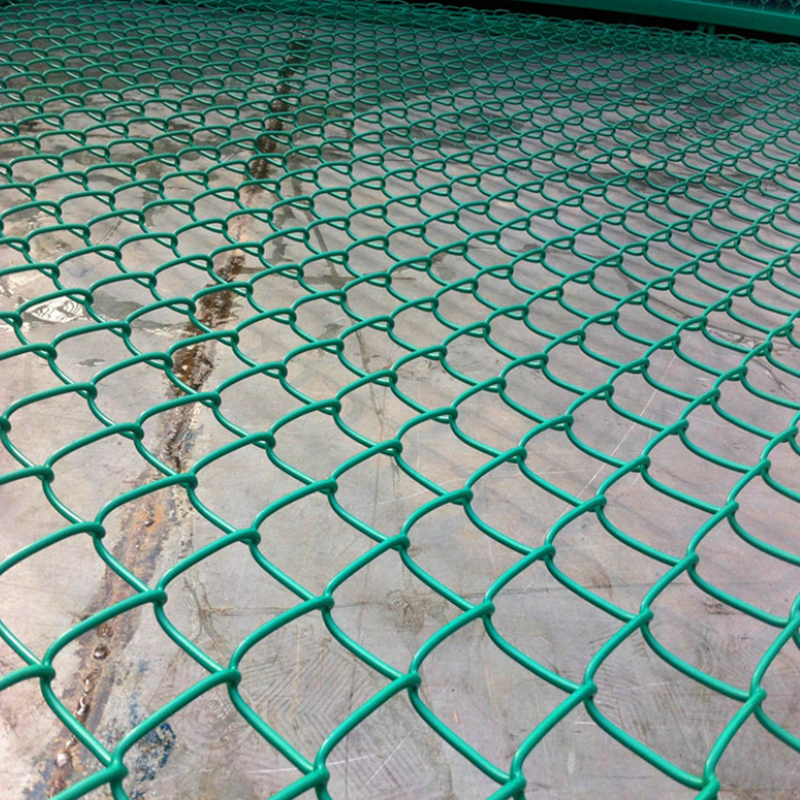
| Coating | Hot‑dip galvanized (≈55 g/m²) or PVC‑coated | Provides corrosion resistance for outdoor use |
| Tensile strength | ≥350 MPa (wire) | Ensures sag resistance under load |
Customization Options
- Aperture geometry: square, hexagonal, or custom polygonal patterns
- Wire diameter increments of 0.1 mm for precise load‑bearing requirements
- Roll dimensions: width slit to exact millimeter, length cut to reduce scrap
- Coating choices: hot‑dip galvanization, zinc‑aluminum alloy, or UV‑stabilized PVC
- Edge treatment: folded, twisted, or fitted with PVC‑capped safety edges
- Additional features: anti‑climb barbs, integrated fastening loops, or UV‑reflective strips
Typical Applications
In poultry farms, the mesh is installed as perimeter fencing to keep out ground‑based predators while allowing chicks to see outside, which reduces stress‑related pecking. The small aperture also prevents feed spillage and protects young birds from being stepped on by larger livestock when used in mixed‑species enclosures.
Horticultural growers use the same material as a barrier against rodents and insects in seedling beds, where the high open area maintains optimal light levels for photosynthesis. Because the mesh is lightweight yet stiff enough to retain shape, it can be suspended over frames without sagging, simplifying installation over large areas.
Industrial settings employ small hole mesh as a protective screen for machinery vents, preventing debris ingress while maintaining airflow. The corrosion‑resistant coating ensures long service life in environments with occasional exposure to cleaning agents or moisture.
Manufacturing Overview
Production begins with cold‑drawing steel wire to the target diameter, followed by automated welding or weaving to form the mesh pattern. The welded joints undergo electric resistance welding, achieving tensile consistency across the sheet. After forming, the mesh passes through a hot‑dip galvanizing line where a uniform zinc coating is applied, or alternatively through a PVC extrusion coating line for polymer finish.
Quality checkpoints include inline wire diameter measurement, aperture verification via optical scanning, and pull‑test sampling of welds. Finished rolls are inspected for coating thickness using magnetic induction gauges, ensuring compliance with the specified corrosion protection class.
Packaging and Shipping
Rolls are wound onto sturdy cardboard cores, then wrapped in shrink‑film to prevent loosening during transit. For extra protection, especially for PVC‑coated variants, a layer of corrugated cardboard is added around the roll before placing it in a wooden palletized crate. This method guards against edge damage and moisture ingress while facilitating easy handling with forklifts.
Shipping documents include material certificates, coating thickness reports, and custom dimensions sheets. Export shipments are marked with handling symbols and can be loaded into standard 20‑foot or 40‑foot containers without special ventilation requirements.
Frequently Asked Questions
- Can the aperture size be customized to non‑standard values? Yes, we can produce square or hexagonal openings from 4 mm up to 20 mm in 0.5 mm increments based on tooling availability.
- What information is needed for a quotation? Please provide wire diameter, aperture shape and size, roll width and length, coating type, and any edge treatment requirements.
- Which materials are available for the wire core? Standard is low‑carbon steel; stainless steel grades 304 or 316 are offered upon request for higher corrosion resistance.
- How is quality inspected before shipment? Each batch undergoes dimensional verification, weld strength testing, and coating thickness measurement; records are retained for traceability.
- What packaging options exist for overseas delivery? Shrink‑wrapped rolls on pallets, corrugated‑wrapped rolls, or custom wooden crates are available; we can also provide moisture‑barrier bags if required.
- What is the typical lead time? Production usually starts within 5‑7 working days after drawing approval, with total lead time ranging from 10‑18 days depending on order size and coating process.
For detailed technical data sheets, sample requests, or to discuss a specific project requirement, please use the contact form below.
Submit Inquiry