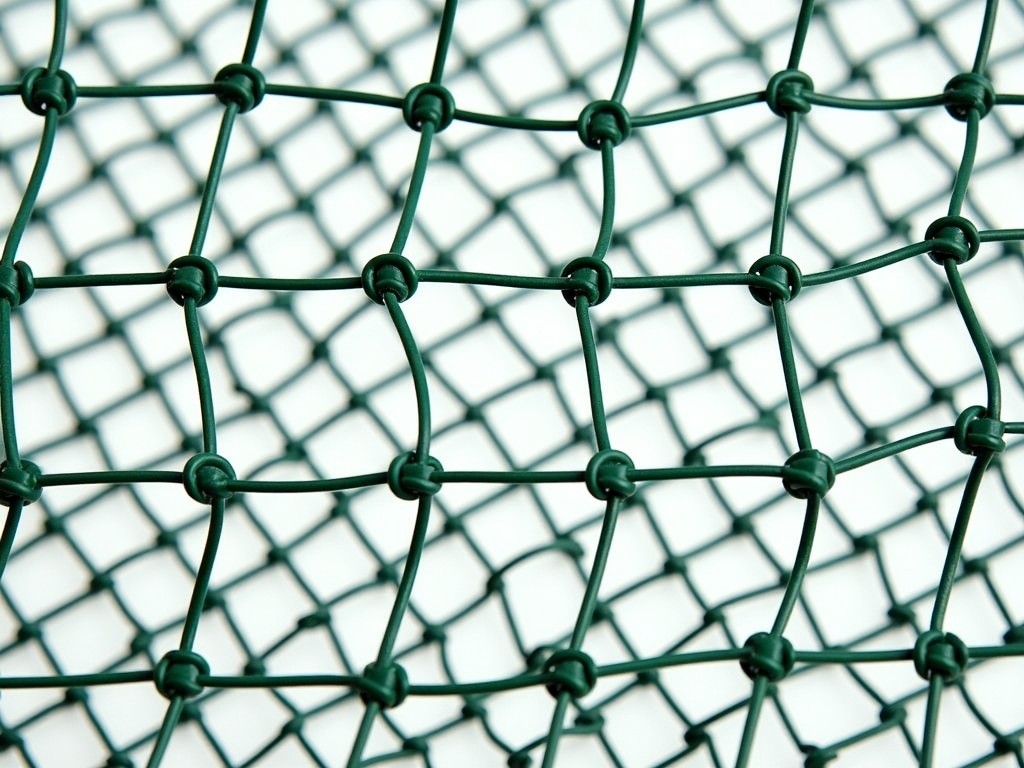
Custom Fixed Knot Woven Wire Fencing Panel Factory
Fixed knot woven wire fencing panels are engineered for perimeter security where consistent opening size and tensile strength are required. The panels are produced by interlocking steel wires at each
Request a QuoteCustom Fixed Knot Woven Wire Fencing Panel Factory
Fixed knot woven wire fencing panels are engineered for perimeter security where consistent opening size and tensile strength are required. The panels are produced by interlocking steel wires at each intersection using a fixed knot technique that prevents movement under load. This construction yields a uniform aperture that maintains its geometry under impact and environmental exposure.
Technical Specifications
| Parameter | Typical Value |
|---|---|
| Wire Diameter | 2.0 mm – 4.5 mm (customizable) |
| Opening Size (Aperture) | 50 mm × 50 mm – 150 mm × 150 mm |
| Panel Height | 0.8 m – 3.0 m |
| Panel Width | Up to 6.0 m (sectional) |
| Tensile Strength of Wire | ≥ 550 MPa (galvanized steel) |
| Coating Options | Hot‑dip galvanized, PVC‑coated, or powder‑coated (thickness per request) |
Values above represent common configurations; exact dimensions, wire grades, and finishes are adjusted according to project specifications and load calculations.
Material Options
Base wire is sourced from cold‑drawn high‑carbon steel with a minimum carbon content of 0.6 % to achieve the required yield strength. For corrosive environments, the wire undergoes hot‑dip galvanization conforming to ISO 1461, providing a zinc coating thickness typically between 55 µm and 85 µm. When additional abrasion resistance or aesthetic matching is needed, a PVC extrusion layer of 0.5 mm – 1.0 mm is applied over the galvanized core, or a thermoset powder coating is cured at 180 °C to achieve a uniform film thickness of 60 µm – 120 µm.
Customization Capabilities
- Wire diameter adjusted in 0.1 mm increments to meet specific load‑bearing calculations.
- Aperture geometry can be shifted from square to rectangular patterns while preserving fixed‑knot integrity.
- Panel lengths are fabricated in modular sections to facilitate transport and on‑site assembly.
- Edge treatments include folded selvage, welded bar reinforcement, or integrated post‑mounting brackets.
- Coating color can be matched to RAL standards or provided as a custom hue upon request.
Manufacturing Process
The production line begins with wire drawing to the specified diameter, followed by spooling and tension‑controlled feeding into the weaving loom. A series of rotating hooks interlace the warp and weft wires, forming a fixed knot at each crossover; the knot is mechanically set to eliminate slip under cyclic loading. After weaving, the panel passes through a cleaning station, then enters either a galvanizing bath or a coating line depending on the selected finish. Final inspection includes dimensional verification using laser scanning and tensile testing of random samples.
Quality Assurance
Quality control is performed at three checkpoints: incoming wire certification (chemical composition and mechanical properties), in‑process knot integrity verification via ultrasonic spot checks, and final product evaluation encompassing aperture uniformity, panel squareness, and coating adhesion (measured by cross‑hatch test per ASTM D3359). Non‑conforming sections are segregated and reworked or scrapped, ensuring that only panels meeting the agreed tolerances proceed to packaging.
Applications
Fixed knot woven panels are selected for high‑security perimeters such as correctional facilities, military installations, and critical infrastructure sites because the knot design prevents panel deformation when subjected to dynamic loads like vehicle impact or climbing attempts. The uniform opening size also supports controlled visibility for surveillance while maintaining a physical barrier that resists cutting with standard hand tools. In agricultural settings, the same geometry provides effective livestock containment while allowing adequate airflow and light penetration for pasture health.
Comparison: Fixed Knot vs. Welded Mesh
| Feature | Fixed Knot Woven | Welded Mesh |
|---|---|---|
| Joint Integrity Under Load | Knots maintain opening; no weld fracture | Welds may crack under repeated impact |
| Adjustability of Aperture | Easily modified during weaving | Fixed after welding; requires re‑manufacture |
| Coating Uniformity | Consistent coating on all wires pre‑weave | Coating may be thinner at weld points |
| Typical Production Lead Time | 3‑4 weeks for standard sizes | 4‑5 weeks due to welding and post‑weld treatment |
Frequently Asked Questions
- Can dimensions be customized? Yes, wire diameter, aperture size, panel height, and width are all adjustable to match structural calculations and site constraints.
- What information is required before quotation? We need the desired opening size, wire gauge, panel dimensions, coating type, and any special edge treatments or mounting provisions.
- What materials are available? Base options include hot‑dip galvanized steel, PVC‑coated galvanized steel, and powder‑coated galvanized steel; alternative alloys such as stainless steel are available upon request.
- How is quality inspected? Each lot undergoes dimensional laser scanning, tensile strength testing of wire samples, and coating adhesion checks per ASTM standards.
- What packaging methods are available? Panels are bundled with protective corner guards, wrapped in UV‑stable polyethylene film, and placed on pallets secured with steel straps for containerized shipment.
- How are export shipments protected? Export crates include moisture‑barrier liners and shock‑absorbing edge profiles to prevent corrosion and mechanical damage during transit.
- What is the typical production lead time? Standard configurations ship within 3‑4 weeks after receipt of approved drawings; custom alloys or coatings may extend this timeline.
- How are samples arranged? We can provide a 300 mm × 300 mm sample panel with the specified wire and finish; shipping costs are borne by the requester.
Get in Touch
For technical data sheets, pricing, or to discuss a specific perimeter security requirement, please contact our engineering team.
Request Quote


