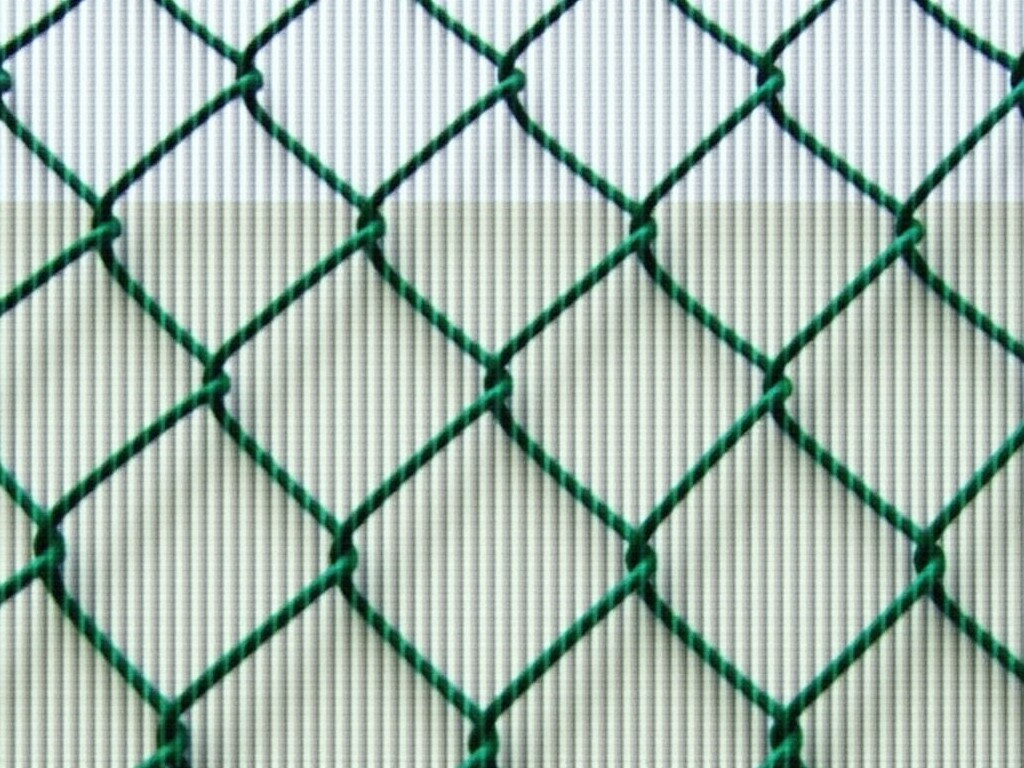
Custom Chain Link Privacy Fence Fabric Manufacturer
Chain link privacy fence fabric consists of a woven steel wire core coated with PVC or polyethylene, integrated with vertical slats that block sight lines while maintaining airflow. Typical wire
Request a QuoteCustom Chain Link Privacy Fence Fabric Manufacturer
Chain link privacy fence fabric consists of a woven steel wire core coated with PVC or polyethylene, integrated with vertical slats that block sight lines while maintaining airflow. Typical wire diameters range from 2.0 mm to 3.0 mm, with coating thicknesses of 50 µm to 100 µm providing corrosion resistance per ASTM F668. Aperture sizes are commonly 50 mm × 50 mm or 75 mm × 75 mm, offering a balance between visibility and privacy.
Manufacturers specify custom dimensions to match site‑specific post spacing, overall height, and required slat alignment, which eliminates the need for on‑site cutting and reduces material waste. Custom slat spacing can be adjusted from 25 mm to 100 mm to meet varying privacy levels without compromising structural tension. Roll widths are typically produced between 1.2 m and 2.4 m, allowing seamless installation across long runs.
Quality‑focused production maintains uniform tensile strength across the fabric, usually exceeding 350 N/mm² for the steel core, ensuring resistance to sagging under wind load. Consistent coating adhesion prevents delamination, and dimensional tolerances are held within ±2 mm for aperture and slat placement. These attributes lower long‑term maintenance costs and extend service life in outdoor environments.
Material Options
- Galvanized steel core with zinc coating thickness 55 µm to 85 µm for base corrosion protection.
- PVC overcoat available in 50 µm to 100 µm thickness, offered in standard colors (black, dark green, brown) and custom RAL matches.
- UV‑stabilized polyethylene slats, thickness 1.5 mm to 2.5 mm, with additive packages providing 2000 h UV resistance per ASTM G154.
- Optional polyester powder coat over PVC for enhanced abrasion resistance, thickness 60 µm to 80 µm.
Customization Choices
- Roll length: standard 25 m, 50 m, or custom lengths up to 100 m per project requirements.
- Slat width: 25 mm, 38 mm, 50 mm, with optional tapered profiles for aerodynamic performance.
- Post spacing: adaptable to 2.0 m, 2.5 m, or 3.0 m intervals, influencing fabric tension requirements.
- Edge finishes: selvage, knuckle, or twisted lock to suit different attachment hardware.
- Color patterning: alternating slat colors or printed logos for branding applications.
Manufacturing Considerations
The weaving process employs high‑speed looms that maintain consistent wire tension, preventing irregular aperture distortion. Slats are inserted via a pneumatic insertion system that aligns each slat within ±1 mm of the designed position before the lock‑stitch secures the fabric. Roll winding uses calibrated tension brakes to avoid over‑tightening, which could elongate the coating and reduce adhesion.
Environmental controls in the extrusion line maintain PVC melt temperature between 160 °C and 180 °C, ensuring uniform thickness and preventing bubbles. Post‑coating curing occurs in a controlled humidity chamber at 50 % RH to achieve optimal cross‑linking. These parameters are logged for each batch to support traceability.
Quality Control Philosophy
- Tensile strength tested on five random samples per roll using a universal testing machine at 200 mm/min strain rate.
- Coating adhesion measured by ASTM D4541 pull‑off test, targeting minimum 1.5 MPa.
- Dimensional inspection performed with laser micrometer on aperture width and slat spacing every 10 m of production.
- UV exposure simulated in QUV apparatus for 1000 h, with color change ΔE < 5 accepted.
- Final visual inspection checks for slat misalignment, coating defects, and edge uniformity before packaging.
Applications
Commercial property perimeters benefit from the fabric’s ability to deter climbing while allowing security cameras to see through the mesh, reducing blind spots. The open area reduces wind load compared to solid panels, lowering post foundation requirements in high‑wind zones.
School zones and playgrounds use the slat configuration to prevent unauthorized observation without creating a feeling of enclosure, supporting a safer environment while maintaining supervision sight lines. The non‑conductive coating eliminates grounding concerns near electrical equipment.
Industrial storage facilities employ the fabric to contain dust and debris while permitting ventilation, which helps regulate temperature inside storage bays. The corrosion‑resistant coating withstands exposure to fertilizers, salts, and mild chemicals commonly found in agro‑industrial settings.
Technical Data
| Parameter | Typical Value | Customizable Range |
|---|---|---|
| Wire Diameter | 2.5 mm | 2.0 mm – 3.0 mm |
| Coating Thickness | 70 µm | 50 µm – 120 µm |
| Aperture Size | 50 mm × 50 mm | 38 mm × 38 mm – 75 mm × 75 mm |
| Slat Width | 38 mm | 25 mm – 50 mm |
| Roll Width | 1.8 m | 1.2 m – 2.4 m |
| Roll Length | 50 m | 25 m – 100 m |
| Tensile Strength (Steel Core) | 380 N/mm² | 350 N/mm² – 420 N/mm² |
| UV Stability (QUV‑B) | 2000 h | 1500 h – 3000 h |
Frequently Asked Questions
A: Yes. Roll width is adjustable between 1.2 m and 2.4 m, and length can be supplied in increments of 5 m up to 100 m to suit layout plans.
A: Required details include desired height, total linear footage, wire gauge, coating type, slat width and spacing, color, and any special edge finish.
A: UV‑stabilized polyethylene is standard; optional PVC‑coated or aluminum slats are available upon request for specific aesthetic or performance needs.
A: Each roll undergoes tensile testing, coating adhesion checks, dimensional verification, and a final visual audit as outlined in our QC protocol.
A: Rolls are wrapped in UV‑resistant polyethylene film, placed on sturdy pallets, and secured with corner guards and stretch wrap to prevent deformation and moisture ingress.
A: Standard lead time is 3‑4 weeks after receipt of approved drawings and material confirmation; expedited options are available for critical schedules.



