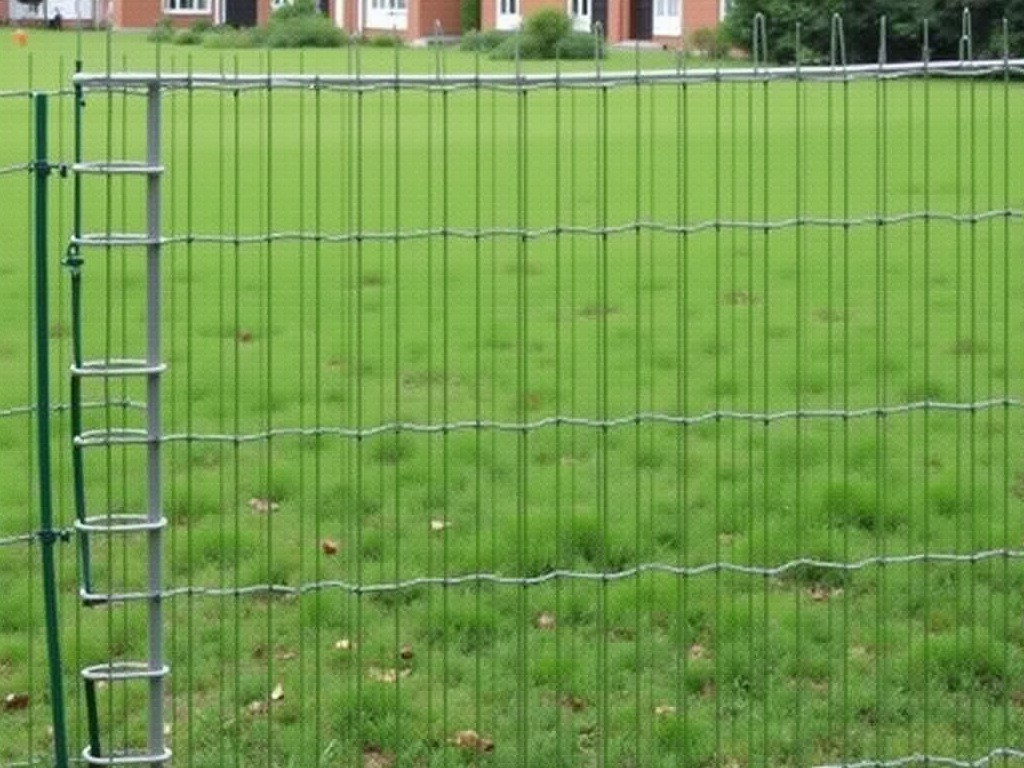
China Woven Wire Cattle Fence For Sale Supplier
The woven wire cattle fence consists of interlocking steel wires forming a uniform mesh pattern designed to contain livestock while allowing visibility and airflow. This construction method
Request a QuoteWoven Wire Cattle Fence – Supplier from China
The woven wire cattle fence consists of interlocking steel wires forming a uniform mesh pattern designed to contain livestock while allowing visibility and airflow. This construction method distributes impact forces across multiple wires, reducing the likelihood of localized failure under animal pressure.
Typical wire diameters range from 2.0 mm to 3.5 mm, with tensile strengths between 350 MPa and 550 MPa depending on the steel grade selected. These values ensure the fence can withstand repeated livestock impacts without permanent deformation.
Standard aperture sizes are 50 mm × 100 mm or 75 mm × 150 mm, providing adequate spacing to prevent hoof entrapment while maintaining structural rigidity. Fence heights commonly offered are 900 mm, 1200 mm, and 1500 mm to suit different pasture configurations.
Protective coatings include hot‑dip galvanization (typically 200 g/m² zinc) or PVC over‑coating for added corrosion resistance in humid or saline environments. Coating thickness is measured according to ISO 1461 standards to guarantee service life expectations.
Roll lengths are usually 20 m or 50 m, with linear weights ranging from 8 kg/m to 15 kg/m based on wire diameter and coating. This facilitates handling with standard farm equipment and reduces the number of splices required during installation.
Technical Specifications
| Parameter | Typical Value | Notes |
|---|---|---|
| Wire Diameter | 2.0 mm – 3.5 mm | Selected per load requirements |
| Tensile Strength | 350 MPa – 550 MPa | Depends on steel grade |
| Aperture (W × H) | 50 mm × 100 mm or 75 mm × 150 mm | Prevents hoof entrapment |
| Height | 900 mm, 1200 mm, 1500 mm | Custom heights available |
| Coating | Hot‑dip Zn ≥200 g/m² or PVC | ISO 1461 compliance |
| Roll Length | 20 m or 50 m | Weight 8‑15 kg/m |
Material Options
- Low‑carbon steel wire (Q195/Q235) for economical installations
- High‑tensile steel wire (Q345) for increased impact resistance
- Stainless steel wire (304/316) for corrosive environments
Applications in Livestock Management
Cattle exert lateral forces when pushing against barriers; the mesh geometry of woven wire distributes these forces over a wide area, reducing peak stress on any single wire. This behavior minimizes permanent deformation and extends service life compared with rigid rail systems.
Visibility through the fence allows herd monitoring without physical contact, which is advantageous for rotational grazing systems where frequent animal movement occurs. The open design also promotes airflow, helping to keep the fence dry and reducing corrosion rates in humid climates.
Customization Parameters
Height can be adjusted in 150 mm increments to match specific pasture layouts or predator exclusion requirements. Aperture dimensions are adaptable to control the size of animals that may attempt to pass through, with smaller openings used for calves or goats.
Wire diameter and tensile grade are selected based on anticipated load conditions, such as high‑density stocking rates or exposure to wildlife pressure. Coating type and thickness are customized according to environmental corrosivity categories (C1‑C5) defined in ISO 12944.
Roll length and packaging configuration can be altered to suit on‑site handling equipment, reducing labor during installation. All custom options are quoted based on detailed project specifications provided by the buyer.
Quality Control Philosophy
Each production lot undergoes tensile testing on a sample of wires to verify that the measured strength falls within the specified range. Results are recorded and traceable to the specific coil number.
Coating adhesion is assessed using a bend test per ISO 2409, ensuring the zinc or PVC layer remains intact after forming. Visual inspection for uniform mesh tightness and absence of broken wires is performed on every roll before packaging.
Dimensional checks of aperture size and roll width are conducted using calibrated gauges, with tolerances held to ±2 mm. These procedures collectively reduce the risk of field‑installation surprises and support long‑term performance expectations.
Packaging and Shipping
Finished rolls are wrapped in UV‑stabilized stretch film to protect the coating from abrasion during handling. Each roll is then placed on a wooden pallet secured with strapping to prevent shifting.
Pallets are loaded into standard 20‑ft or 40‑ft containers with adequate bracing to avoid movement during transit. Export shipments include a packing list, material test certificates, and a declaration of conformity to the requested specifications.
Inquiry
To discuss your specific fence requirements, including dimensions, material grade, coating, and delivery schedule, please use the contact form below. Providing details such as herd size, pasture layout, and environmental conditions enables us to prepare an accurate quotation and lead‑time estimate.
Frequently Asked Questions
Can dimensions be customized?
Yes, height, aperture, wire diameter, and roll length can be adjusted to match project specifications. Custom dimensions are quoted after receiving detailed requirements.
What information is required before quotation?
We typically need the desired fence height, aperture size, wire diameter or tensile grade, coating type, total linear meters, and any special packaging or delivery constraints.
What materials are available?
Low‑carbon steel, high‑tensile steel, and stainless steel wires are stocked. Coating options include hot‑dip galvanization and PVC over‑coating, with thicknesses selectable per corrosion category.
How is quality inspected?
Each lot undergoes tensile strength testing, coating adhesion bend testing, visual mesh inspection, and dimensional verification of aperture and width before packaging.
What packaging methods are available?
Standard packaging consists of stretch‑film‑wrapped rolls on wooden pallets, secured with strapping. Custom packaging such as crate or reel options can be arranged upon request.
How are export shipments protected?
Rolls are film‑wrapped, palletized, and braced within containers to prevent movement. Moisture‑absorbing desiccants are included for long‑haul routes when required.
What is the typical production lead time?
Lead time depends on order size and customization level, generally ranging from 10 to 25 working days after receipt of technical details and advance payment.
How are samples arranged?
Sample sections of 1 m length can be provided for evaluation. Shipping costs are borne by the requester, and sample lead time is typically 3 to 5 working days.



