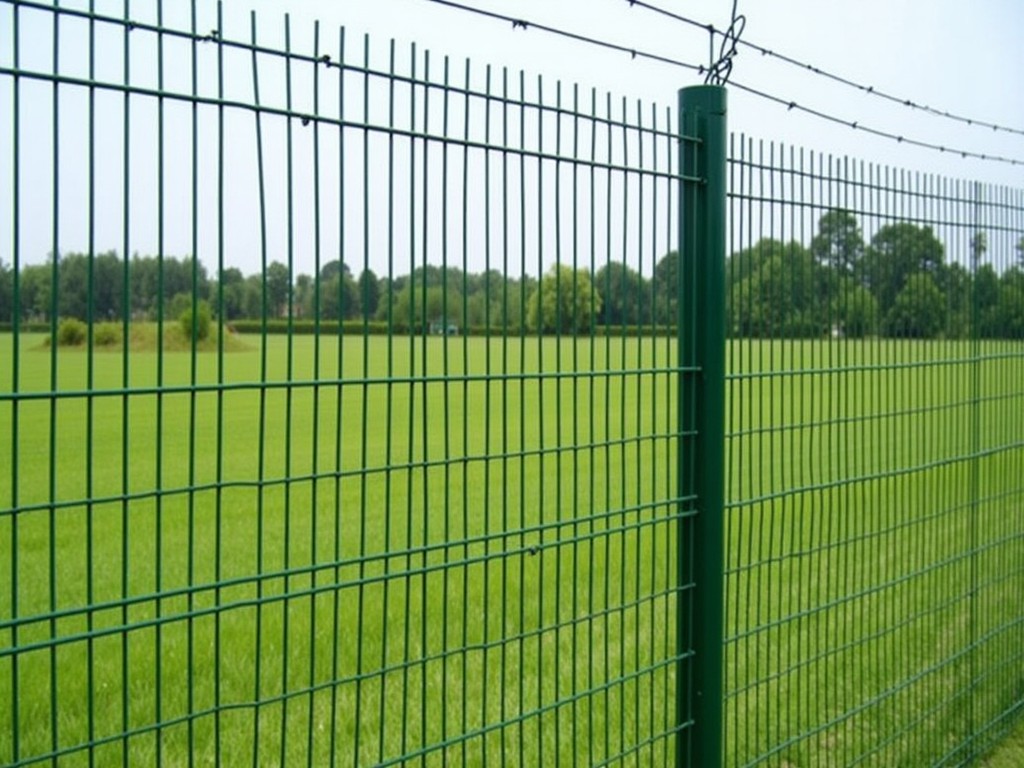
China Woven Wire Cattle Fence Field Fencing Supplier
Woven wire cattle fence is formed by interlacing steel wires into a uniform mesh pattern, creating a barrier that distributes impact forces across multiple strands. This construction reduces the risk
Request a QuoteChina Woven Wire Cattle Fence Field Fencing Supplier
Woven wire cattle fence is formed by interlacing steel wires into a uniform mesh pattern, creating a barrier that distributes impact forces across multiple strands. This construction reduces the risk of wire breakage under livestock pressure compared to stranded or welded alternatives.
Technical Specifications
Typical wire diameters range from 2.0 mm to 4.0 mm, selected based on required load capacity and expected animal size. Mesh openings commonly measure 50 mm × 100 mm or 75 mm × 150 mm, providing adequate visibility while preventing hoof entrapment. Minimum tensile strength of the base steel is 550 MPa, with hot‑dip galvanized coating achieving at least 275 g/m² zinc mass or PVC coating thickness of 0.2 mm for corrosion protection.
| Parameter | Typical Value | Customizable Options |
|---|---|---|
| Wire Diameter | 2.0 mm – 4.0 mm | Intermediate sizes upon request |
| Mesh Opening | 50 mm × 100 mm | Alternative rectangular or square patterns |
| Tensile Strength | ≥ 550 MPa | Higher grades available for extreme loads |
| Coating Type | Hot‑dip Galvanized (275 g/m²) | PVC coating, color options, electro‑galvanized |
| Roll Width | 1.2 m – 2.4 m | Custom widths to suit site constraints |
| Length per Roll | 50 m | Shorter or longer lengths on request |
Material Options
Base wire is typically produced from low‑carbon steel grades such as Q195 for economical applications or high‑tensile Q345 where greater load resistance is required. Hot‑dip galvanizing provides a metallurgical zinc‑iron alloy layer that resists rust in humid environments, while PVC coating adds a protective polymer barrier and allows color coding for visibility. Both coatings can be combined, with a zinc underlayer followed by a PVC overcoat, to extend service life in corrosive soils.
- Q195 low‑carbon steel – standard tensile, good formability
- Q345 high‑tensile steel – increased yield strength for heavy livestock
- Hot‑dip galvanized coating – zinc mass 200‑350 g/m²
- PVC coating – thickness 0.15‑0.30 mm, colors green, black, white
- Dual coating – galvanized base + PVC top layer
Applications
Cattle exert significant lateral pressure on fencing, especially during herd movement or when seeking water. The woven mesh distributes this force across many wires, reducing point loads that could cause individual wire fatigue or breakage. Additionally, the smooth interlocking edges minimize abrasion on animal hides, lowering injury risk compared to barbed or welded designs.
Quality Control
Each production lot undergoes tensile testing on representative wire samples to verify minimum strength specifications. Coating adhesion is assessed by bend‑test methods ensuring the zinc or PVC layer remains intact under flexing. Mesh dimensions are checked with calibrated gauges to maintain opening tolerances within ±2 mm, preventing gaps that could compromise containment.
Customization
Wire diameter can be adjusted in 0.1 mm increments to match specific load calculations. Mesh opening geometry may be altered to rectangular, square, or diamond patterns depending on visibility and hoof safety requirements. Roll length and width are tailored to site logistics, reducing the number of splices needed during installation.
Packaging and Shipping
Finished rolls are first wrapped in UV‑stabilized polyethylene film to protect against moisture and dirt during transit. Each wrapped roll is then placed on a wooden pallet and secured with polypropylene strapping to prevent shifting. Pallets are stacked no higher than two layers and labeled with product code, dimensions, and weight for easy handling at destination.
FAQ
Can dimensions be customized? Yes, wire diameter, mesh opening, roll width, and length can be adjusted to meet project specifications; please provide detailed requirements for a quotation.
What information is needed before quotation? Required details include intended wire diameter or load class, mesh size, coating type, roll dimensions, quantity, and delivery destination.
Contact for Inquiry
To discuss your fencing needs or request a technical data sheet, please use the link below to reach our sales team.
Send Inquiry


