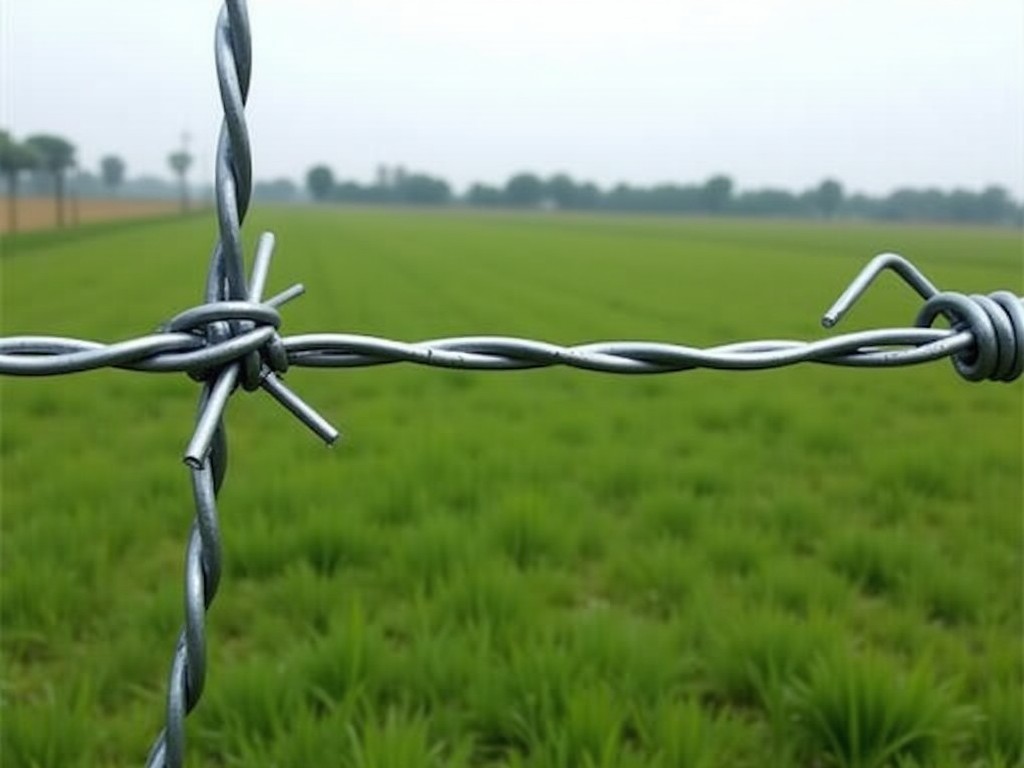
China Barbed Wire Cattle Farm Fence Manufacturer
Barbed wire remains a fundamental perimeter solution for cattle farms because it combines low material cost with effective livestock deterrence. The design relies on sharp protrusions spaced along a
Request a QuoteChina Barbed Wire Cattle Farm Fence Manufacturer
Barbed wire remains a fundamental perimeter solution for cattle farms because it combines low material cost with effective livestock deterrence. The design relies on sharp protrusions spaced along a tensioned wire to discourage animals from pushing through or jumping over the fence line. Successful installations balance wire strength, corrosion resistance, and ease of deployment across varied terrain and climatic conditions.
Product Overview
Manufacturers typically produce two primary configurations: single‑twist and double‑twist barbed wire. In a single‑twist design, two strands are helically wound together with barbs formed on one or both wires. Double‑twist versions interlock four strands, offering higher tensile capacity and greater resistance to unraveling under sustained livestock pressure. Both types are supplied in standard roll lengths ranging from 200 m to 500 m, facilitating rapid deployment on large pastures.
Technical Specifications
| Parameter | Typical Value | Unit |
|---|---|---|
| Wire Diameter (core) | 2.0 – 2.8 | mm |
| Barb Length | 15 – 25 | mm |
| Barb Spacing | 75 – 150 | mm |
| Tensile Strength | 450 – 550 | MPa |
| Elongation at Break | 10 – 20 | % |
| Zinc Coating Weight | 10 – 20 | g/m² |
| Roll Length | 200 – 500 | m |
| Roll Weight (approx.) | 15 – 25 | kg |
Materials and Construction
The core wire is produced from low‑carbon steel (typically C ≤ 0.12%) to ensure adequate ductility for twisting and barb formation while maintaining sufficient strength. After drawing to the target diameter, the wire undergoes a hot‑dip galvanizing process where a uniform zinc layer is metallurgically bonded to the steel surface. This coating provides sacrificial protection against rust, extending service life in humid or salty environments. Barbs are created by cutting and twisting short lengths of the same galvanized wire around the main strands at precise intervals, ensuring mechanical interlock that resists pull‑out under load.
Applications
Cattle exert significant lateral pressure on perimeter fences, especially during feeding or when startled. Barbed wire’s effectiveness stems from its ability to create an uncomfortable stimulus upon contact, discouraging animals from attempting to breach the fence. Compared to solid panel systems, barbed wire offers lower material cost per meter, lighter weight for easier handling, and adaptability to uneven ground where posts can follow contour changes. These attributes make it particularly suited for extensive rangeland operations where long fence lines must be erected economically.
Customization Options
- Wire diameter: 1.8 mm to 3.2 mm (customizable)
- Barb geometry: length, thickness, and twist direction adjustable
- Barb spacing: 50 mm to 200 mm per client specification
- Coating types: hot‑dip galvanized, galvanized‑plus‑PVC overlay, or zinc‑alum alloy
- Roll dimensions: length, width, and core diameter tailored to logistics needs
- Packaging: wooden pallets, corrugated cardboard wraps, or steel‑banded bundles
Quality Control
Raw material verification begins with chemical analysis and tensile testing of incoming steel coils to confirm compliance with grade specifications. During wire drawing, in‑process monitors track diameter reduction and surface finish to detect deviations early. After galvanizing, coating thickness is measured via magnetic induction or gravimetric methods, and adhesion is assessed by bend‑test procedures. Final product inspections include dimensional checks of barb spacing and length, break‑strength testing on sample lengths, and visual inspection for defects such as uncoated spots or irregular twists. All test results are retained for traceability and can be supplied to customers upon request.
Packaging and Shipping
Finished rolls are wound onto sturdy wooden or plastic cores, then wrapped in protective polyethylene film to guard against moisture and abrasion during transit. For bulk shipments, rolls are stacked on pallets secured with strapping and corner protectors, facilitating safe handling with forklifts or pallet jacks. Each pallet is labeled with product code, dimensions, weight, and batch number. Container loading follows standard weight distribution guidelines to minimize shifting, and optional desiccant packets can be included for long‑haul routes with high humidity exposure.
Frequently Asked Questions
Can dimensions be customized?
Yes, wire diameter, barb length, barb spacing, and roll length can be adjusted to match specific farm layouts or livestock types. Customers provide the required parameters during the quotation stage.
What information is needed before quotation?
Key details include desired wire gauge, barb configuration, coating preference, total length needed, and any special packaging or labeling requirements. Providing a site plan or post spacing helps optimize roll lengths.
What materials are available?
Standard offerings use low‑carbon steel with hot‑dip galvanizing. Optional upgrades include PVC‑coated galvanized wire for added abrasion resistance or zinc‑alum alloy coatings for extended corrosion protection in aggressive environments.
How is quality inspected?
Quality control incorporates raw material testing, in‑process dimensional monitoring, coating thickness verification, tensile strength sampling, and final visual inspection. Test certificates are available upon request.
What packaging methods are available?
Standard packaging consists of stretch‑film wrapped rolls on wooden cores, palletized with strapping. Alternative options include cardboard‑wrapped rolls, steel‑banded bundles, or custom crating for specialized transport.
What is the typical production lead time?
Lead time depends on order volume and customization complexity, typically ranging from 2 to 4 weeks for standard specifications. Exact schedules are confirmed at order acceptance.
How are samples arranged?
Sample lengths of 5 m to 10 m can be dispatched via express courier, with shipping costs generally borne by the requester. Larger evaluation quantities are subject to separate negotiation.
Contact Us for Technical Consultation
To discuss specific fence requirements, request a detailed quotation, or obtain sample specifications, please reach out to our engineering team. We provide prompt responses and can assist with configuration selection based on your herd size, pasture topology, and environmental conditions.
Submit Inquiry


