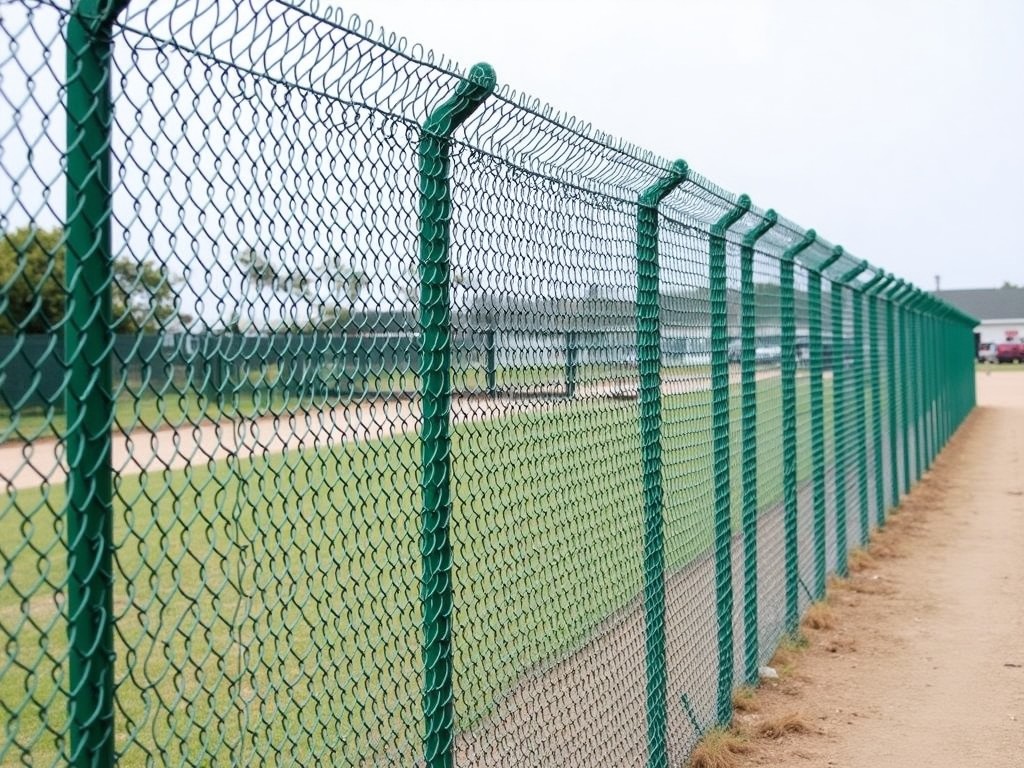
Buy Portable Chain Link Fence Panels Company
Panels consist of welded steel wire mesh formed into rigid rectangles that can be lifted and repositioned without dismantling the fabric. Standard heights range from 1.2 m to 2.4 m, widths from 2.0 m
Request a QuotePortable Chain Link Fence Panels – Overview
Panels consist of welded steel wire mesh formed into rigid rectangles that can be lifted and repositioned without dismantling the fabric. Standard heights range from 1.2 m to 2.4 m, widths from 2.0 m to 3.0 m, and the mesh is typically 50 mm × 50 mm with wire diameters between 3.0 mm and 4.5 mm.
Core Technical Specifications
Typical values are listed below; actual dimensions can be adjusted according to project requirements.
| Parameter | Typical Range | Notes |
|---|---|---|
| Panel Height | 1.2 m – 2.4 m | Custom heights available in 0.1 m increments |
| Panel Width | 2.0 m – 3.0 m | Standard widths suit pallet handling |
| Wire Diameter | 3.0 mm – 4.5 mm | Affects tensile strength and impact resistance |
| Mesh Opening | 50 mm × 50 mm (standard) | Alternative openings 25 mm, 75 mm on request |
| Coating Type | Hot‑dip galvanized (Zn) 55 µm avg. | Optional PVC or powder over‑coat |
| Wind Load Capacity | Up to 150 km/h (depends on height & anchorage) | Calculated per ASCE 7‑16 |
Material Options and Protective Coatings
Base wire is low‑carbon steel with a minimum tensile strength of 350 MPa; high‑tensile grades up to 550 MPa are available for higher impact environments.
Hot‑dip galvanizing applies a zinc alloy layer typically 45–65 µm thick, providing sacrificial protection in atmospheric exposure classified as C3 to C5 per ISO 12944.
For aesthetic or chemical‑resistance needs, a polyvinyl chloride (PVC) over‑coat of 0.8 mm thickness can be extruded onto the galvanized surface, offering additional barrier against chlorides.
Powder‑coated finishes in standard RAL colors are applied over a zinc‑phosphate primer, achieving a film thickness of 60–80 µm and UV stability for outdoor use.
Design Features for Portability
Each panel incorporates two forged steel lifting lugs rated for 2.5 kN vertical load, enabling safe handling with standard crane hooks or fork‑lift tines.
Optional fork‑pocket brackets can be bolted to the lower rail, providing 100 mm × 50 mm pockets that accommodate 50 mm fork spacing.
Quick‑connect clamps use a spring‑loaded pin system that locks adjacent panels in under 5 seconds, eliminating the need for tools or tension wires.
For weight‑sensitive applications, an aluminum alloy frame (6061‑T6) can replace the steel perimeter, reducing panel mass by approximately 35 % while maintaining the same mesh specifications.
Typical Applications
Construction sites use these panels as temporary perimeter protection because they can be erected and relocated in less than 15 minutes per 10 m line, reducing labor costs compared with welded wire fencing.
Event organizers select the system for crowd control and venue security; the modular nature allows rapid reconfiguration of entry/exit points without damaging the underlying surface.
In mining and quarry operations, the panels serve as splash barriers and equipment guards, where the hot‑dip coating resists abrasive dust and occasional impact from falling rock.
Utility companies deploy them around substations during maintenance outages; the non‑conductive PVC over‑coat option minimizes risk of accidental contact with live parts.
Customization Capabilities
Panel dimensions can be altered in 0.1 m increments for height and 0.2 m increments for width to match site‑specific layout constraints.
Wire diameter may be increased up to 5.0 mm for high‑impact zones, or reduced to 2.5 mm when visibility and lightweight handling are priorities.
Mesh opening can be changed to 25 mm×25 mm for small‑particle containment or to 75 mm×75 mm for improved wind flow.
Optional accessories include barbed‑top arms (45° angle, 300 mm length), privacy slats (PVC or aluminum), and integrated sign‑mounting plates.
Color choices extend beyond standard galvanized gray; RAL 1023 (traffic yellow) and RAL 6005 (moss green) are available upon request for high‑visibility or camouflage requirements.
Quality Control and Testing
Incoming wire is inspected for diameter tolerance (±0.05 mm) and tensile strength using a universal testing machine calibrated to ISO 6892‑1.
After welding, each panel undergoes a visual inspection for weld uniformity; any weld with porosity exceeding 0.2 mm is rejected.
Zinc coating thickness is measured via magnetic induction on five random points per panel; the average must meet 55 µm ±5 µm per ASTM A123.
Adhesion of PVC over‑coat is verified by a cross‑cut test (ASTM D3359) requiring a minimum rating of 4B.
Final dimensional check confirms that panel squareness (diagonal difference) is less than 5 mm over a 2.4 m span.
Packaging and Shipping
Panels are stacked on heat‑treated wooden pallets (1200 mm × 1000 mm) with a maximum stack height of 1.8 m to ensure stability during transit.
Edge protectors made from recycled HDPE are placed on all four corners to prevent coating damage from strap tension.
The entire pallet is wrapped in 80 µm stretch film and secured with polyester strapping rated for 2 kN break strength.
For ocean freight, pallets are placed inside 20‑foot containers with a maximum gross weight of 24 tonnes; internal dunnage bags prevent shifting.
Domestic truckload shipments typically accommodate 24 pallets per 53‑foot trailer, yielding a cost‑effective price per linear meter of fence.
Frequently Asked Questions
- Can panel dimensions be customized?
- Yes. Height and width can be adjusted in 0.1 m and 0.2 m increments respectively; custom lengths are available upon request.
- What information is required before quotation?
- Required details include desired panel height, width, wire diameter, mesh opening, coating type, quantity, and delivery location.
- What materials are available?
- Base wire: low‑carbon or high‑tensile steel. Coatings: hot‑dip galvanized (Zn), PVC over‑coat, powder‑coated RAL finishes.
- How is quality inspected?
- Each batch undergoes wire tensile testing, weld visual inspection, zinc thickness measurement (ASTM A123), coating adhesion (ASTM D3359), and final dimensional verification.
- What packaging methods are available?
- Standard pallet stacking with HDPE edge protectors, stretch film, and polyester strapping; custom crates or container‑specific loading can be arranged.
- How are export shipments protected?
- Pallets are placed inside ISO containers with dunnage bags, moisture‑absorbing desiccants, and optional vapor‑corrosion inhibitor (VCI) sheets.
- What is the typical production lead time?
- Lead time ranges from 10 to 20 working days depending on coating selection and order size; expedited options are available.
- How are samples arranged?
- Sample panels (up to 1 m²) can be shipped via express courier; charges are credited against a subsequent order.
Get a Quote
To receive a detailed quotation, please provide the project specifications listed above. The engineering team will review the requirements and return a formal offer within one business day.
Request a Quote


