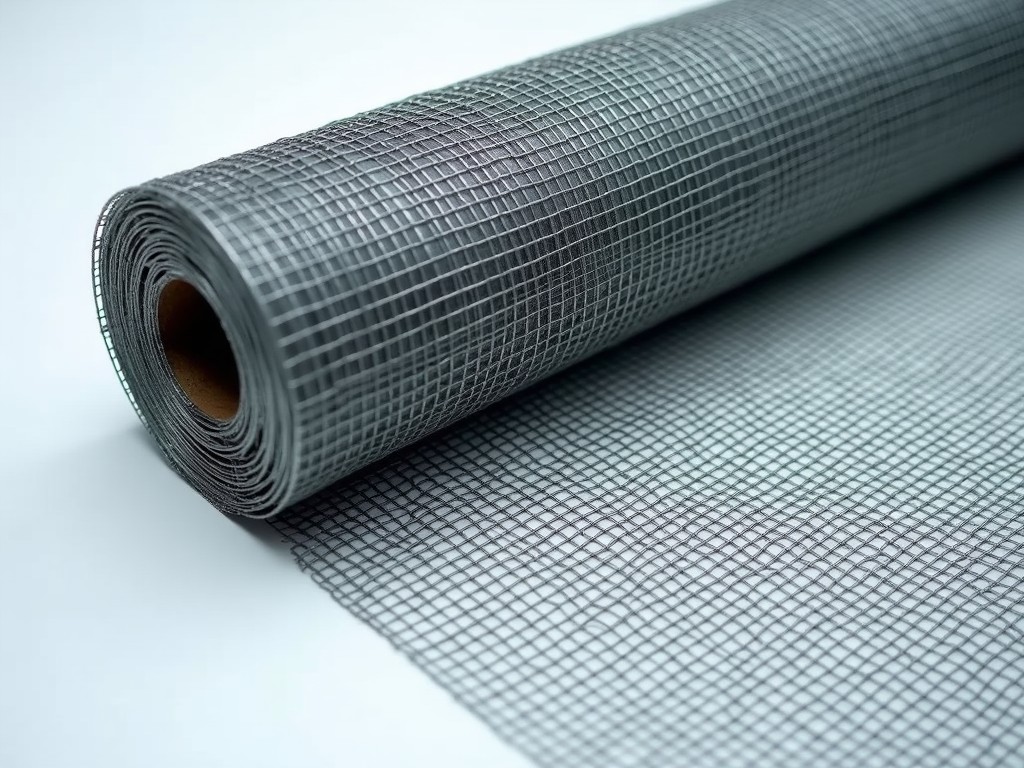
Best Price Galvanized Hardware Cloth Wire Mesh Roll Factory
Galvanized hardware cloth, also known as welded wire mesh, is a versatile barrier material used across construction, agriculture, and industrial sectors. The zinc coating provides corrosion
Request a QuoteBest Price Galvanized Hardware Cloth Wire Mesh Roll Factory
Galvanized hardware cloth, also known as welded wire mesh, is a versatile barrier material used across construction, agriculture, and industrial sectors. The zinc coating provides corrosion resistance that extends service life in outdoor and humid environments.
Manufacturers produce the mesh in roll form to facilitate easy handling, cutting, and installation. Roll dimensions, wire gauge, and opening size are selected based on the specific load, exposure, and filtration requirements of the end‑use application.
Product Overview
The hardware cloth consists of low‑carbon steel wires that are welded at each intersection to form a uniform grid. After welding, the entire sheet passes through a hot‑dip galvanizing line where it is immersed in molten zinc at approximately 450 °C, creating a metallurgical bond that protects the steel substrate.
Typical roll widths range from 0.6 m to 2.4 m, with lengths available up to 50 m per roll depending on the wire diameter and opening size. The mesh can be supplied with either a square or rectangular opening pattern, and the wire diameter is selected to meet tensile strength and flexibility criteria.
Material Composition & Galvanization Process
The base wire is typically ASTM A1008 low‑carbon steel, containing less than 0.10 % carbon to ensure good weldability and ductility. Trace elements such as manganese and silicon are kept within limits that do not adversely affect the zinc coating adhesion.
During hot‑dip galvanizing, the steel surface undergoes a series of chemical reactions: cleaning, fluxing, immersion in zinc bath, and cooling. The resulting coating consists of an outer layer of pure zinc, a zinc‑iron alloy layer, and a thin inner layer of steel, providing barrier and sacrificial protection.
Coating thickness is measured in grams per square meter (gsm). Standard hardware cloth rolls are offered with coating weights of 180 gsm, 270 gsm, or 360 gsm, which correspond approximately to 13 µm, 20 µm, and 27 µm of zinc thickness respectively.
Standard Specifications
| Parameter | Typical Value | Remarks |
|---|---|---|
| Wire Diameter | 0.5 mm – 2.0 mm | Selected based on load requirements |
| Opening Size (Square) | 6 mm – 50 mm | Custom apertures available |
| Roll Width | 0.6 m – 2.4 m | Standard widths; wider rolls slit to size |
| Roll Length | Up to 50 m (depends on diameter) | Longer lengths on request |
| Coating Weight | 180 gsm – 360 gsm | Corresponds to 13‑27 µm Zn thickness |
| Tensile Strength (Wire) | ≥ 350 MPa | Measured per ASTM A370 |
Typical Applications
- Reinforcement of concrete slabs and precast panels where crack control is required.
- Insect and rodent barriers for agricultural buildings, greenhouses, and storage facilities.
- Ventilation screens for HVAC equipment, preventing debris ingress while maintaining airflow.
- Safety guarding around machinery, providing visibility and containment.
- Filter media in liquid‑solid separation processes, such as wastewater pretreatment.
Quality Assurance & Testing
Each production lot undergoes visual inspection for weld uniformity and coating continuity. Automated optical systems detect missing welds or zinc skips that exceed 0.5 mm in length.
Coating thickness is verified using magnetic inductivity probes on a minimum of five random points per roll, with results recorded against the target gsm value. Acceptance criteria follow ISO 1461 for hot‑dip galvanized coatings.
Mechanical properties are checked by tensile testing of wire samples taken from the roll edge. Elongation and yield strength must meet the specified minimums before the lot is released for shipment.
Customization Options
- Alternative wire materials: stainless steel (AISI 304/316) for corrosive environments.
- Custom opening patterns: rectangular, hexagonal, or staggered layouts.
- Edge treatments: selvedge, rolled edge, or PVC‑coated borders for added safety.
- Roll length and width tailored to specific handling equipment or installation constraints.
- Special coating weights up to 600 gsm for extended service life in marine settings.
Packaging & Logistics
Rolls are wound on a sturdy cardboard core and wrapped in polyethylene film to protect against moisture during transit. The outer layer consists of a corrugated cardboard sleeve that provides impact resistance.
Standard pallet configuration holds up to 20 rolls, depending on roll diameter and weight. Each pallet is secured with stretch wrap and steel straps, and labeled with product code, dimensions, coating weight, and batch number for traceability.
For export shipments, the packaging complies with ISPM‑15 regulations when wooden pallets are used, and fumigation certificates are available upon request.



