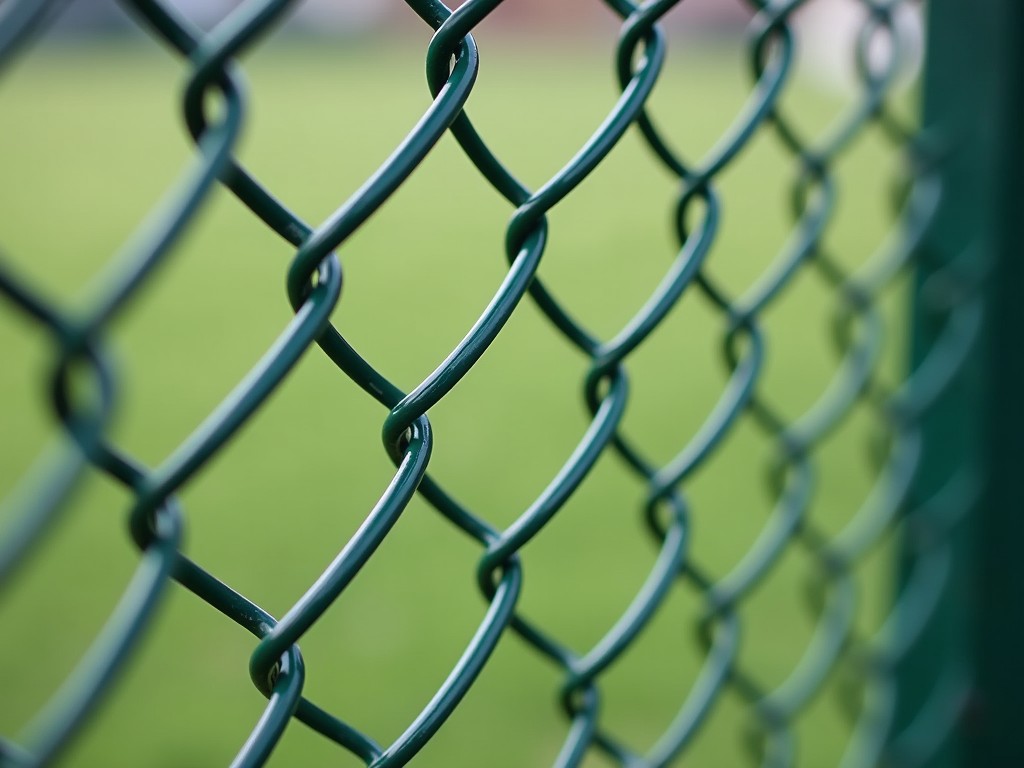
Best Price Diamond Chain Link Fence Supplier
Diamond chain link fence consists of steel wire woven into a uniform diamond pattern, providing a flexible yet strong barrier. The wire is typically galvanized or coated to resist corrosion, and the
Request a QuoteBest Price Diamond Chain Link Fence Supplier
Diamond chain link fence consists of steel wire woven into a uniform diamond pattern, providing a flexible yet strong barrier. The wire is typically galvanized or coated to resist corrosion, and the mesh opening can be adjusted to meet specific security or containment requirements. Understanding the wire gauge, coating weight, and post specifications helps buyers evaluate long‑term performance and total cost of ownership.
Product Overview
The fence fabric is formed by interlocking steel wires in a continuous zig‑zag (helical) pattern that creates the characteristic diamond openings. Standard wire diameters range from 2.0 mm to 4.0 mm, with larger diameters used for higher impact resistance. The nominal opening size (distance between parallel wires) is commonly 50 mm, 75 mm, or 100 mm, influencing both visibility and climb resistance.
Material Specifications
| Parameter | Typical Range | Notes |
|---|---|---|
| Wire diameter | 2.0 mm – 4.0 mm | Selected based on load requirements |
| Tensile strength (steel) | 350 MPa – 550 MPa | Cold‑drawn carbon steel |
| Coating type | Hot‑dip galvanized, PVC‑coated, or powder‑coated | Coating weight varies 60–275 g/m² Zn |
| Mesh opening (nominal) | 50 mm, 75 mm, 100 mm | Affects visibility and anti‑climb |
| Standard roll height | 0.9 m – 3.0 m | Custom heights available on request |
Manufacturing Process
First, high‑carbon steel wire is drawn to the specified diameter and cleaned to remove oxides. The wire is then fed into a knitting machine where it is formed into a helical spiral; adjacent spirals are interlinked to produce the diamond mesh. After weaving, the fabric passes through a hot‑dip galvanizing line (or coating line) where a uniform zinc layer is applied. Finally, the fabric is rolled, inspected, and cut to length.
Customization Options
- Wire gauge: 2.0 mm, 2.5 mm, 3.0 mm, 3.5 mm, 4.0 mm
- Mesh opening: 50 mm, 75 mm, 100 mm (custom sizes available)
- Coating: hot‑dip galvanized (Z60‑Z275), PVC‑coated (various colours), powder‑coated
- Height: 0.9 m to 3.0 m; custom lengths per roll
- Selvage options: knuckle‑knuckle, twist‑twist, barbed‑top
- Posts and accessories: galvanized steel or aluminum, with base plates, tension bands, and gate hardware
Typical Applications
Security perimeters benefit from the fence’s high tensile strength and low climb resistance when a small mesh opening is selected. Sports facilities use larger openings for better visibility while still containing balls and equipment. Agricultural enclosures rely on the corrosion‑resistant coating to withstand exposure to fertilizers and animal waste. Industrial sites choose the product for its ability to be quickly installed on uneven terrain and its low maintenance over a 20‑year service life.
Quality Control & Testing
Each roll undergoes dimensional verification: wire diameter, opening size, and roll width are measured against tolerances (±0.1 mm for wire, ±2 mm for opening). Coating adhesion is tested by a pull‑off method according to ASTM D4541, ensuring a minimum adhesion strength of 2.5 MPa. Random samples are subjected to a tensile test on the wire to confirm that the actual tensile strength meets the specified grade. Visual inspection checks for uniform coating, absence of broken wires, and proper selvage formation.
Packaging & Shipping
Finished rolls are wrapped in UV‑stabilized polyethylene film to protect the coating during transit. Rolls are then placed on wooden pallets, secured with steel straps, and labeled with product code, dimensions, and weight. For export, pallets are fitted with corner protectors and stretch‑wrapped to meet ISPM‑15 standards. Standard pallet height is 1.1 m, allowing double‑stacking in most containers.
Pricing & Value
Unit price is primarily driven by wire diameter, coating weight, and roll length. A 3.0 mm galvanized wire with Z150 coating typically costs less per linear meter than a 4.0 mm PVC‑coated version due to lower material and processing costs. Because the fence requires minimal maintenance and offers a service life exceeding two decades in most environments, the total cost of ownership remains competitive compared with alternatives such as welded panel systems or concrete barriers.
Frequently Asked Questions
Can the mesh opening be customized?
Yes. While 50 mm, 75 mm, and 100 mm are standard, non‑standard openings can be produced by adjusting the knitting machine pitch, subject to minimum order quantities.
What information is needed for a quotation?
Required details include desired height, wire gauge, mesh opening, coating type, roll length, and any accessories such as posts, tension bands, or gates. Providing a site plan or sketch helps ensure accurate post spacing.
How is the coating weight verified?
Coating weight is measured using the gravimetric method per ASTM A90/A90M, with results reported in grams per square meter of zinc. Test certificates are available upon request.
Contact for Quote
To obtain a detailed quotation, share your project specifications via the contact form. Our technical team will review the requirements, confirm available options, and return a formal quote with lead times and payment terms.
Request Quote


