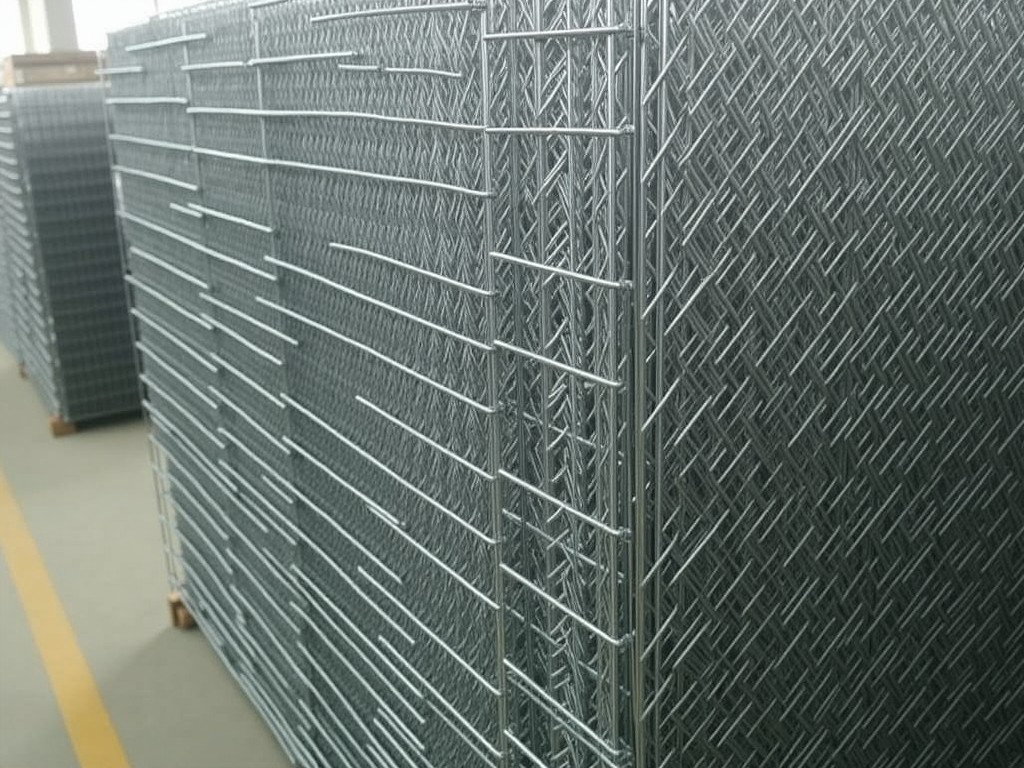
Wholesale Welded Wire Mesh Galvanized Rolls Factory
The product consists of low‑carbon steel wires welded at each intersection to form a uniform grid, then coated with zinc to protect against corrosion. Wire diameters typically range from 1.0 mm to
Request a QuoteWholesale Welded Wire Mesh Galvanized Rolls
The product consists of low‑carbon steel wires welded at each intersection to form a uniform grid, then coated with zinc to protect against corrosion. Wire diameters typically range from 1.0 mm to 4.0 mm, while mesh openings vary from 12 mm × 12 mm to 100 mm × 100 mm depending on the intended load. Rolls are supplied in standard widths of 0.5 m to 2.0 m and lengths up to 50 m, with a zinc coating weight of 120 g/m² to 275 g/m² measured according to ASTM A123.
Material and Specifications
The base wire is manufactured from cold‑drawn steel with a tensile strength of 350 MPa to 550 MPa, ensuring sufficient rigidity for structural applications. After welding, the mesh undergoes hot‑dip galvanization, which creates a metallurgical bond between the zinc layer and the steel surface, providing a barrier that resists rust in both indoor and outdoor environments. The coating thickness is verified by magnetic induction gauges, with typical values falling within the range specified for each product grade.
| Parameter | Typical Value | Customizable Range |
|---|---|---|
| Wire Diameter | 2.0 mm | 1.0 mm – 4.0 mm |
| Mesh Opening | 50 mm × 50 mm | 12 mm × 12 mm – 100 mm × 100 mm |
| Roll Width | 1.0 m | 0.5 m – 2.0 m |
| Roll Length | 30 m | 10 m – 50 m |
| Zinc Coating | 180 g/m² | 120 g/m² – 275 g/m² |
| Tensile Strength | 450 MPa | 350 MPa – 550 MPa |
Manufacturing Process
Wire is first drawn to the target diameter and straightened before being fed into a resistance welding machine that fuses each crossing point with a precise electrical pulse. The welded sheet is then cut to the desired width and coiled. Subsequent hot‑dip galvanization immerses the coil in a molten zinc bath at approximately 450 °C, forming a uniform alloy layer. After cooling, the coil is inspected for coating continuity before being re‑rolled to final length.
Applications
In concrete construction, the mesh serves as secondary reinforcement, distributing tensile stresses and reducing crack formation in slabs, walls, and precast elements. Its open grid allows concrete to flow freely while maintaining structural integrity, which improves load distribution compared to solid bar reinforcement. The corrosion‑resistant coating extends service life in environments exposed to moisture, chemicals, or alternating wet‑dry cycles.
- Concrete slab and pavement reinforcement
- Precast panel and pipe manufacturing
- Security fencing and perimeter barriers
- Animal enclosure and poultry fencing
- Gabion baskets and retaining wall fill
- Industrial shelving and racking substrates
Quality Control
Dimensional accuracy is verified using laser scanners that measure wire diameter, pitch, and roll width against tolerance bands of ±0.1 mm. Coating adhesion is assessed by the ASTM D4541 pull‑off test, with a minimum acceptable value of 2.5 MPa. Tensile samples taken from the welded joints are tested to ensure the weld strength meets or exceeds 80 % of the base wire strength. Visual inspection under 10× magnification identifies any missed welds or coating defects before packaging.
Customization Options
Customers may specify alternative wire diameters to adjust stiffness or weight per square meter. Mesh opening can be altered to suit specific aggregate sizes in concrete or to control ventilation in fencing applications. Roll length and width are tailored to minimize handling time on‑site, while zinc coating weight can be increased for marine or industrial environments requiring higher corrosion resistance. All custom parameters are subject to production feasibility checks and are quoted based on material usage and tooling adjustments.
Packaging and Shipping
Finished rolls are wrapped in a polyethylene film to protect the zinc layer from abrasion during transit. Each roll is placed on a wooden pallet, secured with polypropylene straps, and labeled with product code, dimensions, and weight. Standard container loads accommodate up to 20 pallets per 20‑foot unit, with pallet dimensions optimized for forklift handling. For bulk orders, intermediate bulk containers (IBCs) can be used to reduce handling steps.
Frequently Asked Questions
Can dimensions be customized? Yes, wire diameter, mesh opening, roll width, and length can be adjusted according to project specifications.
What information is required before quotation? Required details include wire diameter, mesh size, desired roll dimensions, coating weight, and order quantity.
How is quality inspected? Inspection includes dimensional verification, coating adhesion testing, tensile strength sampling, and visual weld inspection.
What packaging methods are available? Rolls are film‑wrapped, palletized, and strapped; alternative packaging such as IBCs or crates can be arranged upon request.
What is the typical production lead time? Lead time ranges from 10 to 25 working days depending on order size and customization complexity.
Request a Quote
To obtain a formal quotation, please provide your technical requirements via the contact form. Our engineering team will review the specifications, confirm feasibility, and return a detailed price and lead time within two business days.
Send Inquiry


