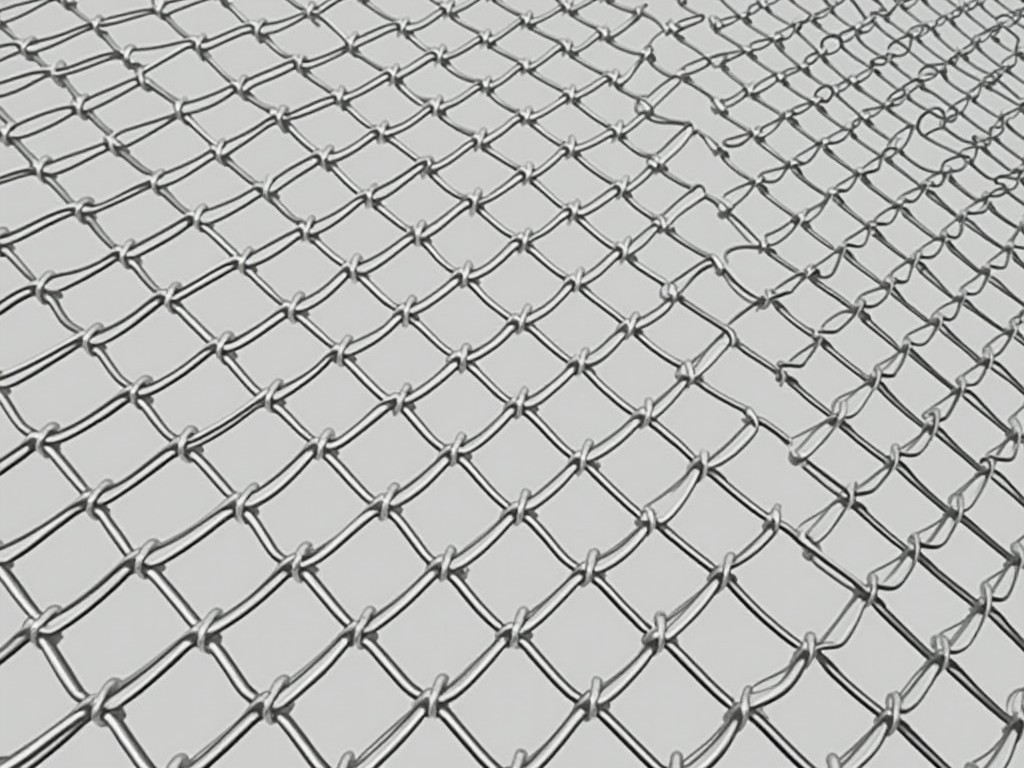
Wholesale Stainless Steel Welded Mesh Panels Exporter
Stainless steel welded mesh panels are fabricated by resistance welding intersecting wires at each crossover, creating a rigid grid with consistent aperture dimensions. The process yields a product
Request a QuoteWholesale Stainless Steel Welded Mesh Panels Exporter
Stainless steel welded mesh panels are fabricated by resistance welding intersecting wires at each crossover, creating a rigid grid with consistent aperture dimensions. The process yields a product where the weld points provide shear strength comparable to the parent wire, allowing the panel to carry loads without deformation.
Material Options and Mechanical Properties
Two primary austenitic grades are used: 304 (18% Cr, 8% Ni) for general indoor and mildly corrosive environments, and 316 (16% Cr, 10% Ni, 2% Mo) for marine, chemical, or high‑chloride settings. Both grades retain an austenitic structure after welding, providing ductility and resistance to sensitization when proper welding parameters are applied.
- Wire diameter range: 0.8 mm to 4.0 mm, selected based on required tensile load and deflection limits.
- Aperture (opening) sizes: from 6 mm square up to 100 mm square, customizable in 2 mm increments.
- Typical tensile strength of the wire: 500–750 MPa for 304, 550–800 MPa for 316 (cold‑drawn condition).
Panel Dimensions and Tolerances
Standard panel widths are 1000 mm, 1200 mm, and 1500 mm; lengths can be supplied up to 6000 mm in a single piece to minimize field splices. Custom lengths are achievable by butt‑welding additional segments with overlapping weld zones, maintaining the same aperture pattern across the joint.
Dimensional tolerances follow ISO 9044: overall width ±3 mm, length ±5 mm, aperture location ±0.5 mm relative to nominal grid, and wire diameter ±0.05 mm.
Typical Specification Table
| Parameter | Range / Typical Value | Notes |
|---|---|---|
| Wire Diameter | 0.8 mm – 4.0 mm | Selected per load requirement |
| Aperture Size | 6 mm – 100 mm square | Custom increments available |
| Panel Width | 1000 mm, 1200 mm, 1500 mm (custom) | Length up to 6000 mm seamless |
| Material Grade | AISI 304, 316L | Other grades on request |
| Surface Finish | Mill finish, brushed, passivated | Passivation improves corrosion resistance |
| Weight (approx.) | 2.5 kg/m² – 18 kg/m² | Depends on wire diameter & aperture |
Manufacturing Considerations
Resistance welding parameters—current, weld time, and electrode pressure—are calibrated for each wire diameter to achieve a nugget diameter of approximately 0.5 × wire diameter. This ensures the weld joint retains at least 90 % of the parent wire’s tensile strength while minimizing heat‑affected zone discoloration.
Post‑weld, panels may undergo optional pickling and passivation to remove oxides and restore the chromium‑rich passive layer, especially for 316L in chloride environments. Visual inspection follows ASTM E165 for weld uniformity, and dimensional verification uses calibrated calipers and laser scanners.
Applications – Why the Panel Fits Specific Industries
In food processing facilities, the smooth, non‑porous surface of passivated 304 mesh prevents bacterial harborage and allows aggressive cleaning with caustic solutions, meeting FDA 21 CFR 110. The open area facilitates airflow and drainage, reducing moisture accumulation on equipment platforms.
For architectural façades, the mesh provides a predictable shade coefficient; selecting a 20 mm aperture with 1.6 mm wire yields approximately 45 % open area, which can be modeled in daylight simulations to meet interior lighting targets while maintaining a lightweight cladding system (< 12 kg/m²).
In mining screening, the high tensile strength of 3.2 mm 316L wire resists abrasion from ore particles, and the welded joints prevent progressive wire breakage under cyclic impact, extending screen life compared to woven alternatives.
Customization Logic
Customers specify three core variables: wire diameter, aperture size, and panel dimensions. From these, the manufacturer calculates the required weld current using the formula I = k × d² (where d is wire diameter in mm and k is a material‑dependent constant). Adjustments are made for electrode wear and ambient temperature to keep nugget size within tolerance.
Additional options include edge framing (C‑channel or angle), pre‑drilled mounting holes, and secondary coatings such as PVC or powder paint for color coding or extra chemical resistance.
Quality Control Philosophy
Each production lot undergoes a three‑stage check: (1) incoming wire certification (mill test reports for chemistry and tensile), (2) in‑process monitoring of weld nugget diameter via optical microscopy on a sample every 30 m of weld, and (3) final audit of panel flatness (max deviation 2 mm over 1 m) and aperture uniformity (coefficient of variation < 3 %). Records are retained for traceability per ISO 9001.
Packaging and Export Protection
Panels are stacked flat on wooden pallets, separated by corrugated cardboard sheets, and secured with steel strapping. For overseas shipments, a heat‑shrink polyethylene film wraps the pallet, followed by a plywood crate that meets ISPM‑15 standards. This combination limits flexing and prevents surface abrasion during handling.
Request a Quote
To receive a formal quotation, provide the required wire diameter, aperture size, panel width and length, material grade, and any secondary treatments. Including the destination port allows us to calculate accurate freight and insurance estimates.



