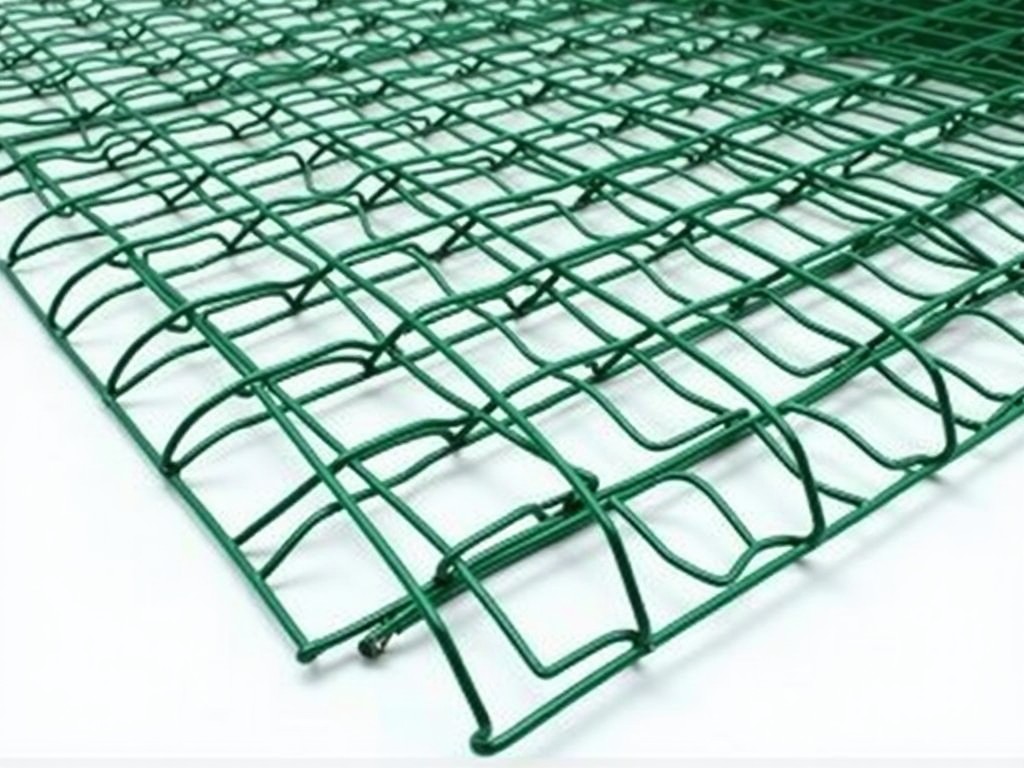
Wholesale Pvc Coated Welded Wire Mesh Panels
These panels consist of low‑carbon steel wires welded at each intersection to form a uniform grid, then coated with a polyvinyl chloride (PVC) layer for corrosion resistance. The coating thickness
Request a QuoteWholesale PVC Coated Welded Wire Mesh Panels
These panels consist of low‑carbon steel wires welded at each intersection to form a uniform grid, then coated with a polyvinyl chloride (PVC) layer for corrosion resistance. The coating thickness typically ranges from 0.25 mm to 0.40 mm, providing a barrier against moisture, chemicals, and UV exposure. The result is a rigid yet flexible product suitable for demanding environments where both mechanical strength and long‑term durability are required.
Product Overview
PVC coated welded wire mesh panels are supplied in standard roll widths of 0.9 m, 1.2 m, and 1.5 m, with lengths up to 30 m per roll for easy handling. Aperture sizes vary from 12 mm × 12 mm to 50 mm × 50 mm, allowing selection based on load‑bearing needs and visual openness. Wire diameters commonly fall between 2.0 mm and 4.0 mm, influencing tensile strength and panel weight, which typically ranges from 2.5 kg/m² to 6.0 kg/m² depending on specification.
Technical Specifications
| Parameter | Typical Value | Unit | Notes |
|---|---|---|---|
| Wire Diameter | 2.0 – 4.0 | mm | Customizable per project |
| Aperture Size | 12 × 12 – 50 × 50 | mm | Square or rectangular options |
| PVC Coating Thickness | 0.25 – 0.40 | mm | UV‑stabilized formulation |
| Tensile Strength of Wire | 350 – 550 | MPa | Based on low‑carbon steel grade |
| Weight per Area | 2.5 – 6.0 | kg/m² | Depends on wire diameter and aperture |
| Salt Spray Resistance | ≥ 500 | hours | ASTM B117 equivalent |
Material Composition
The core wire is produced from low‑carbon steel with a carbon content typically below 0.12 %, ensuring good weldability and ductility. After welding, the mesh passes through a hot‑dip or extrusion coating line where PVC resin, plasticizers, stabilizers, and pigments are applied uniformly. The coating adheres to the steel surface through a combination of mechanical interlock and chemical bonding, delivering a continuous protective layer that resists cracking under flex.
Manufacturing Process
Wire is first drawn to the target diameter, then straightened and cut to length before being fed into an automatic welding machine. Resistance spot welding creates strong joints at each intersection without compromising the zinc‑free steel substrate. The welded mesh is subsequently cleaned, pre‑heated, and passed through a PVC coating extruder where the molten polymer is applied at controlled thickness. Final cooling sets the coating, after which the product is inspected for uniformity and cut to specified roll lengths.
Applications
- In agriculture, the panels serve as livestock fencing where the PVC coating prevents rust caused by exposure to manure and moisture, extending service life beyond untreated steel.
- Construction sites use the mesh as concrete reinforcement for slab-on-grade applications; the coating reduces chloride ingress, helping to meet durability specifications for reinforced concrete.
- Transport infrastructure projects employ the panels as rockfall protection barriers; the flexible yet strong grid absorbs impact energy while the coating withstands prolonged exposure to road‑side de‑icing salts.
- Industrial facilities install the mesh as machine guarding or partitioning; the smooth PVC surface minimizes injury risk and allows easy cleaning in hygienic environments.
- Landscaping and garden centers utilize the product for trellises and plant supports where the coating resists fading and provides a consistent aesthetic over multiple growing seasons.
Customization Options
Clients can specify wire diameter, aperture geometry, roll width, and length to match structural calculations or installation constraints. PVC color can be selected from standard shades such as green, gray, or black, or custom‑matched upon request for branding or camouflage needs. Additional treatments, including anti‑static additives or flame‑retardant modifiers, are available for specialized environments like mines or electrical substations.
Quality Control & Testing
Each production lot undergoes dimensional verification using laser gauges to ensure aperture tolerance within ±2 mm. Coating thickness is measured with magnetic induction probes at multiple points across the roll. Adhesion strength is assessed via cross‑hatch tape tests according to ASTM D3359, targeting a rating of 4B or higher. Mechanical properties of the base wire are validated through tensile testing on sampled strands, confirming compliance with the specified MPa range.
Packaging and Shipping
Panels are rolled onto sturdy cardboard cores and wrapped in polyethylene film to protect against moisture during transit. Rolls are secured with strapping bands and placed on pallets rated for a maximum load of 1 tonne. For export shipments, pallets are fumigated and fitted with corner protectors to meet ISPM‑15 standards. Documentation includes material test reports, coating thickness certificates, and origin declarations upon request.
Frequently Asked Questions
- Can dimensions be customized?
- Yes, wire diameter, aperture size, roll width, and length can be adjusted to suit project specifications; consult technical sales for feasibility.
- What information is required before quotation?
- Provide intended application, required tensile load, environmental conditions (e.g., salt exposure, UV), and any color or additive preferences.
- How is quality inspected?
- Inspection includes dimensional checks, coating thickness measurement, adhesion testing, and wire tensile validation per international standards.
- What packaging methods are available?
- Standard packaging uses polyethylene‑wrapped rolls on pallets; custom crating or container loading can be arranged for oversized or delicate orders.
- What is the typical production lead time?
- Lead time ranges from 2 to 4 weeks depending on order size and customization complexity; exact schedules are confirmed at order acceptance.
Request a Quote
To discuss your specific requirements and receive a detailed quotation, please contact our sales team.



