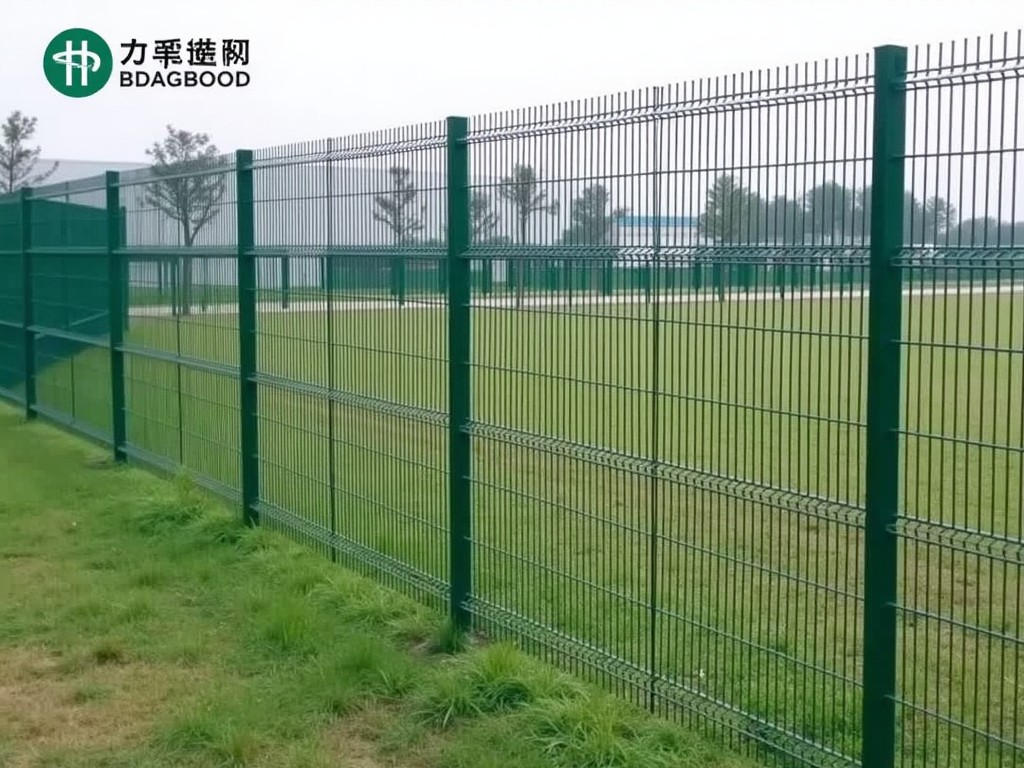
Wholesale High Quality Welded Wire Mesh Fence Factory
Welded wire mesh fence is produced by intersecting longitudinal and transverse wires at right angles and fusing them through resistance welding. Supplying this product wholesale allows distributors
Request a QuoteWholesale High Quality Welded Wire Mesh Fence Factory
Welded wire mesh fence is produced by intersecting longitudinal and transverse wires at right angles and fusing them through resistance welding. Supplying this product wholesale allows distributors and OEMs to receive consistent roll dimensions, coating uniformity, and weld integrity across large volume orders.
Material Composition and Coating Options
Base wire is typically low‑carbon steel (C ≤ 0.12 %) with a minimum yield strength of 350 MPa. For corrosion resistance, manufacturers offer hot‑dip galvanized coatings ranging from 60 g/m² to 275 g/m² zinc, or a PVC overcoat with a thickness of 0.3 mm to 0.5 mm. Alternative finishes include electro‑galvanized (10‑15 g/m²) or a powder‑coated layer for specific color requirements.
Wire Gauge and Mesh Opening Specifications
Wire diameters are available from 1.2 mm up to 5.0 mm, selected according to load expectations. Mesh openings range from 12 mm × 12 mm for small‑part containment to 100 mm × 100 mm for perimeter barriers. The tensile strength of the welded joint typically exceeds 90 % of the parent wire strength, verified through shear testing.
| Parameter | Typical Range |
|---|---|
| Wire Diameter | 1.2 mm – 5.0 mm |
| Mesh Opening | 12 mm – 100 mm (square) |
| Zinc Coating Weight | 60 g/m² – 275 g/m² (hot‑dip) |
| PVC Overcoat Thickness | 0.3 mm – 0.5 mm |
| Standard Roll Length | 10 m – 50 m (customizable) |
Manufacturing Process Overview
The process begins with wire drawing to the target diameter, followed by straightening and feeding into a resistance welder where cross wires are fused at 1500 A–2500 A depending on gauge. After welding, the mesh passes through a cleaning station, then enters either a hot‑dip galvanizing bath (≈450 °C) or a PVC extrusion line. Final steps include slitting to roll width, edge treatment (knuckle or twist), and winding onto cores.
Quality Assurance and Testing
Each production lot undergoes dimensional inspection (±2 mm on roll width, ±1 mm on opening size). Weld shear strength is measured using a universal testing machine, with acceptance criteria set at ≥315 MPa for 3 mm wire. Coating adhesion is evaluated by the ASTM D4541 pull‑off test, requiring ≥5 MPa for PVC and ≥7 MPa for zinc. Visual inspection checks for missing welds, protrusions, or coating holidays.
Typical Applications in Industrial Settings
In manufacturing facilities, the fence provides machine guarding that meets ISO 14120 impact resistance when constructed with 3 mm wire and 50 mm openings. For livestock enclosures, a 2 mm wire with 25 mm openings prevents hoof entrapment while resisting corrosion from urine and feed acids. Perimeter security installations often specify 4 mm wire, 75 mm openings, and a 200 g/m² zinc coating to achieve a service life exceeding 15 years in coastal environments.
- Material handling area partitions
- Warehouse racking protection
- Agricultural livestock fencing
- Temporary construction site barriers
- Noise attenuation panels when combined with absorbent backing
Customization Parameters
Buyers can specify wire diameter, opening size, roll width (typically 0.5 m–2.5 m), coating type, and edge finish. Additional options include pre‑punched mounting holes, integrated anti‑climb rollers, or powder‑coated colors matched to corporate safety standards. Length adjustments are accommodated by splicing rolls with stainless steel clips or by delivering continuous lengths on wooden spools.
Packaging and Logistics
Rolls are wrapped in polyethylene film to prevent moisture ingress, then placed on pallets with corner protectors. Each pallet receives a load‑securing strap and is labeled with product code, wire gauge, coating weight, and total linear meters. For export, pallets are fitted with heat‑treated wooden skids and sealed in waterproof crates, complying with ISPM 15 regulations.
Frequently Asked Questions
- Can dimensions be customized? Yes, wire diameter, opening size, roll width, and length are adjusted per project specifications.
- What information is required before quotation? Provide required wire gauge, opening dimensions, coating preference, roll width, and total linear meters.
- What materials are available? Low‑carbon steel with hot‑dip galvanized, PVC, electro‑galvanized, or powder‑coated finishes.
- How is quality inspected? Dimensional checks, weld shear testing, coating adhesion, and visual inspection per lot.
- What packaging methods are available? Polyethylene‑wrapped rolls on pallets, with optional wooden crates for overseas shipments.
- How are export shipments protected? Heat‑treated skids, waterproof covering, and ISPM 15‑compliant packaging.
- What is the typical production lead time? Lead time ranges from 10 to 25 working days depending on order size and coating complexity.
- How are samples arranged? Sample rolls (up to 5 m) can be dispatched upon receipt of a formal request; freight is collect or prepaid as agreed.
For technical data sheets, coating certificates, or to discuss a specific project, use the contact form below.
Request Quote & Technical Consultation


