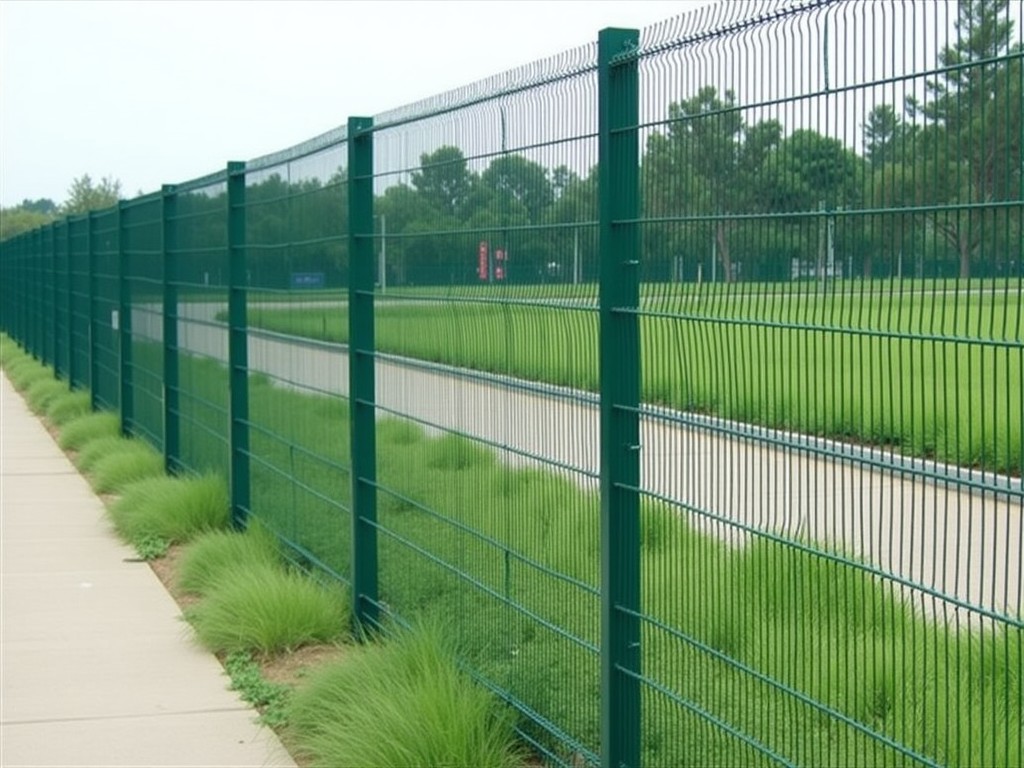
Oem Pvc Coated Galvanized Welded Wire Mesh Fence Manufacturer
This product consists of low‑carbon steel wires that are first hot‑dip galvanized to a minimum zinc coating of 55 g/m², then welded at each intersection to form a uniform mesh, and finally extruded
Request a QuoteOEM PVC Coated Galvanized Welded Wire Mesh Fence
This product consists of low‑carbon steel wires that are first hot‑dip galvanized to a minimum zinc coating of 55 g/m², then welded at each intersection to form a uniform mesh, and finally extruded with a PVC layer of 0.5 mm thickness on both sides. The combination provides corrosion resistance from the zinc barrier and mechanical protection from the polymer coating, suitable for outdoor exposure in temperate and humid climates.
Material and Construction Details
The base wire is typically 1.8 mm to 3.0 mm diameter, selected according to required tensile strength. After welding, the mesh passes through a PVC extrusion line where the coating is applied under controlled temperature to ensure uniform adhesion, measured by a peel strength of at least 12 N/mm. The weld points receive the same PVC thickness as the wires, eliminating exposed steel at joints.
Typical Specifications
| Property | Value | Unit |
|---|---|---|
| Wire Diameter | 1.8 – 3.0 | mm |
| Mesh Aperture | 25 × 25 – 100 × 100 | mm |
| Roll Width | 0.5 – 2.5 | m |
| PVC Coating Thickness | 0.5 (each side) | mm |
| Zinc Coating | ≥55 | g/m² |
Customization Options
- Wire diameter from 1.6 mm to 4.0 mm for varying load requirements
- Mesh aperture adjustable between 12 mm and 150 mm to control visibility and passage
- Roll width customizable up to 3.0 m to reduce seams in long installations
- PVC color choices include green, gray, black, and white for aesthetic or camouflage needs
- Length per roll can be set from 10 m to 50 m based on handling constraints
Typical Applications
The welded mesh forms a rigid barrier that resists deformation under impact, making it appropriate for livestock containment where animal pressure can reach 2 kN/m². The PVC coating prevents zinc leaching, which is important in agricultural settings where feed and water contact the fence. In perimeter security, the coating adds a visual deterrent and reduces glare, while the underlying galvanized core maintains structural integrity after prolonged UV exposure.
- Livestock enclosures – high tensile strength withstands pushing and rubbing
- Crop protection – prevents wildlife intrusion without contaminating soil
- Industrial perimeter – resists corrosion in chemical‑laden atmospheres
- Sports facilities – provides uniform rebound characteristics for balls
- Temporary site security – easy to install and remove with minimal ground preparation
Quality Control Philosophy
Each batch undergoes tensile testing of randomly selected wires to verify a minimum yield strength of 350 MPa. Coating adhesion is assessed by cross‑hatch peel tests according to ASTM D3359, accepting only results of 4B or better. Weld integrity is checked via micro‑section examination to ensure full fusion and absence of porosity exceeding 0.02 mm². Dimensional tolerances are monitored on a laser gauge, keeping aperture variation within ±2 mm.
Packaging and Shipping
Rolls are wound on a cardboard core with an inner diameter of 76 mm, then wrapped in UV‑stabilized stretch film to prevent abrasion during transit. A corner protector of recycled polymer is applied to each roll end to avoid edge damage. For export, rolls are stacked on heat‑treated pallets, secured with polyester strapping, and covered with a waterproof tarp that meets ISPM 15 standards. Typical pallet load capacity is 1 200 kg, allowing efficient container utilization.
To discuss specific project requirements, request a quotation, or obtain sample rolls, please contact our technical sales team.
Request Quote


