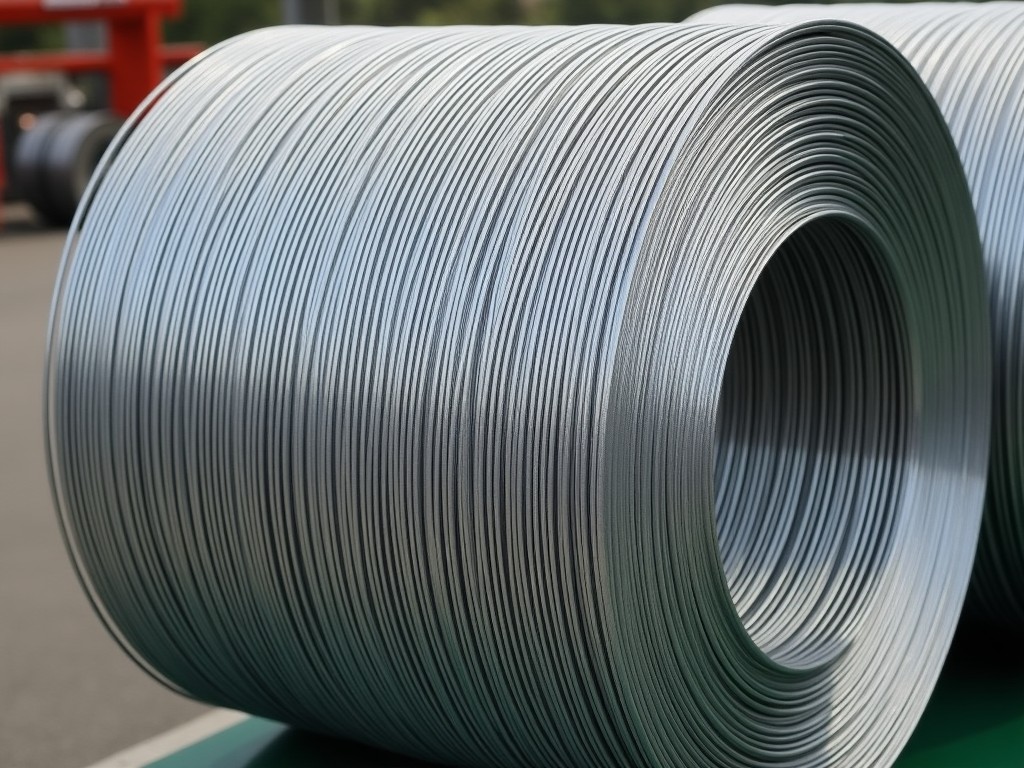
Low Price Galvanized Welded Iron Wire Mesh Roll Factory
This product consists of low‑carbon steel wires welded at each intersection and coated with a protective zinc layer. The mesh is supplied in roll form, enabling continuous installation for fencing,
Request a QuoteLow Price Galvanized Welded Iron Wire Mesh Roll
This product consists of low‑carbon steel wires welded at each intersection and coated with a protective zinc layer. The mesh is supplied in roll form, enabling continuous installation for fencing, concrete reinforcement, and protective barriers. Typical wire diameters range from 1.2 mm to 3.0 mm, with mesh openings from 12 mm × 12 mm to 50 mm × 50 mm, and roll widths up to 2 m.
Technical Specifications
| Parameter | Typical Value | Unit | Notes |
|---|---|---|---|
| Wire Diameter | 1.2 – 3.0 | mm | Customizable per request |
| Mesh Opening | 12 – 50 | mm | Square or rectangular |
| Roll Width | 0.5 – 2.0 | m | Standard widths; others available |
| Roll Length | 10 – 50 | m | Dependent on wire diameter |
| Zinc Coating Weight | 60 – 275 | g/m² | ASTM A123 / EN 10244‑2 |
| Tensile Strength (Wire) | 350 – 550 | MPa | Minimum value |
Material & Manufacturing Process
The base wire is produced from low‑carbon steel (C ≤ 0.12 %) to ensure good weldability and ductility. Welding is performed using resistance spot welding, which creates a fused joint without additional filler material. After welding, the mesh passes through a hot‑dip galvanizing bath where molten zinc (Zn ≥ 99.5 %) coats all surfaces, providing a uniform barrier against corrosion. Coating thickness is controlled via withdrawal speed and bath temperature, meeting the specified g/m² range.
Post‑galvanizing, the mesh is cooled, inspected for coating continuity, and then wound onto a core with interleaving protective paper to prevent surface abrasion during handling. The entire process follows ISO 9001 quality management principles, with each batch traceable to raw‑material certification.
Applications
In construction, the mesh serves as a cost‑effective reinforcement for thin concrete slabs, reducing cracking caused by shrinkage and temperature changes. Its open geometry allows concrete to flow through, creating a composite action that improves flexural strength without significantly increasing weight.
For perimeter security, the welded joints provide a rigid panel that resists deformation under impact, while the galvanized coating extends service life in outdoor environments exposed to moisture and UV radiation. Typical installations include highway guardrails, agricultural fencing, and industrial site enclosures.
The roll format simplifies transportation and on‑site deployment; workers can unroll the mesh directly onto the substrate, cut to length, and fasten with staples or ties, reducing labor time compared to prefabricated panels.
Quality Assurance
Each roll undergoes dimensional verification: wire diameter measured with micrometers (±0.02 mm), mesh opening checked with calibrated gauges, and roll width verified against a steel tape. Coating thickness is assessed using a magnetic‑induction tester at multiple points along the roll, ensuring uniformity within ±10 % of the target value.
Mechanical integrity of the welds is validated by peel‑test samples taken from every production lot; the minimum required shear strength is 0.8 × the wire tensile strength. Visual inspection looks for missed welds, zinc drips, or surface defects, with any non‑conforming sections removed before winding.
Customization Options
Customers can specify wire diameter, mesh opening, roll width, and length to match project‑specific loading and handling constraints. Zinc coating weight can be increased for corrosive environments (e.g., marine splash zones) or reduced for cost‑sensitive interior applications.
Additional options include PVC over‑coating for colour coding, stainless‑steel wire for extreme chemical exposure, and pre‑cut lengths with edge protection for rapid installation. All customizations are quoted based on the required tooling adjustments and material lead times.
Packaging & Shipping
Rolls are wrapped in a UV‑stabilized polyethylene film to guard against moisture and dirt during transit. The wrapped roll is then placed on a wooden pallet secured with strapping bands; pallet dimensions are optimized for standard container loading (e.g., 1.2 m × 1.0 m footprint).
For overseas shipments, each pallet receives a corner protector and is stretch‑wrapped again to prevent shifting. Documentation includes material test reports, coating certificates, and a packing list detailing roll count, total weight, and dimensions.
Frequently Asked Questions
- Can dimensions be customized?
- Yes, wire diameter, mesh opening, roll width, and length can be adjusted according to project requirements; tooling changes may affect lead time.
- What information is needed for a quotation?
- Required details include wire diameter, mesh size, roll dimensions, desired zinc coating weight, quantity, and delivery destination.
- How is coating quality verified?
- Coating thickness is measured with a magnetic‑induction gauge at multiple points per roll; results are reported in g/m² with a ±10 % tolerance.
- What packaging options are available?
- Standard packaging uses polyethylene film and wooden pallets; moisture‑barrier bags or corrugated boxes can be supplied upon request.
- What is the typical production lead time?
- Lead time ranges from 2 to 4 weeks for standard specifications; custom sizes may extend to 6 weeks depending on tooling availability.
Contact for Inquiry
For technical assistance, sample requests, or a formal quotation, please use the inquiry form linked below. Our engineering team will respond with detailed specifications and pricing within one business day.
Send Inquiry


