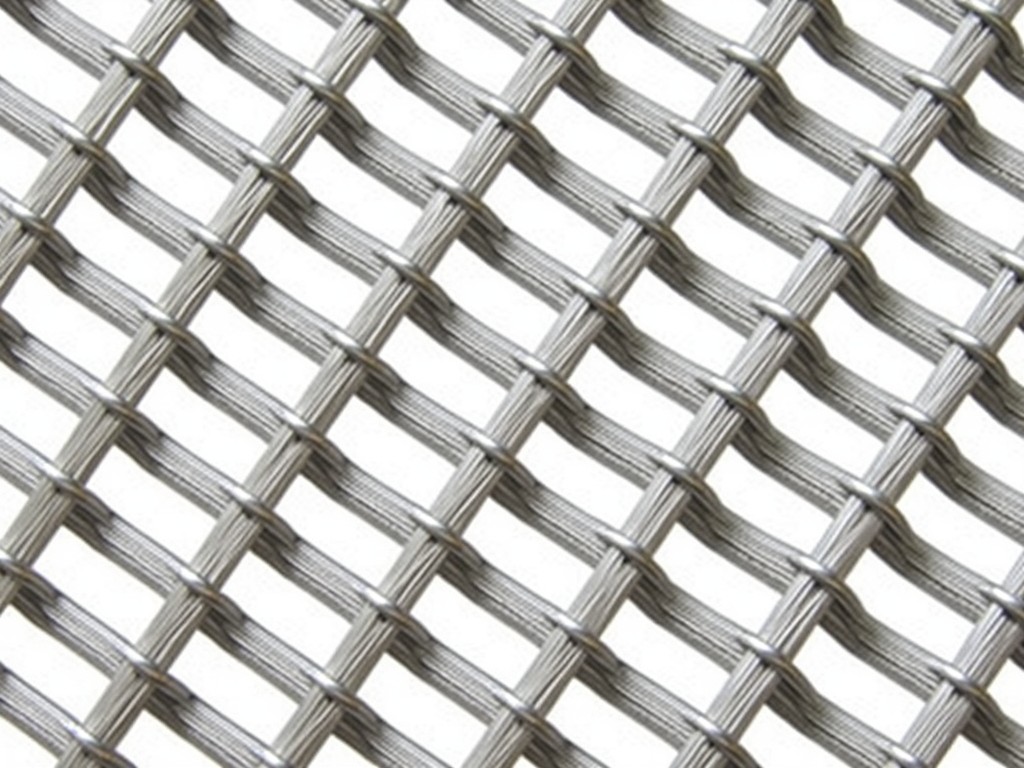
Factory Direct Stainless Steel Welded Wire Mesh Supplier
Stainless steel welded wire mesh is produced by intersecting longitudinal and transverse wires at right angles and fusing them through resistance welding. The resulting grid offers uniform opening
Request a QuoteFactory Direct Stainless Steel Welded Wire Mesh Supplier
Overview
Stainless steel welded wire mesh is produced by intersecting longitudinal and transverse wires at right angles and fusing them through resistance welding.
The resulting grid offers uniform opening dimensions and consistent mechanical properties across the panel.
Because the weld eliminates the need for weaving or knotting, the mesh maintains dimensional stability under load and resists unraveling.
Technical Specifications
Wire diameters typically range from 0.5 mm to 3.0 mm, allowing selection based on required tensile strength and opening size.
Common aperture sizes vary from 6 mm square to 100 mm square, with rectangular options available upon request.
The mesh is supplied in grades 304, 316L, or 310S stainless steel, each offering different corrosion resistance levels suitable for indoor, outdoor, or high‑temperature environments.
| Parameter | Typical Range | Notes |
|---|---|---|
| Wire Diameter | 0.5 mm – 3.0 mm | Selected per load requirement |
| Aperture Size | 6 mm – 100 mm square | Rectangular custom sizes available |
| Stainless Steel Grade | 304, 316L, 310S | Corrosion resistance increases with grade |
| Tensile Strength (Wire) | 500 – 800 MPa | Dependent on grade and cold work |
| Weight per Area | 2 – 15 kg/m² | Varies with wire diameter and opening |
Manufacturing Process
Production begins with drawing stainless steel wire to the specified diameter, followed by straightening and cleaning to remove surface oxides.
The wires are then fed into a resistance welding machine where precise electrical current creates a fusion bond at each intersection, after which the mesh is cut to length and flattened.
Applications
In food processing facilities, the mesh provides a sanitary barrier that resists corrosion from frequent washdowns and allows airflow for drying.
In architectural concrete reinforcement, the uniform weld distribution improves crack control compared to woven alternatives.
- Chemical plants – resistant to acidic and alkaline splashes, used as safety guards and filter supports.
- Automotive manufacturing – employed as conveyor belts and protective screens due to high fatigue endurance.
- Agricultural facilities – serves as livestock fencing and crop drying racks, withstanding outdoor exposure.
- Architectural cladding – provides decorative facades with consistent openness and structural integrity.
Customization Options
Customers can specify wire diameter, aperture shape, panel dimensions, and edge treatment to match installation requirements.
Surface finishes such as electropolishing or passivation are available to enhance corrosion resistance in aggressive environments.
Roll widths, coil lengths, and flat sheet formats are offered based on handling and transportation constraints.
Quality Control
Each batch undergoes visual inspection for weld continuity and wire alignment under 10× magnification.
Dimensional verification uses laser scanning to confirm opening size tolerances, typically within ±0.2 mm of the nominal dimension.
Mechanical testing includes tensile strength measurements on sampled wires, with results recorded for traceability.
Packaging & Shipping
Mesh panels are stacked with interleaving protective paper and secured with steel straps to prevent shifting during transit.
Rolls are wound on rigid cores, wrapped in shrink film, and placed in corrugated cartons labeled with part number and weight.
For export shipments, moisture‑absorbent desiccants and ISPM‑15 compliant pallets are used to meet international regulations.
Frequently Asked Questions
Q: Can dimensions be customized?
A: Yes, wire diameter, aperture size, panel width and length, and edge finishing can be tailored to project specifications.
Q: What information is required before quotation?
A: Required details include wire diameter, aperture shape and size, panel dimensions, stainless steel grade, surface finish, and order quantity.
Q: How is quality inspected?
A: Inspection includes visual weld checks, laser dimensional scanning, and tensile strength testing on wire samples per batch.
Q: What packaging methods are available?
A: Standard packaging uses protective paper interleaving and steel strapping for panels, or shrink‑wrapped rolls on cores; export packaging adds desiccants and treated pallets.
Q: What is the typical production lead time?
A: Lead time depends on complexity and volume, generally ranging from 2 to 4 weeks after final drawing approval.
Contact Us
For technical assistance or to request a quote, please reach out to our engineering team.



