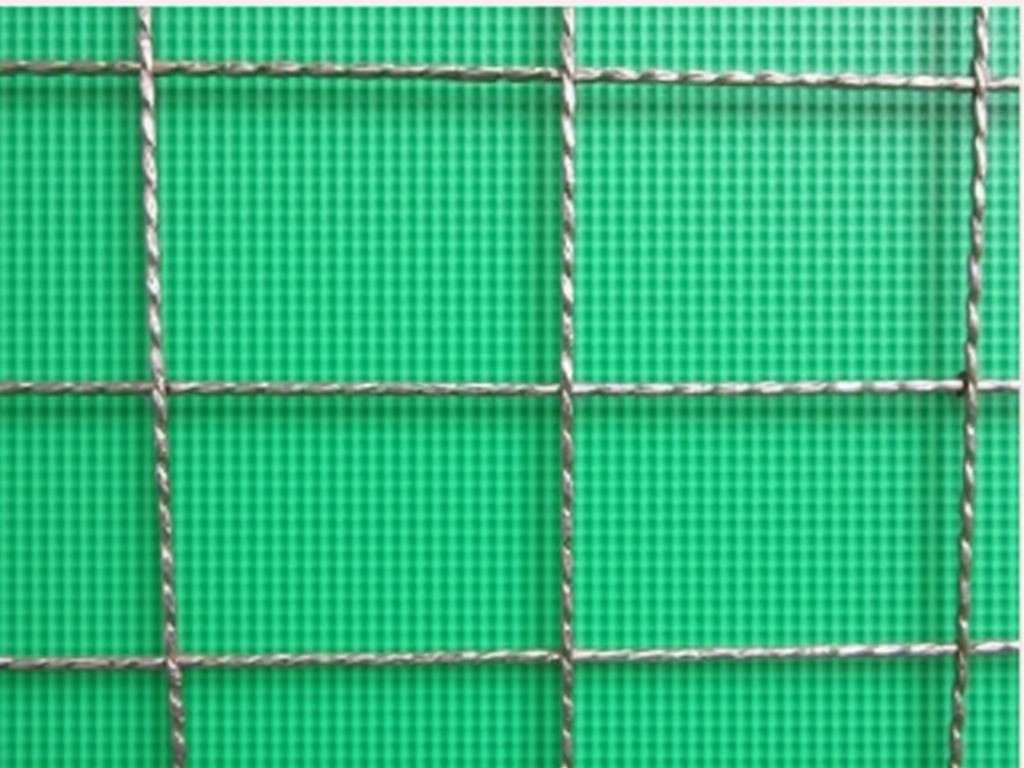
Factory Direct Green Pvc Coated Welded Wire Mesh Panels Exporter
PVC coating provides a continuous polymer layer that encapsulates each welded intersection, preventing direct contact between the steel substrate and environmental moisture. The coating thickness
Request a QuoteFactory Direct Green PVC Coated Welded Wire Mesh Panels Exporter
PVC coating provides a continuous polymer layer that encapsulates each welded intersection, preventing direct contact between the steel substrate and environmental moisture. The coating thickness typically ranges from 0.3 mm to 0.5 mm, measured after curing.
The underlying weld joints are formed by resistance spot welding, achieving tensile shear values commonly exceeding 1.2 kN per intersection for 2 mm diameter wire.
Panel sizes are customizable; standard widths range from 0.5 m to 2.0 m, with lengths up to 6.0 m, while aperture (opening) dimensions can be specified from 10 mm × 10 mm to 100 mm × 100 mm.
| Property | Typical Value | Customizable Range |
|---|---|---|
| Wire Diameter | 2.0 mm | 1.2 mm – 4.0 mm |
| Aperture Size | 50 mm × 50 mm | 10 mm × 10 mm – 100 mm × 100 mm |
| Panel Width | 1.0 m | 0.5 m – 2.0 m |
| Panel Length | 3.0 m | 1.0 m – 6.0 m |
| PVC Coating Thickness | 0.4 mm | 0.2 mm – 0.6 mm |
| Tensile Shear Strength per Weld | 1.2 kN | 0.8 kN – 2.0 kN (depending on wire) |
In agricultural settings, the green PVC coating blends with vegetation while providing a barrier that resists rust from fertilizers and irrigation, extending service life beyond untreated steel mesh.
For concrete formwork, the mesh acts as a reinforcement layer; the PVC coating prevents alkaline concrete from degrading the steel, maintaining bond strength over multiple pour cycles.
- Security fencing for industrial perimeters
- Animal containment enclosures
- Gabion baskets for retaining walls
- Tree protection guards in landscaping
Production begins with drawing high-carbon steel wire to the specified diameter, followed by automated resistance welding to form the grid. The welded panel then passes through a fluidized bed PVC coating system where powdered PVC is electrostatically adhered and cured at 180 °C to achieve uniform thickness.
Quality control includes visual inspection for coating continuity, magnetic gauge measurement of PVC thickness at multiple points, and destructive shear testing of a sample of welds to verify mechanical integrity.
Customization options encompass wire diameter, aperture geometry, panel dimensions, coating color (green standard, with RAL alternatives available), and edge treatments such as flattened borders or reinforced flanges for easier handling.
Finished panels are stacked flat, protected with corner guards, wrapped in shrink‑film to guard against abrasion, and placed on pallets sized for container loading. Each pallet is secured with straps and labeled with destination details.
Frequently Asked Questions
Yes, wire diameter, aperture size, width, and length can be adjusted to project requirements; provide a sketch or detailed specifications for a quotation.
What information is required before quotation?Required data include desired wire gauge, opening dimensions, panel size, PVC thickness or color preference, quantity, and delivery destination.
How is quality inspected?Inspection comprises visual coating checks, thickness measurement via calibrated magnetic gauges, and weld strength testing on a statistically significant sample.
What packaging methods are available?Standard packaging uses palletized stacks with shrink‑film and corner protection; custom crating or container‑specific bracing can be arranged upon request.
To discuss your specific needs or request a sample, please use the contact form below.
Request Quote


