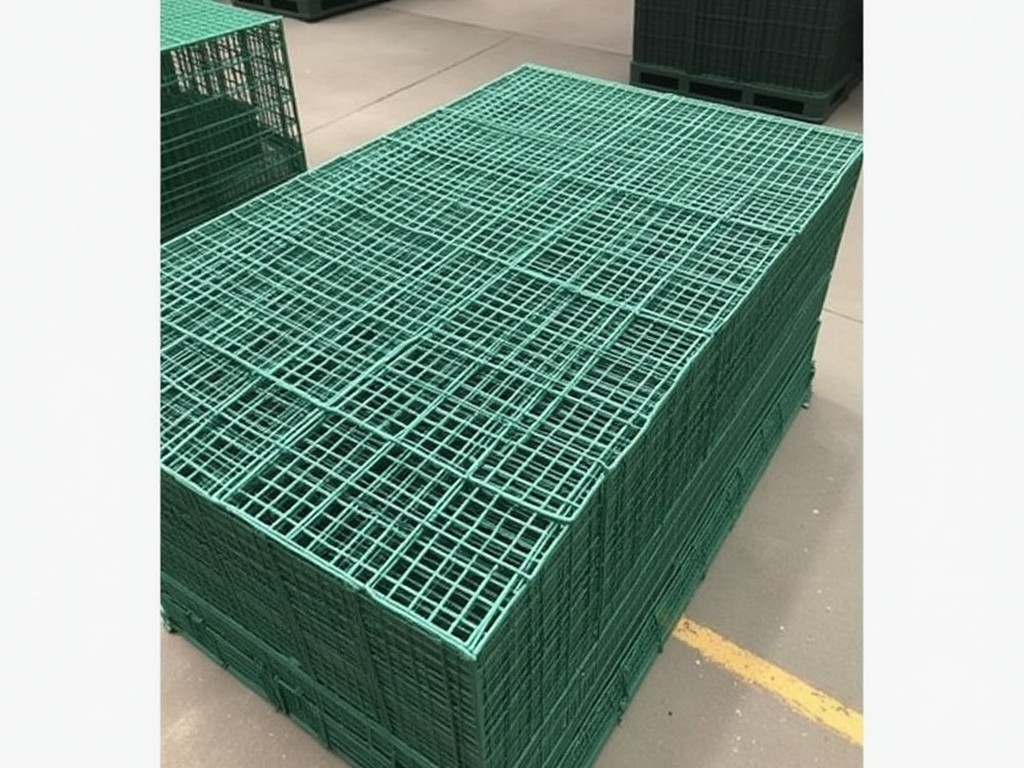
Direct Factory Welded Mesh Gabion Baskets Exporter
Welded mesh gabion baskets are fabricated from steel wire panels that are welded at each intersection to form a rigid grid. The panels are then assembled into modular units that can be filled with
Request a QuoteDirect Factory Welded Mesh Gabion Baskets Exporter
Welded mesh gabion baskets are fabricated from steel wire panels that are welded at each intersection to form a rigid grid. The panels are then assembled into modular units that can be filled with stone or other aggregate to create gravity‑retaining structures. As a direct‑factory exporter, the manufacturer controls the entire production chain from wire drawing to final packaging, allowing tight tolerances and consistent corrosion protection.
Construction and Material Specifications
The primary material is low‑carbon steel wire, typically ranging from 2.0 mm to 4.0 mm diameter, depending on the required tensile strength. Welding is performed using resistance spot welding, achieving a shear strength of at least 90 % of the parent wire’s tensile capacity. After welding, the mesh undergoes a hot‑dip galvanizing process (Zn‑Al‑Mg alloy coating) or a PVC coating to provide a minimum coating thickness of 55 µm for corrosion resistance in aggressive soils.
Standard mesh openings are 50 mm × 50 mm or 75 mm × 75 mm, providing a balance between aggregate retention and hydraulic permeability. Panel dimensions are usually 2.0 m × 1.0 m or 2.5 m × 1.2 m, with longitudinal and transverse wires aligned to the panel edges to facilitate welding of adjacent units. Tolerance on panel length and width is ±5 mm, and wire diameter tolerance is ±0.05 mm.
| Parameter | Typical Range | Unit |
|---|---|---|
| Wire diameter | 2.0 – 4.0 | mm |
| Mesh opening | 50 × 50 or 75 × 75 | mm |
| Panel size (length × width) | 2.0 × 1.0 or 2.5 × 1.2 | m |
| Coating type | Hot‑dip Zn‑Al‑Mg or PVC | – |
| Minimum coating thickness | 55 | µm |
| Tensile strength of wire | ≥350 | MPa |
Design and Engineering Considerations
Gabion structures rely on the interlocking of filled aggregate and the flexural rigidity of the welded mesh to resist lateral earth pressure. The modulus of elasticity of the steel mesh (approximately 200 GPa) contributes to minimal deformation under service loads, while the welded joints prevent panel separation during settlement. Designers typically apply a factor of safety of 1.5 to 2.0 on the tensile capacity of the mesh when calculating the maximum retainable height.
Permeability is a key design parameter; the open area ratio of a 50 mm mesh is about 44 %, allowing free drainage and reducing hydrostatic pressure behind the wall. For applications requiring finer aggregate retention, a 75 mm mesh can be combined with a geotextile liner to prevent soil migration while maintaining adequate flow.
Typical Applications
In riverbank stabilization, welded mesh gabion baskets provide a flexible yet robust barrier that conforms to uneven terrain, reducing scour by dissipating flow energy through the voids between stones. The mass of the fill, combined with the tensile resistance of the mesh, counters the lateral thrust of water currents, making the system suitable for channels with velocities up to 3 m/s.
For highway embankments, the baskets are stacked in a stepped configuration to create retaining walls that accommodate differential settlement without cracking. The ability to use locally sourced rock reduces transportation costs, and the permeable face promotes vegetation growth, contributing to long‑term slope stability.
In industrial settings, gabion walls are used as containment barriers for bulk storage yards, where they withstand impact forces from moving equipment and provide fire‑resistant separation due to the inorganic fill. The welded mesh ensures that the baskets retain their shape under repeated loading cycles, a critical factor for facilities with frequent loading‑unloading operations.
Quality Control and Testing
Each production batch undergoes tensile testing on sample wires to verify that the ultimate tensile strength meets the specified minimum (commonly 350 MPa for low‑carbon steel). Weld shear strength is measured using a pull‑off test on welded joints, with acceptance criteria set at a minimum of 300 N per spot for 2.5 mm wire.
Coating thickness is checked with a magnetic‑induction gauge on at least five random points per panel; the average must exceed the specified minimum, and no single reading may fall below 80 % of that value. Dimensional inspection includes laser scanning of panel length, width, and diagonal to ensure squareness within 2 mm over a 2 m span.
Prior to shipment, a random sample of assembled baskets is filled with standard aggregate and subjected to a lateral load test simulating 1.5 times the design earth pressure; deformation is recorded and must remain within elastic limits (less than 5 mm deflection at the top edge).
Customization Options
Customers can specify alternative wire diameters (up to 6.0 mm) for higher load‑bearing capacity, or select a stainless‑steel core (grade 304 or 316) for environments with chloride exposure. Mesh opening sizes can be adjusted from 30 mm to 100 mm to accommodate different aggregate gradations or filtration requirements.
Panel lengths can be customized in increments of 0.25 m, enabling non‑standard wall heights without the need for on‑site cutting. Additional accessories such as spiral binding wires, helical connectors, or corrosion‑resistant steel staples are available to facilitate rapid assembly on‑site.
Coating options extend beyond hot‑dip galvanizing to include epoxy‑powder coating (minimum thickness 80 µm) or a dual‑layer system (galvanized inner layer with PVC outer layer) for applications requiring UV resistance or aesthetic color matching.
Packaging and Export Logistics
Baskets are bundled in groups of five to ten units, secured with steel strapping and placed on fumigated wooden pallets measuring 1.1 m × 1.1 m. Each pallet is wrapped in UV‑stabilized polyethylene film to protect the coating from moisture and abrasion during transit.
For container loading, the pallets are arranged in an interlocking pattern to maximize vertical stability, with a typical 20‑foot container accommodating up to 22 pallets (approximately 440 baskets of standard size). The total gross weight per container is kept below the container’s maximum payload (usually 24 t) by adjusting the number of baskets per pallet based on wire diameter and coating weight.
Export documentation includes a material test report (MTR), coating thickness certificate, and a declaration of conformity to relevant standards such as ASTM A975 for welded wire gabion baskets or EN 10223‑3 for steel wire mesh. These documents are provided electronically with the shipment to facilitate customs clearance.
Frequently Asked Questions
Can dimensions be customized?
Yes, wire diameter, mesh opening, panel length, and height can be tailored to project specifications. Custom sizes are produced using the same welding and coating lines, ensuring consistent quality.
What information is required before quotation?
Required details include desired wire diameter, mesh opening, panel dimensions, coating type, quantity, and any special testing or certification needs. Providing a sketch or layout helps the engineering team confirm load requirements.
What materials are available?
Standard low‑carbon steel wire (grades Q195/Q235), stainless steel (304/316), and optional galvanized or PVC‑coated finishes are available. Material selection is based on environmental exposure and design life.
How is quality inspected?
Quality control incorporates tensile testing of wire, weld shear strength verification, coating thickness measurement, dimensional inspection, and load‑deflection testing on assembled baskets before packaging.
What packaging methods are available?
Standard packaging uses palletized bundles with polyethylene film; alternative options include wooden crates, steel frames, or corrosion‑inhibitor VCI bags for long‑term storage.
How are export shipments protected?
Shipments are wrapped in UV‑stabilized film, secured with steel strapping, and loaded with load‑securing bars to prevent movement. Desiccant packets may be added to control humidity inside the container.
What is the typical production lead time?
Lead time varies with order size and customization level; standard specifications usually ship within 3‑4 weeks after receipt of purchase order, while customized orders may require 5‑6 weeks.
How are samples arranged?
Sample panels (typically 0.5 m × 0.5 m) can be provided free of charge for evaluation; the customer covers freight charges, and samples are prepared with the same coating and welding parameters as production units.
For technical inquiries, pricing, or to discuss specific project requirements, contact our engineering team.



