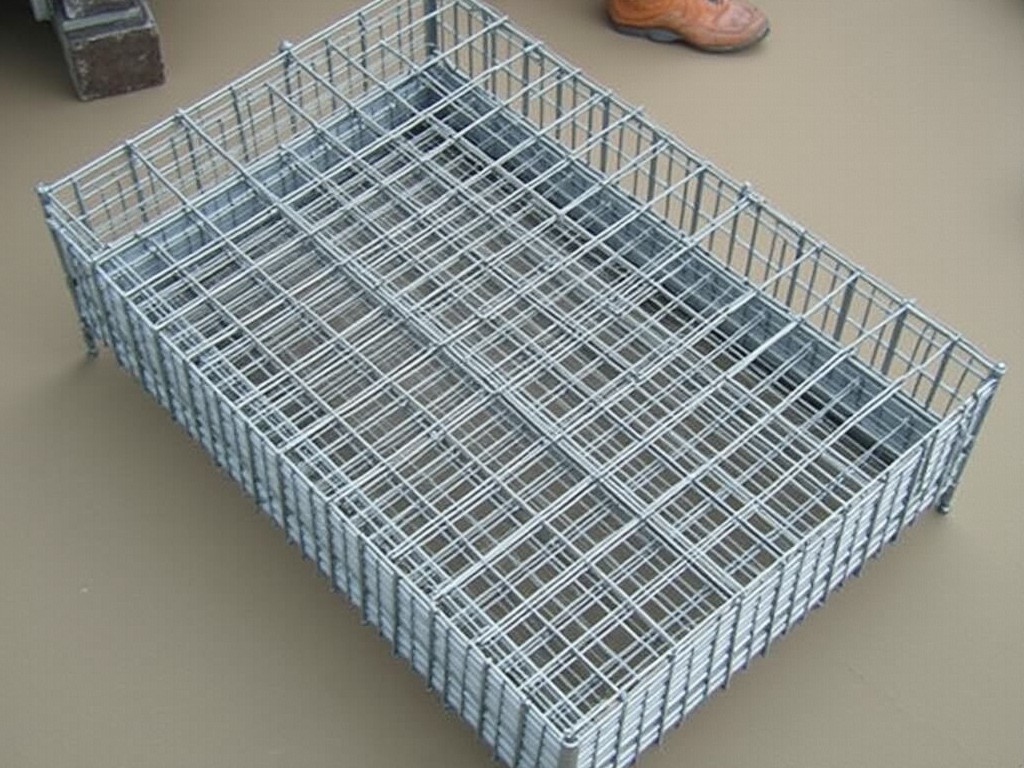
Direct Factory Welded Gabion Box Baskets Retaining Wall Exporter
The welded gabion box basket is a three‑dimensional mesh unit fabricated by spot‑welding steel wire rods at each intersection, forming a rigid cage that can be filled with stone, recycled concrete,
Request a QuoteDirect Factory Welded Gabion Box Baskets for Retaining Wall Applications
The welded gabion box basket is a three‑dimensional mesh unit fabricated by spot‑welding steel wire rods at each intersection, forming a rigid cage that can be filled with stone, recycled concrete, or other granular fill. This construction method eliminates the need for lacing wires, resulting in a uniform tensile capacity across the entire panel and reducing on‑site assembly time by up to 40 % compared with traditional woven gabions.
Structural Design and Mesh Configuration
Standard mesh openings are 76 mm × 76 mm, providing a balance between fill retention and hydraulic permeability. The wire diameter typically ranges from 3.0 mm to 5.0 mm, yielding a nominal tensile strength of 450 MPa to 550 MPa depending on the steel grade. Each basket incorporates reinforced corner posts with a 50 mm × 50 mm square profile to resist bursting forces when the cage is fully loaded.
- Spot‑weld spacing: 100 mm center‑to‑center along longitudinal wires.
- Panel depth options: 0.5 m, 0.75 m, 1.0 m, 1.5 m (custom depths available).
- Edge reinforcement: additional 2 mm diameter wire wrapped around perimeter for impact resistance.
Material Specifications
| Parameter | Typical Value | Notes |
|---|---|---|
| Wire Grade | Q235B or Q345B | Higher grades available on request. |
| Coating Type | Hot‑dip Galvanized (Zn ≥ 250 g/m²) or Galfan (Zn‑5%Al‑mischmetal) | Provides 30‑year corrosion resistance in moderate environments. |
| Tensile Strength (Wire) | 450‑550 MPa | Dependent on wire diameter and steel grade. |
| Elongation at Break | ≥ 20 % | Ensures ductility under impact loading. |
Typical Applications in Civil Engineering
Gabion box baskets function as gravity retaining structures where the mass of the fill provides resistance against lateral earth pressure. Because the cages are permeable, they accommodate groundwater flow, reducing hydrostatic buildup behind the wall. This makes them suitable for riverbank stabilization, highway embankments, and temporary works where drainage is critical.
In addition to retaining walls, the baskets are employed as acoustic barriers, protective linings for pipelines, and architectural façade elements. The modular nature allows engineers to create stepped terraces or curved profiles by varying basket orientation and fill gradation, which is difficult to achieve with concrete panels.
Quality Assurance and Testing
Each production lot undergoes visual inspection for weld uniformity and coating continuity. Destructive tests include tensile strength measurement on sampled wires according to ISO 6892‑1 and corrosion resistance evaluation via salt‑spray testing (ASTM B117) for 500 hours. Dimensional tolerances are maintained within ± 3 mm for panel length and width, ensuring tight fit during installation.
Load‑deflection tests on assembled baskets filled with graded stone verify that the structure sustains a uniform pressure of 15 kN/m² without permanent deformation. Test reports are available upon request and form part of the documentation package shipped with each order.
Customization Options
- Wire diameter: 2.5 mm to 6.0 mm (adjusted for load requirements).
- Mesh aperture: 50 mm × 50 mm to 100 mm × 100 mm (for fine or coarse fill).
- Panel dimensions: length up to 6 m, height up to 3 m (custom lengths achievable with intermediate connectors).
- Coating alternatives: PVC‑over‑galvanized, stainless‑steel wire (Grade 304/316) for aggressive environments.
- Accessories: lifting lugs, grounding clips, and geotextile liners for filtration.
Packaging and Export Logistics
Baskets are stacked on pallets with protective corner guards and secured with PET straps. Each pallet is shrink‑wrapped to prevent moisture ingress during transit. Standard export packaging accommodates 20‑foot containers, holding approximately 24 m³ of gabion units (equivalent to 120 standard 1 m × 1 m × 0.5 m baskets). For project‑specific quantities, we provide consolidated loading plans to minimize handling at the port of discharge.
Documentation includes a commercial invoice, packing list, material test certificates, and a container loading sketch. All paperwork complies with ISPM‑15 standards for wood‑free packaging, facilitating smooth customs clearance in destination countries.
Frequently Asked Questions
- Can dimensions be customized? Yes, length, height, and mesh aperture can be adjusted to meet design specifications; tooling changes are minimal for lengths under 6 m.
- What information is required before quotation? Required data include desired basket size, wire diameter, coating type, fill material specifications, and total quantity.
- What materials are available? Standard options are Q235B/Q345B steel with hot‑dip galvanized or Galfan coating; stainless‑steel and PVC‑coated wires are offered on request.
- How is quality inspected? Each batch undergoes visual weld inspection, tensile testing of wire, salt‑spray corrosion testing, and dimensional verification.
- What packaging methods are available? Palletized, shrink‑wrapped, and container‑ready packaging; custom crating for oversized units.
- How are export shipments protected? Corner guards, PET strapping, and moisture‑barrier shrink wrap guard against mechanical damage and humidity.
- What is the typical production lead time? Lead time ranges from 2 to 4 weeks depending on order size and coating selection; expedited schedules are available for stocked configurations.
- How are samples arranged? Free sample panels (up to 0.5 m × 0.5 m) can be shipped via express courier; the recipient covers freight charges.
Request a Quote
To obtain a detailed quotation, please provide the project’s technical requirements using the form below. Our engineering team will review the specifications, confirm feasibility, and return a formal offer with lead time and payment terms within one business day.
Submit Inquiry


