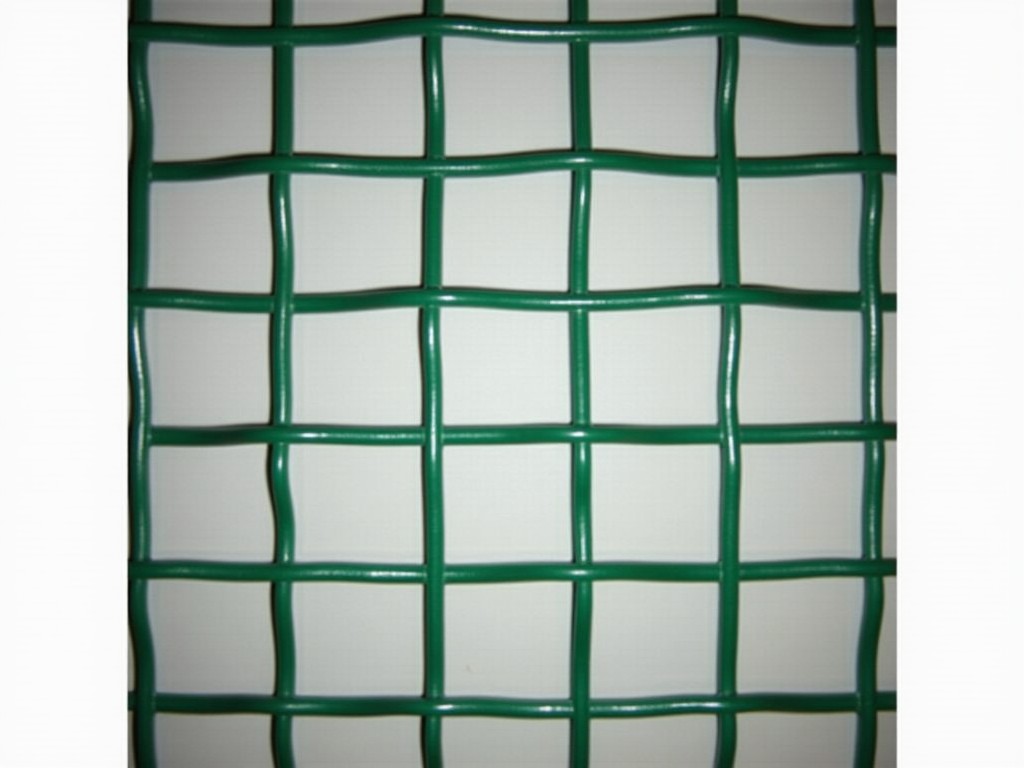
Direct Factory Pvc Coated Welded Wire Mesh
This product consists of low‑carbon steel wires welded at each intersection to form a uniform grid, followed by extrusion of a polyvinyl chloride (PVC) layer over the entire surface. The welding
Request a QuoteDirect Factory PVC Coated Welded Wire Mesh
This product consists of low‑carbon steel wires welded at each intersection to form a uniform grid, followed by extrusion of a polyvinyl chloride (PVC) layer over the entire surface. The welding process creates a monolithic joint that maintains the mesh opening under load, while the PVC coating provides a barrier against moisture, chemicals, and UV exposure.
Construction and Material Characteristics
The base wire is typically drawn from SAE 1008/1010 steel with a diameter ranging from 1.2 mm to 3.0 mm, depending on the required mechanical performance. Welding is performed using resistance spot welding, which fuses the wires without adding filler material, preserving the cross‑sectional area of each strand.
After welding, the mesh passes through a PVC extrusion line where the coating thickness is controlled to 0.3 mm ± 0.05 mm on each side. The PVC compound includes stabilizers and impact modifiers that give a Shore A hardness of approximately 85 and a tensile elongation at break of 250 %.
Technical Specifications
| Parameter | Typical Value | Adjustable Range |
|---|---|---|
| Wire diameter | 2.0 mm | 1.2 mm – 3.0 mm |
| Mesh opening (clear) | 25 mm × 25 mm | 10 mm – 100 mm |
| PVC coating thickness (each side) | 0.30 mm | 0.20 mm – 0.50 mm |
| Tensile strength of wire | ≥ 450 MPa | Depends on wire grade |
| Weight per square meter | ≈ 1.8 kg/m² | Scales with wire size & opening |
| Standard roll width | 1.0 m | 0.5 m – 2.0 m |
| Standard roll length | 30 m | 10 m – 100 m |
Typical Applications
The combination of a rigid welded grid and a protective polymer coat makes the mesh suitable for environments where mechanical integrity and corrosion resistance are both required.
- Concrete reinforcement: Used as a secondary reinforcement layer in slabs and walls, the PVC coating prevents direct contact with alkaline pore solution, reducing the risk of wire corrosion while maintaining bond strength.
- Animal containment fencing: The smooth PVC surface limits abrasion on livestock hides, and the coating resists urine and feed chemicals, extending service life in barns and pens.
- Industrial partitioning: Installed as machine guards or safety barriers, the mesh provides visibility and airflow while the polymer layer protects against splashes of oils and coolants.
- Roofing and cladding support: Applied as a substrate for insulated panels, the coating shields the steel from condensation and rainwater, preserving structural capacity over the building’s service life.
Quality Control and Testing
Each production lot undergoes visual inspection for weld continuity and coating uniformity, followed by dimensional checks of wire diameter and opening size using calibrated gauges.
Adhesion of the PVC to the steel is measured by a peel test according to ASTM D903, with a minimum acceptable value of 12 N/mm. Corrosion resistance is evaluated via a salt‑spray (ASTM B117) exposure of 500 hours, after which the coating must show no blistering or loss of adhesion.
Customization Options
- Wire diameter selection from 1.2 mm to 3.0 mm to tune tensile load capacity.
- Mesh opening customization ranging from 10 mm square to 100 mm square or rectangular patterns.
- PVC coating thickness adjustment between 0.20 mm and 0.50 mm per side, with optional UV‑stabilizer packages.
- Color choices include standard gray, green, or custom RAL matches achieved through pigmentation of the PVC compound.
- Edge treatments such as folded selvages or welded end caps for easier handling and installation.
Packaging and Shipping
Rolls are wound on a rigid core, wrapped in a polyethylene shrink film, and placed on a pallet with corner protectors. The pallet is then secured with strapping and stretch wrap to prevent shifting during transit.
For export shipments, a moisture‑barrier bag and desiccant packets are added inside the outer packaging to limit condensation. All packages are marked with product code, dimensions, weight, and handling instructions.
Frequently Asked Questions
Q: Can the wire diameter and mesh opening be adjusted for a specific load requirement?
A: Yes. The welding process allows independent selection of wire diameter (1.2 mm‑3.0 mm) and opening size (10 mm‑100 mm) to meet design specifications.
Q: What information is needed to obtain a quotation?
A: Required details include wire diameter, mesh opening, PVC coating thickness, roll width and length, color, and any special edge treatment.
Q: How is the quality of the PVC coating verified?
A: Coating thickness is measured with a micrometer on random samples, adhesion is tested by peel‑off strength, and UV stability is assessed via accelerated weathering per ASTM G154.
Request a Quote
Our engineering team can review your project parameters and provide a detailed proposal, including lead time and pricing.
Send Inquiry


