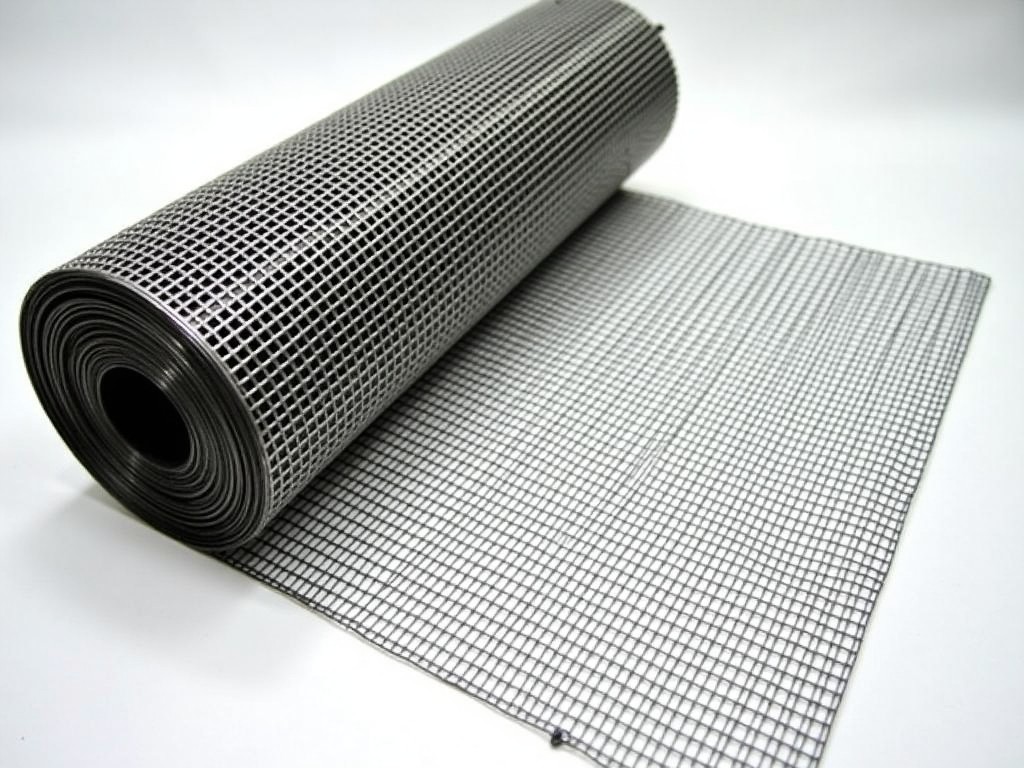
Custom Stainless Steel Welded Wire Mesh Rolls Manufacturer
Stainless steel welded wire mesh rolls are produced by intersecting longitudinal and transverse wires at right angles and fusing each junction through resistance welding. This process creates a
Request a QuoteCustom Stainless Steel Welded Wire Mesh Rolls Manufacturer
Stainless steel welded wire mesh rolls are produced by intersecting longitudinal and transverse wires at right angles and fusing each junction through resistance welding. This process creates a uniform grid with consistent opening sizes and wire diameters that maintain dimensional stability under load. The resulting product offers predictable tensile strength and corrosion resistance suitable for demanding industrial environments.
Material Specifications
The base wire is typically drawn from austenitic stainless steel grades such as 304, 316L, or 321, each offering distinct chromium‑nickel balances that affect corrosion resistance and mechanical properties. Wire diameters commonly range from 0.5 mm to 6.0 mm, allowing the mesh to satisfy both fine filtration and heavy‑duty reinforcement requirements. Aperture (opening) dimensions are defined as the clear distance between adjacent wires and can be tailored from 2 mm up to 150 mm depending on the intended function.
Mechanical properties such as yield strength and elongation are derived from the wire’s cold‑work condition; for example, 304 stainless wire in the full‑hard condition exhibits a minimum yield strength of approximately 520 MPa. These values are verified through tensile testing of sample strands before welding to ensure the final mesh meets the design specifications.
Manufacturing Process
Wire is first straightened and cut to length before being fed into a precision welding machine that aligns the longitudinal and transverse wires with programmable spacing. Resistance welding applies a controlled current at each crossover, creating a metallurgical bond without adding filler material. The weld nugget size is typically 1.5 to 2.5 times the wire diameter, ensuring joint strength that matches or exceeds the parent wire.
After welding, the mesh passes through a tensioning station that removes residual stresses and establishes uniform roll tightness. The continuous sheet is then wound onto a core with optional interleaving paper or plastic film to prevent surface abrasion during handling. Final dimensions are verified with laser gauges to confirm roll width, length, and mesh flatness within tolerance bands of ±0.5 mm.
Customization Options
Customers specify mesh geometry and material based on functional demands such as load bearing, filtration efficiency, or aesthetic appearance. The following table outlines the principal dimensions that can be adjusted during production, together with typical values that serve as a starting point for quotation.
| Parameter | Typical Range | Notes |
|---|---|---|
| Wire Diameter (mm) | 0.5 – 6.0 | Selected according to tensile requirement; finer diameters increase open area. |
| Aperture (mm) | 2 – 150 | Clear opening between wires; influences flow rate and particle retention. |
| Roll Width (mm) | 500 – 2000 | Standard cores accommodate widths up to 2 m; wider rolls require custom mandrels. |
| Roll Length (m) | 10 – 500 | Length limited by handling equipment; longer lengths supplied on multiple cores. |
| Stainless Grade | 304, 316L, 321, 430 | Grade selection affects corrosion resistance in specific environments (e.g., chloride exposure). |
| Surface Finish | Mill finish, brushed, electropolished | Optional finishes improve appearance or reduce fouling in sanitary applications. |
Typical Industrial Applications
In concrete reinforcement, welded wire mesh provides distributed tensile strength that reduces cracking and improves load distribution across slabs and walls. The uniform weld pattern ensures consistent bonding with concrete, which is critical for structural integrity in high‑rise buildings and infrastructure projects.
For filtration and screening, the precise aperture dimensions allow reliable separation of particles in liquid or gas streams, while the stainless construction resists chemical attack and thermal cycling. Industries such as food processing, pharmaceuticals, and chemical plants rely on this combination of hygiene and durability to meet regulatory standards.
Architectural cladding and safety barriers benefit from the mesh’s aesthetic transparency combined with impact resistance. The welded joints eliminate sharp edges, and the material’s corrosion resistance maintains appearance over extended exposure to weather and UV radiation.
Quality Control Philosophy
Each production lot undergoes incoming wire inspection for diameter tolerance, tensile strength, and surface cleanliness using calibrated micrometers and tensile testers. During welding, real‑time monitoring of current and duration ensures every junction receives the prescribed energy input, which is logged for traceability.
Finished rolls are sampled for aperture uniformity, flatness, and weld strength via peel‑off tests that measure the force required to separate a welded joint. Results are compared against predefined acceptance criteria, and any deviation triggers a root‑cause analysis before the batch is released for shipment.
Packaging and Shipping
To protect the mesh surface, rolls are wrapped in a layer of polyethylene film followed by a corrugated cardboard sleeve that resists puncture and moisture ingress. For export shipments, the packaged rolls are placed on pallets secured with steel straps and corner protectors, then shrink‑wrapped to stabilize the load.
Each pallet is labeled with product code, dimensions, grade, and batch number, facilitating easy identification at the destination. Standard freight options include full‑truckload (FTL) and less‑than‑truckload (LTL) services, with lead times typically ranging from 2 to 4 weeks depending on order complexity and destination.
Frequently Asked Questions
- Can dimensions be customized? Yes, wire diameter, aperture, roll width, length, and grade are all adjustable according to project specifications.
- What information is required before quotation? We need the desired mesh opening, wire size, material grade, roll dimensions, and any special finish or testing requirements.
- What materials are available? Austenitic grades 304, 316L, 321, and ferritic 430 are standard; other alloys can be sourced upon request.
- How is quality inspected? Incoming wire is checked for diameter and tensile strength; weld integrity is monitored in‑process; final rolls undergo aperture, flatness, and peel‑off testing.
- What packaging methods are available? Standard packaging includes polyethylene film and cardboard sleeve; additional options such as wooden crates or vapor‑corrosion inhibitor (VCI) bags are available for harsh environments.
- How are export shipments protected? Rolls are palletized, strapped, corner‑protected, and shrink‑wrapped to withstand handling and transit conditions.
- What is the typical production lead time? Lead times generally range from 10 to 25 working days, depending on order size and customization complexity.
- How are samples arranged? Small sample sections (typically 300 mm × 300 mm) can be dispatched via express courier upon receipt of a formal request and applicable shipping fees.
Ready to Discuss Your Project?
Provide your mesh specifications, including wire diameter, aperture, material grade, roll dimensions, and required quantity. Our engineering team will review the details and return a detailed quotation with lead time.
Submit an inquiry to begin the conversation.



