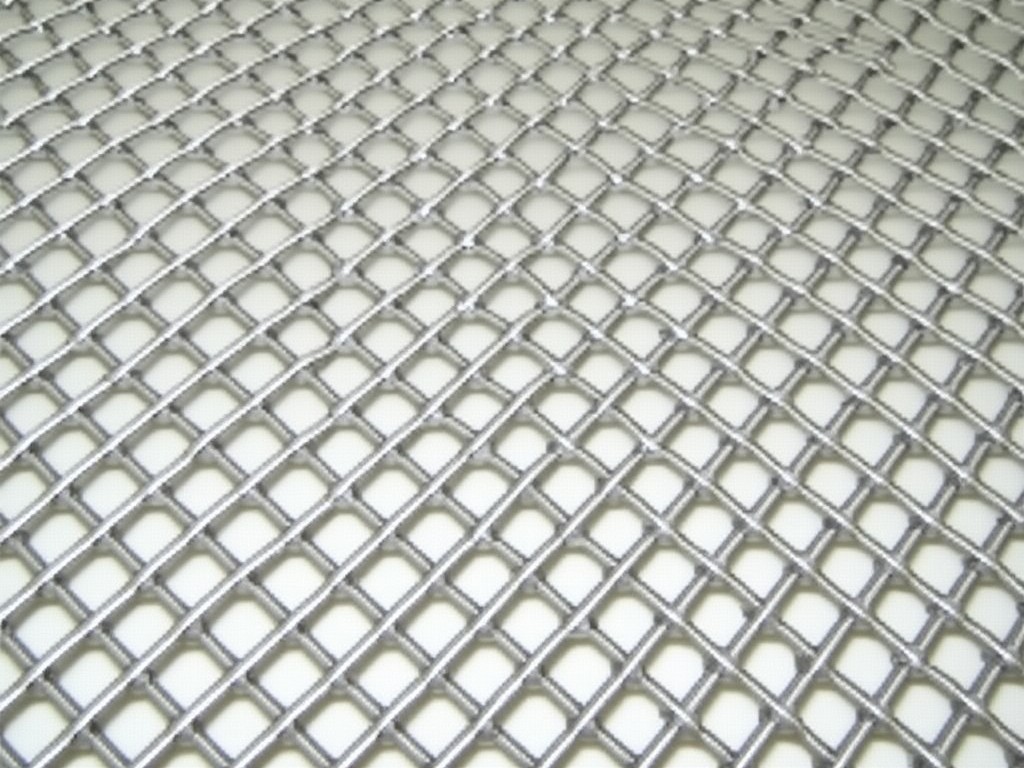
Custom Stainless Steel Weld Mesh Suppliers Factory
Stainless steel weld mesh consists of intersecting wires joined by resistance welding, creating a uniform grid with high structural integrity. The factory produces meshes to order, allowing precise
Request a QuoteCustom Stainless Steel Weld Mesh Suppliers Factory
Stainless steel weld mesh consists of intersecting wires joined by resistance welding, creating a uniform grid with high structural integrity. The factory produces meshes to order, allowing precise control over alloy composition, wire diameter, opening size, and overall panel dimensions.
Material Grades and Mechanical Properties
The most commonly used austenitic grades are 304, 316L, and 321, each offering distinct corrosion resistance and temperature capability. Selection depends on the process environment, such as exposure to chlorides, acids, or elevated temperatures.
| Grade | Typical Chromium (%wt) | Typical Nickel (%wt) | Yield Strength (MPa, annealed) | Maximum Service Temperature (°C) |
|---|---|---|---|---|
| 304 | 18.0–20.0 | 8.0–10.5 | 215 | 870 |
| 316L | 16.0–18.0 | 10.0–14.0 | 205 | 925 |
| 321 | 17.0–19.0 | 9.0–12.0 | 215 | 900 |
Mesh Geometry Parameters
Three primary dimensions define a weld mesh: wire diameter (d), opening size (a × b), and panel width/length (W × L). Wire diameter typically ranges from 0.5 mm to 6.0 mm, while rectangular openings can be as small as 2 mm × 2 mm or as large as 100 mm × 100 mm for heavy‑duty screening.
The aspect ratio of the opening (a/b) influences flow characteristics and particle retention; square openings provide isotropic performance, whereas rectangular openings are preferred when directional screening is required.
Customization Options
Beyond geometry, customers can specify edge treatments such as folded, flared, or welded frames to facilitate installation. Surface finishes include pickled, passivated, or electropolished layers to enhance corrosion resistance in aggressive media.
- Wire diameter: 0.5 mm – 6.0 mm (increment 0.1 mm)
- Opening size: 2 mm – 100 mm (square or rectangular)
- Panel dimensions: up to 2000 mm × 6000 mm (custom lengths available)
- Edge finish: plain, folded over 10 mm, welded flange, or frames with pre‑drilled holes
- Surface treatment: pickling, passivation, electropolishing, or PTFE coating
Manufacturing Process
The production line begins with precision drawing of stainless steel wire to the specified diameter, followed by spooling and tension leveling. Wires are then laid orthogonal to each other on a welding table where computer‑controlled resistance welders fuse each intersection.
Welding parameters—current, pressure, and time—are adjusted per wire diameter and alloy to achieve consistent nugget size without overheating, which could sensitize the austenitic structure. After welding, the mesh undergoes optional flattening and edge‑forming operations before final inspection.
Quality Control & Testing
Each batch receives dimensional verification using laser scanning or coordinate measuring machines to confirm wire diameter, opening size, and panel squareness within ±0.1 mm tolerance. Mechanical testing includes tensile strength of weld spots, measured per ASTM F2256, with a minimum requirement of 90 % of base wire strength.
Corrosion resistance is validated through salt‑spray (ASTM B117) or intergranular corrosion (ASTM A262) tests when the application demands it. Documentation bundles include material certificates, weld‑spot reports, and inspection records traceable to the specific production order.
Typical Industrial Applications
In chemical processing, weld mesh serves as catalyst support beds where uniform flow distribution and resistance to acidic media are critical; 316L grade with electropolished finish minimizes fouling and extends service life.
Food‑grade equipment uses 304 mesh with passivated surfaces for sieving and drying operations, meeting FDA‑compliant hygiene standards while allowing easy cleaning.
Architectural façades and safety barriers employ larger‑opening meshes (e.g., 50 mm × 50 mm) made from 321 for high‑temperature exposure, providing both structural rigidity and aesthetic openness.
Frequently Asked Questions
Yes. Wire diameter, opening size, panel length and width, and edge finish are all specified per drawing or technical data sheet.
A sketch or CAD file showing desired mesh geometry, material grade, quantity, and any special surface treatment or edge detail.
Dimensional checks, weld‑spot tensile testing, and, upon request, corrosion‑test reports are provided with each shipment.
Meshes are rolled on cardboard cores, wrapped in polyethylene film, and placed in wooden crates or pallets according to size; custom packaging (e.g., vacuum‑sealed) can be arranged.
Request a Quote
To receive a formal quotation, please provide the mesh specifications outlined above. Our engineering team will review the details and respond with lead time, pricing, and any recommended alternatives.



