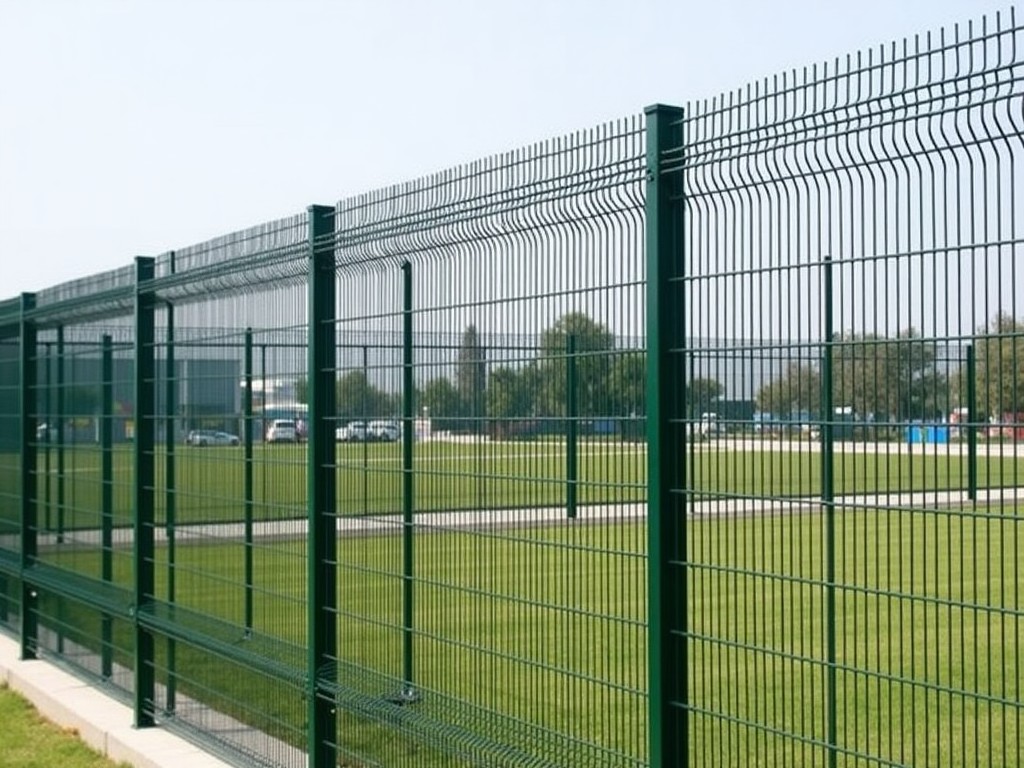
China Stainless Steel Welded Wire Fence Manufacturer
This page details the engineering characteristics of welded wire fence products manufactured from austenitic stainless steel grades. Understanding material properties, production methods, and
Request a QuoteChina Stainless Steel Welded Wire Fence Manufacturer
This page details the engineering characteristics of welded wire fence products manufactured from austenitic stainless steel grades. Understanding material properties, production methods, and performance specifications helps procurement professionals evaluate suitability for corrosive environments and structural applications.
The information presented focuses on measurable attributes such as wire diameter, opening size, tensile strength, and corrosion resistance values, avoiding subjective marketing language.
Material Composition
The fence utilizes stainless steel wire conforming to ASTM A240/A240M, primarily grades 304 and 316L. Grade 304 contains approximately 18% chromium and 8% nickel, providing general atmospheric corrosion resistance. Grade 316L adds 2‑3% molybdenum, enhancing resistance to chlorides and acidic environments.
Wire is supplied in cold‑drawn condition with typical tensile strength ranging from 620 MPa to 800 MPa depending on grade and diameter. Chemical composition limits are controlled to ensure weldability and maintain passive film integrity after welding.
| Element | Typical Range (wt%) |
|---|---|
| Chromium (Cr) | 16.0 – 20.0 |
| Nickel (Ni) | 8.0 – 12.0 |
| Molybdenum (Mo) – 316L only | 2.0 – 3.0 |
| Carbon (C) max | 0.03 |
Manufacturing Process
Wire is first straightened and cut to length, then arranged in a orthogonal grid pattern. Automatic resistance welding machines apply controlled current and pressure at each intersection, forming a homogeneous metallurgical bond without filler material.
Welding parameters are calibrated to achieve a nugget diameter of approximately 0.6 × wire diameter, ensuring joint strength matches or exceeds the base wire tensile strength. Post‑weld, the fence passes through a annealing furnace (optional) to relieve residual stresses, followed by a pickling and passivation bath to restore the chromium‑rich oxide layer.
Final inspection includes visual examination of weld continuity, dimensional verification of aperture sizes, and mechanical testing of weld shear strength according to ISO 9018.
Technical Specifications
Standard product lines are defined by wire diameter, opening size, and roll dimensions. Custom sizes are available upon request, subject to tooling constraints.
| Parameter | Typical Range | Notes |
|---|---|---|
| Wire Diameter | 0.8 mm – 3.0 mm | Cold‑drawn stainless steel |
| Opening Size (Aperture) | 10 mm × 10 mm – 100 mm × 100 mm | Square or rectangular |
| Roll Width | 0.5 m – 2.5 m | Custom widths available |
| Roll Length | 10 m – 50 m | Length per roll |
| Tensile Strength (Wire) | 620 MPa – 800 MPa | Dependent on grade and diameter |
| Weld Shear Strength | ≥ 90 % of wire tensile | Tested per ISO 9018 |
Applications
Stainless steel welded wire fence is selected where long‑term exposure to moisture, chemicals, or saline atmospheres would degrade carbon steel alternatives. Its corrosion resistance reduces maintenance cycles and extends service life in harsh environments.
- Marine facilities: pier fencing, aquaculture enclosures, and salt‑water splash zones.
- Food and beverage processing: areas requiring frequent washdown with chlorinated cleaners.
- Chemical plants: containment barriers around storage tanks and process equipment.
- Transport infrastructure: highway noise barriers and railway right‑of‑way protection.
- Architectural façades: decorative panels where aesthetic durability is required.
Quality Assurance
Each production lot undergoes dimensional inspection using calibrated laser gauges to verify wire diameter and opening tolerances within ±0.1 mm. Weld integrity is assessed by tensile shear testing on specimens cut from random locations across the roll.
Surface quality is examined under 10× magnification for signs of incomplete fusion or spatter. Passivation effectiveness is validated via copper sulfate spot testing per ASTM A380, confirming a continuous chromium‑oxide layer.
Documentation includes material test certificates (MTC), inspection reports, and a traceability label affixed to each roll core.
Customization Options
Beyond standard catalog sizes, the manufacturer can adjust wire gauge, aperture geometry, roll dimensions, and surface finish to match project‑specific requirements. Tooling changes are accommodated for volumes exceeding 500 kg.
- Alternative stainless grades: 321, 347, or duplex 2205 for elevated temperature or higher strength needs.
- Surface treatments: electropolishing for improved smoothness or PVC coating for additional abrasion resistance.
- Edge treatments: rounded or flattened wires to reduce handling hazards.
- Roll configurations: split rolls, interleaved layers, or pre‑cut panels.
- Custom markings: laser‑etched logos or batch numbers for identification.
Packaging and Logistics
Finished rolls are wrapped in polyethylene shrink film to protect against moisture and surface abrasion during transit. Each roll is placed on a sturdy wooden pallet with corner protectors and secured with polyester strapping.
For overseas shipments, containers are lined with desiccant bags and the cargo is marked “Keep Dry”. Pallet dimensions conform to standard ISO 668 sizes to facilitate forklift handling and warehouse stacking.
Lead time varies from 2 weeks for standard sizes to 4‑6 weeks for customized orders, depending on raw material availability and tooling preparation.
Frequently Asked Questions
- Can dimensions be customized? Yes, wire diameter, opening size, roll width, and length can be tailored to project specifications. Minimum order quantities apply for non‑standard tooling.
- What information is required before quotation? Required details include desired wire grade, diameter, aperture dimensions, roll dimensions, quantity, and any special surface treatment or packaging needs.
- What materials are available? Standard grades are 304 and 316L stainless steel; other grades such as 321, 347, and duplex 2205 are offered upon request.
- How is quality inspected? Each lot undergoes dimensional verification, weld shear testing, visual weld inspection, and passivation validation per ASTM A380.
- What packaging methods are available? Standard packaging is polyethylene shrink film on wooden pallets; options include interleaved layers, cardboard edge protectors, and custom labeling.
- How are export shipments protected? Rolls are wrapped in moisture‑barrier film, packed with desiccant, and secured within ISO‑standard containers.
- What is the typical production lead time? Standard products ship within 10‑15 working days; customized items typically require 20‑30 working days.
- How are samples arranged? Sample lengths of up to 2 m can be provided free of charge; freight charges are collected or prepaid as agreed.
For technical data sheets, sample requests, or project‑specific quotations, please contact our engineering team.
Request Quote or Sample


