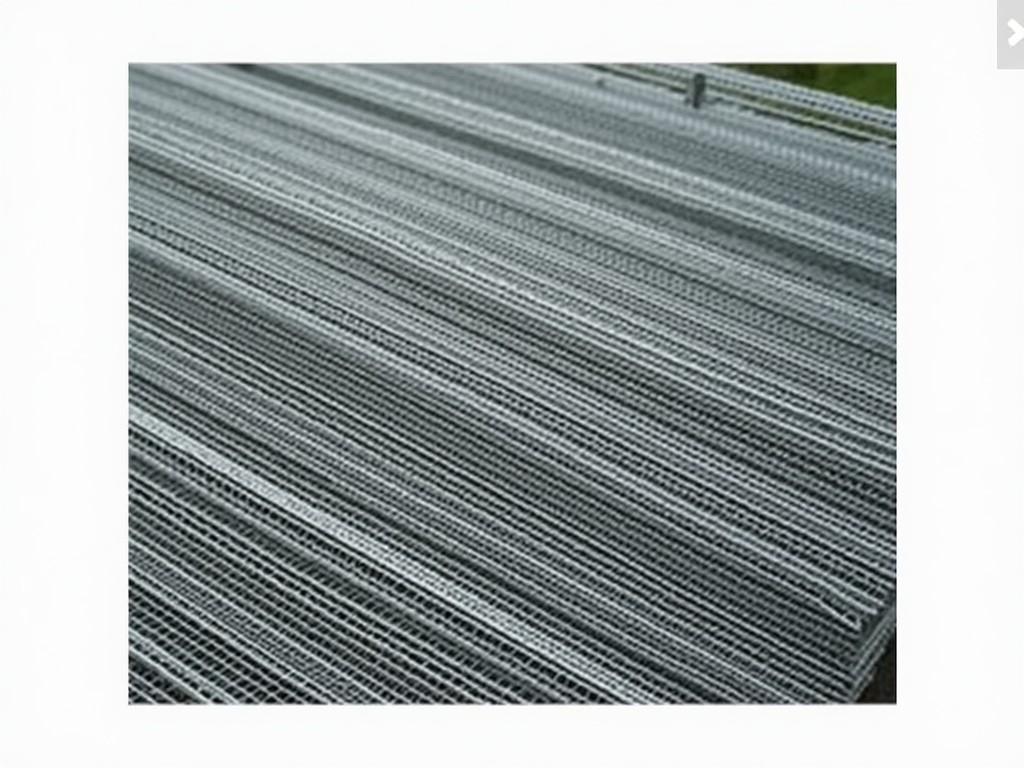
China Hot Dipped Galvanized Welded Wire Mesh Supplier
Hot dipped galvanized welded wire mesh is produced by welding low-carbon steel wires at their intersections, then immersing the entire panel in a molten zinc bath. This process creates a
Request a QuoteChina Hot Dipped Galvanized Welded Wire Mesh Supplier
Hot dipped galvanized welded wire mesh is produced by welding low-carbon steel wires at their intersections, then immersing the entire panel in a molten zinc bath. This process creates a metallurgical bond between the zinc coating and the steel substrate, providing uniform protection against corrosion.
The mechanical and protective properties of the mesh depend on several controllable parameters: wire diameter, opening size, zinc coating mass, and tensile strength of the base steel.
| Parameter | Typical Value | Unit |
|---|---|---|
| Wire Diameter | 1.2 – 5.0 | mm |
| Mesh Opening | 12.5 – 150 | mm |
| Zinc Coating Weight | 60 – 275 | g/m² |
| Tensile Strength | 350 – 550 | MPa |
| Elongation at Break | 10 – 25 | % |
| Roll Width | 0.5 – 2.0 | m |
| Roll Length | 10 – 50 | m |
Manufacturing begins with drawing high-tensile low-carbon steel wire to the specified diameter, followed by automated resistance welding to form a square or rectangular grid.
The welded panel is then conveyed through a hot dip galvanizing line where it is immersed in zinc heated to approximately 450 °C, withdrawn, and allowed to cool, forming a uniform alloy layer.
After galvanizing, the mesh passes through a cooling bath to solidify the coating, then is inspected for coating continuity before being cut to width and wound onto cores for shipment.
Typical Applications
- Concrete reinforcement: The mesh provides tensile support in slabs and walls, distributing loads and reducing cracking due to its uniform grid and corrosion-resistant coating.
- Perimeter fencing for industrial sites: The welded joints give high shear resistance, while the galvanized coating extends service life in outdoor environments exposed to moisture and chemicals.
- Animal enclosure panels: Small opening sizes prevent livestock from escaping, and the smooth welded surface minimizes injury risk.
- Machine guarding: The rigid grid offers visibility and airflow while meeting safety standards for barrier strength.
- Gabion baskets: When filled with stone, the mesh retains its shape under load, and the zinc coating protects against prolonged exposure to water and soil.
Customization Options
- Wire diameter: selectable from 1.2 mm to 5.0 mm to match load requirements.
- Mesh opening: adjustable from 12.5 mm to 150 mm for specific filtration or containment needs.
- Zinc coating weight: variable between 60 g/m² and 275 g/m² depending on environmental exposure.
- Roll dimensions: width and length can be tailored to fit handling equipment and installation layout.
- Edge treatment: options include flattened, twisted, or welded end caps to facilitate fastening.
Quality Control & Inspection
Each production lot undergoes coating adhesion testing via the bend test, where a sample is folded 180° over a mandrel to verify that the zinc layer remains intact without flaking.
Tensile strength is measured on representative wire specimens, and visual inspection ensures uniform weld quality and absence of defects such as missed welds or protrusions.
Packaging & Shipping
Finished rolls are wrapped in waterproof kraft paper, then placed on pallets and secured with polyester strapping to prevent shifting during transit.
For export shipments, pallets are loaded into containers with additional corner protectors and moisture-absorbing desiccants to maintain coating integrity.
Frequently Asked Questions
- Can dimensions be customized?
- Yes, wire diameter, mesh opening, coating weight, and roll dimensions can be adjusted according to project specifications.
- What information is required before quotation?
- Required details include wire diameter, mesh size, coating weight, roll width and length, quantity, and any special edge treatment or packaging preferences.
- How is quality inspected?
- Inspection includes coating adhesion bend test, tensile strength measurement on wire samples, visual weld inspection, and dimensional verification.
- What packaging methods are available?
- Standard packaging uses waterproof paper and pallet strapping; optional vapor‑barrier bags and wooden crates are available for harsh environments.
For technical data sheets, sample requests, or project-specific quotations, please reach out to our engineering team.
Contact Us


