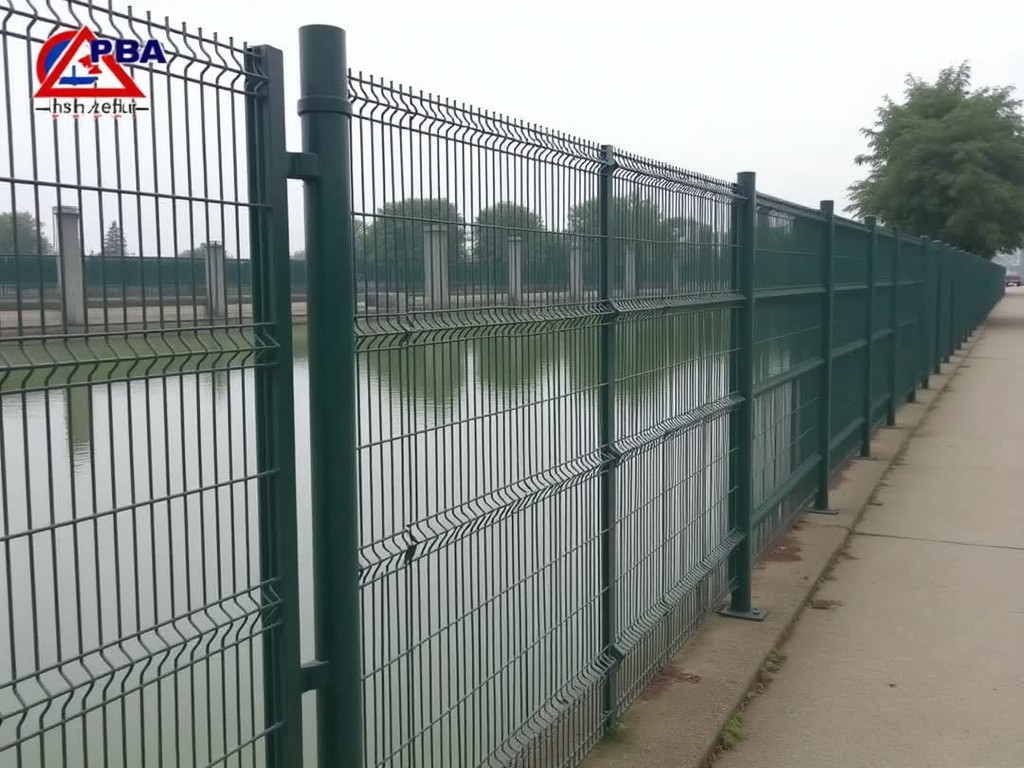
China Electro Galvanized Welded Mesh Fence Supplier
This product consists of low‑carbon steel wires that are electrically welded at each intersection and then coated with a uniform zinc layer through an electro‑galvanizing process. The coating
Request a QuoteElectro Galvanized Welded Mesh Fence – Supplier Overview
This product consists of low‑carbon steel wires that are electrically welded at each intersection and then coated with a uniform zinc layer through an electro‑galvanizing process. The coating provides sacrificial protection against corrosion while maintaining the weld integrity.
Construction Details
Wire diameters typically range from 1.2 mm to 3.0 mm, selected based on required load resistance and flexibility. The welding pitch creates square or rectangular apertures with opening sizes from 25 mm × 25 mm up to 100 mm × 100 mm.
After welding, the mesh passes through an electro‑galvanizing bath where a zinc layer of 10 µm to 20 µm is deposited uniformly on all surfaces, including weld points. This thickness offers a corrosion rate of less than 0.5 µm/year in moderate atmospheric conditions.
Typical Specification Table
| Parameter | Typical Range | Notes |
|---|---|---|
| Wire Diameter | 1.2 mm – 3.0 mm | Customizable per project load |
| Mesh Opening | 25 mm × 25 mm – 100 mm × 100 mm | Square or rectangular |
| Roll Width | 0.5 m – 2.5 m | Standard shipping width |
| Coating Weight | 10 µm – 20 µm Zn | Electro‑galvanized |
| Tensile Strength of Wire | 350 MPa – 550 MPa | Based on steel grade |
Key Applications
- Perimeter security for industrial facilities where weld strength prevents cut‑through attempts.
- Animal containment in agriculture, offering smooth edges that reduce injury risk.
- Concrete reinforcement mesh for precast panels, providing uniform load distribution.
- Temporary site fencing, allowing quick installation and removal without damaging the coating.
- Ventilation guards for machinery, where the open area ensures airflow while maintaining structural rigidity.
Each application leverages the combination of high shear resistance at weld points and consistent corrosion protection across the entire surface.
Quality Control Approach
Wire diameter is monitored with laser micrometers at ±0.02 mm tolerance before welding. Weld penetration is verified using ultrasonic testing on a sample basis, targeting a minimum nugget diameter of 0.6 × wire diameter.
Coating thickness is measured via magnetic induction on random sections of each roll, with acceptance criteria of 10 µm–20 µm and a maximum variation of ±2 µm across the width.
Final visual inspection checks for weld spatter, coating uniformity, and any mechanical damage that could compromise corrosion resistance.
Customization Options
Clients may specify alternative wire grades such as high‑tensile low‑alloy steel for increased load capacity.
Mesh aperture can be altered to rectangular patterns to suit specific filtration or screening requirements.
Roll length and width are adjustable to match transportation constraints or on‑site handling equipment.
Additional coating layers, such as a polymer overcoat, can be applied upon request for enhanced UV resistance in exposed environments.
Packaging and Shipping
Rolls are wound on cardboard cores with inner diameter 76 mm and outer diameter not exceeding 300 mm, then wrapped in polyethylene film to protect against moisture.
Each pallet holds up to 20 rolls, secured with steel straps and corner protectors to prevent shifting during transit.
Export shipments include fumigated wooden pallets and a detailed packing list that references coil number, weight, and coating specification.
Frequently Asked Questions
Can dimensions be customized?
Yes, wire diameter, mesh opening, roll width, and length can be adjusted to meet project‑specific requirements; provide the desired values during quotation.
What information is needed for a quote?
Please supply the required wire diameter, aperture size, roll dimensions, coating weight, quantity, and delivery destination.
How is quality inspected?
Incoming wire is checked for diameter and tensile strength, welds are sampled for penetration, and the zinc coating is measured for thickness and uniformity before packaging.
What packaging methods are available?
Standard packaging uses polyethylene‑wrapped rolls on cardboard cores, palletized with steel straps; special options such as corrosion‑inhibiting VCI bags are available upon request.
What is the typical production lead time?
Lead time ranges from 2 to 4 weeks depending on order size and customization level; exact schedules are confirmed at order acceptance.
To discuss your specifications, request a sample, or obtain a detailed quotation, please contact our technical sales team.
Request a Quote


