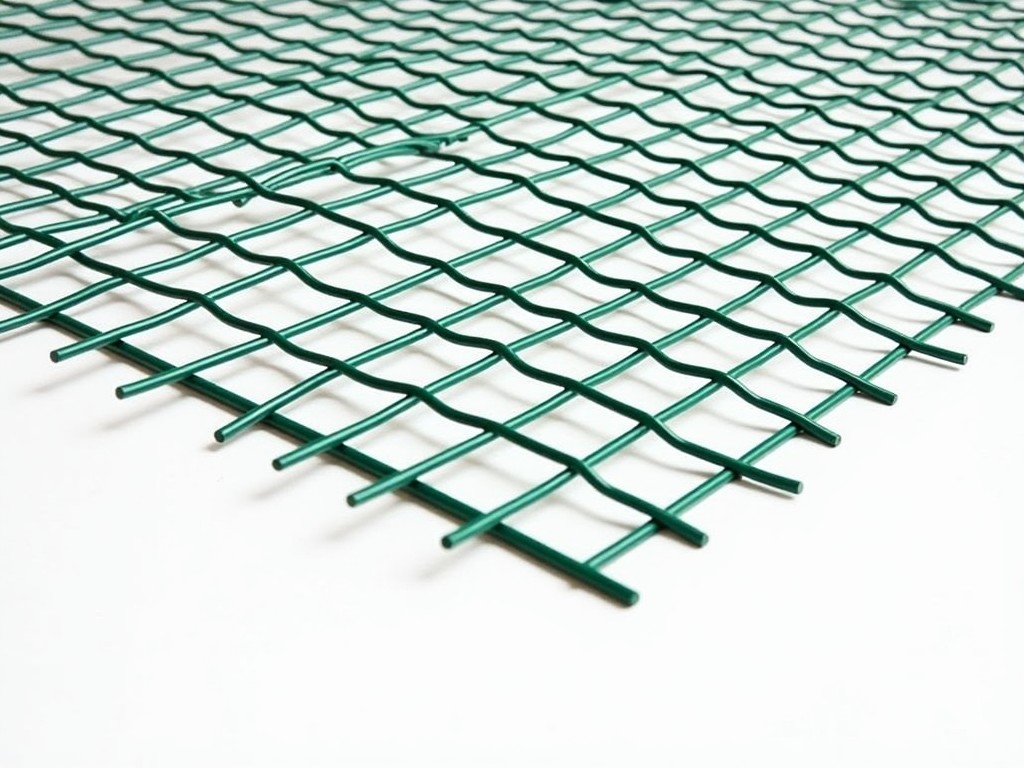
B2B Powder Coated Welded Wire Mesh Price
Powder coated welded wire mesh is produced by electrically resistance welding low‑carbon steel wires into a uniform grid, then applying a thermoset polymer coating through electrostatic spray and
Request a QuoteB2B Powder Coated Welded Wire Mesh Price
Powder coated welded wire mesh is produced by electrically resistance welding low‑carbon steel wires into a uniform grid, then applying a thermoset polymer coating through electrostatic spray and curing. The coating provides a barrier against corrosion while maintaining the mechanical integrity of the welded joint.
The base wire is typically SAE 1008 or equivalent cold‑drawn steel, chosen for its consistent tensile strength and weldability. After welding, the mesh undergoes a pre‑treatment phosphate wash to improve coating adhesion before the powder application.
Coating thickness is controlled to 60–120 µm (dry film) depending on customer specification, which influences both appearance and service life in outdoor environments.
| Parameter | Typical Value | Unit | Notes |
|---|---|---|---|
| Wire Diameter | 1.2 – 4.0 | mm | Customizable per project |
| Mesh Opening (Clear) | 10 – 150 | mm | Square or rectangular |
| Tensile Strength of Wire | ≥ 350 | MPa | Base steel before coating |
| Coating Adhesion (ASTM D3359) | 5B | Rating | No delamination after cross‑hatch test |
| Salt Spray Resistance (ASTM B117) | ≥ 500 | hours | Typical for 60 µm coating |
The welded joint retains the full cross‑section of the wire, providing a shear capacity that exceeds the wire’s tensile strength in most configurations. This makes the mesh suitable for load‑bearing guards and safety barriers where impact resistance is required.
Powder coating offers a uniform finish without drips or runs, and the thermoset resin resists UV degradation better than many liquid paints, extending service life in exposed installations.
Typical Applications
In industrial facilities, the mesh is used as machine guarding where visibility and airflow are essential, while the coating prevents rust from coolant spray or cleaning agents.
Agricultural installations employ the product for livestock pens and crop protection cages; the coating withstands ammonia, fertilizers, and frequent washing cycles.
Architectural projects specify powder coated mesh for façade infill panels, balcony railings, and sunshades, where aesthetic consistency and low maintenance are prioritized over raw steel appearance.
Customization Options
- Wire diameter from 1.2 mm to 4.0 mm in 0.1 mm increments
- Mesh opening (clear) ranging from 10 mm to 150 mm, square or rectangular patterns
- Panel dimensions up to 2.4 m × 3.0 m, with custom cut‑outs or notches
- Coating colour matched to RAL or Pantone standards; gloss levels from matte to semi‑gloss
- Edge treatment options: flattened, rolled, or capped with PVC inserts
Quality Control & Standards
Each production lot undergoes tensile testing on sample wires, weld shear testing on welded intersections, and coating thickness measurement via magnetic induction. Results are recorded against internal specifications aligned with ASTM A185 for welded wire fabric and ASTM D3451 for powder coating performance.
Visual inspection is conducted under standardized lighting to detect coating defects such as pinholes, orange peel, or insufficient coverage. Any panel exceeding the allowable defect density is reworked or rejected.
Factors Influencing Price
Raw steel cost fluctuates with market indices; higher wire diameter increases material weight and thus price per square metre.
Coating colour and gloss level affect price because custom pigments or special resins add to formulation costs.
Order volume drives economies of scale; setup charges for coil slitting and welding amortize over larger runs, reducing unit price.
Additional processing such as CNC cutting, hole punching, or framing adds labor and machine time, which is quoted separately.
Frequently Asked Questions
Can dimensions be customized? Yes, wire size, mesh opening, panel length and width, and edge finish are all adjustable to match project drawings.
What information is required for a quotation? Provide wire diameter, mesh opening, panel dimensions, coating colour or RAL code, quantity, and any secondary operations (cutting, holes, framing).
Which coating standards are available? Standard powders meet ASTM D3451; optional formulations can achieve higher UV stability or chemical resistance upon request.
How is quality inspected before shipment? Each batch undergoes dimensional verification, weld shear testing, coating thickness gauging, and adhesion testing per ASTM D3359.
What packaging methods protect the finish? Panels are interleaved with polyethylene sheets, stacked on pallets, and wrapped with stretch film; corner protectors prevent coating damage during transit.
To receive a detailed, no‑obligation quote tailored to your specifications, please share your technical requirements using the contact form below.
Request Quote


