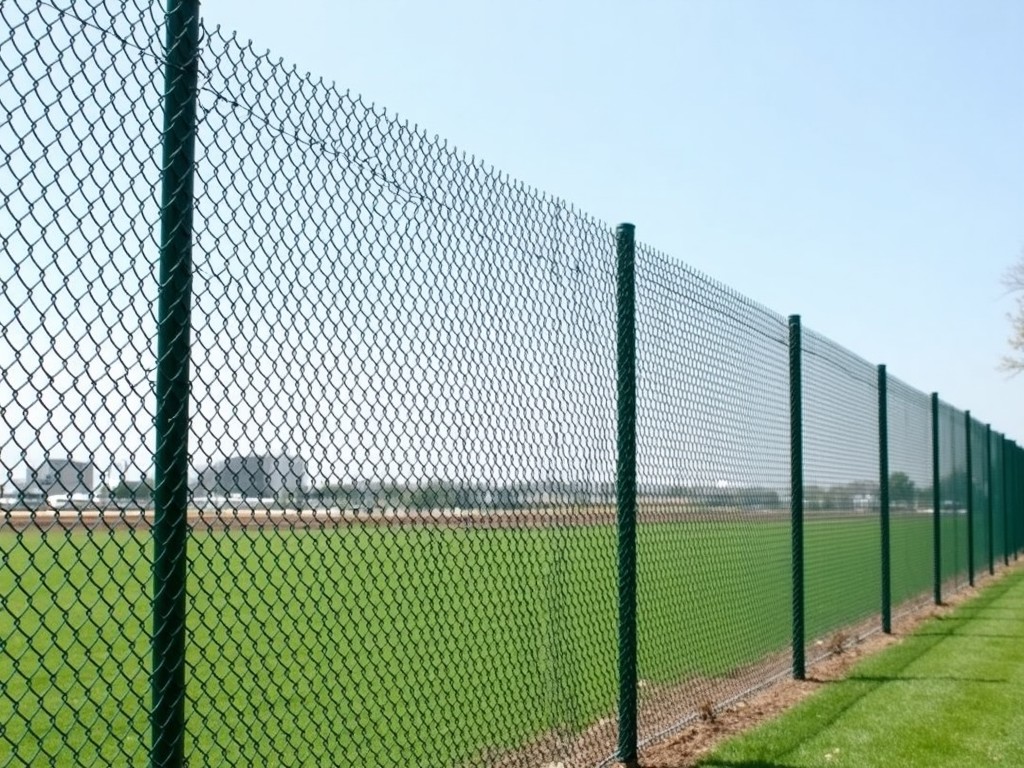
B2B Galvanized Welded Wire Fence Panels 48 In X 100 Ft Supplier
The product consists of welded steel wire mesh formed into rectangular panels that are 48 inches high and 100 feet long when unrolled. Each panel is fabricated by resistance welding intersecting
Request a QuoteGalvanized Welded Wire Fence Panels – 48 in x 100 ft
The product consists of welded steel wire mesh formed into rectangular panels that are 48 inches high and 100 feet long when unrolled. Each panel is fabricated by resistance welding intersecting wires at every junction, then coated with a zinc layer through hot‑dip galvanization to provide corrosion resistance for outdoor installations.
Product Overview
These panels serve as a continuous barrier when joined end‑to‑end or overlapped, offering a flexible alternative to rigid fencing systems. The welded construction eliminates reliance on fasteners that can loosen under vibration, while the uniform mesh opening provides consistent visibility and airflow.
Technical Specifications
Key dimensions and material properties are defined by industry standards for welded wire mesh. The following table lists typical values that can be adjusted according to project requirements.
| Parameter | Typical Value | Unit |
|---|---|---|
| Wire Gauge | 12 | AWG |
| Mesh Opening | 2 x 4 | in |
| Tensile Strength of Wire | 550 | MPa |
| Zinc Coating Weight | 275 | g/m² |
| Panel Height | 48 | in |
| Roll Length | 100 | ft |
Material & Coating Details
The base wire is low‑carbon steel with a carbon content typically below 0.10 % to ensure good weldability. After welding, the mesh undergoes hot‑dip galvanization where it is immersed in molten zinc at approximately 450 °C, forming a metallurgical bond that yields a coating weight of 200‑300 g/m² depending on immersion time. This coating provides sacrificial protection, extending service life in environments with moderate to high humidity.
Applications
- Livestock containment where durability and resistance to animal impact are required.
- Temporary site security for construction zones, offering rapid deployment and removal.
- Perimeter fencing for utility installations where corrosion resistance reduces maintenance cycles.
- Agricultural field barriers that allow airflow while preventing wildlife intrusion.
Quality Assurance
Each production lot undergoes visual inspection for weld uniformity and coating continuity. Adhesion of the zinc layer is verified by a bend test per ASTM A123, ensuring no cracking or delamination when the mesh is flexed to a 180‑degree angle. Additionally, a salt spray test (ASTM B117) is conducted on representative samples to confirm corrosion resistance equivalent to the specified coating weight.
Packaging & Handling
Panels are rolled tightly around a core and secured with biodegradable strapping. Each roll is wrapped in UV‑stabilized polyethylene film to prevent surface abrasion during transit. A standard pallet holds up to four rolls, with a total gross weight approximated by the formula: (wire weight per meter × roll length) + packaging weight, typically ranging between 250 kg and 300 kg per pallet.
Customization Options
- Wire gauge ranging from 10 AWG to 16 AWG for varying load requirements.
- Mesh opening dimensions such as 1 x 2 in, 2 x 2 in, or 4 x 4 in to suit specific visibility or containment needs.
- Zinc coating weight adjustable from 150 g/m² to 400 g/m² for harsher environments.
- Panel height and length can be cut to custom dimensions before rolling.
Frequently Asked Questions
Can the dimensions be customized?
Yes, both height and length can be altered prior to rolling; custom lengths are typically supplied in multiples of 10 ft to facilitate handling.
What information is required before quotation?
Project specifications should include desired wire gauge, mesh opening, coating weight, total linear footage, and any special packaging or labeling requests.
How is quality inspected?
Quality control includes visual weld inspection, adhesion bend testing, and salt spray exposure as outlined in the quality assurance section.
What packaging methods are available for export?
Standard export packaging uses UV‑stabilized film and corner protectors; additional options such as wooden crates or steel bands are available upon request.
Get a Quote
Please contact our sales team with your project details to receive a technical quotation and lead time.



