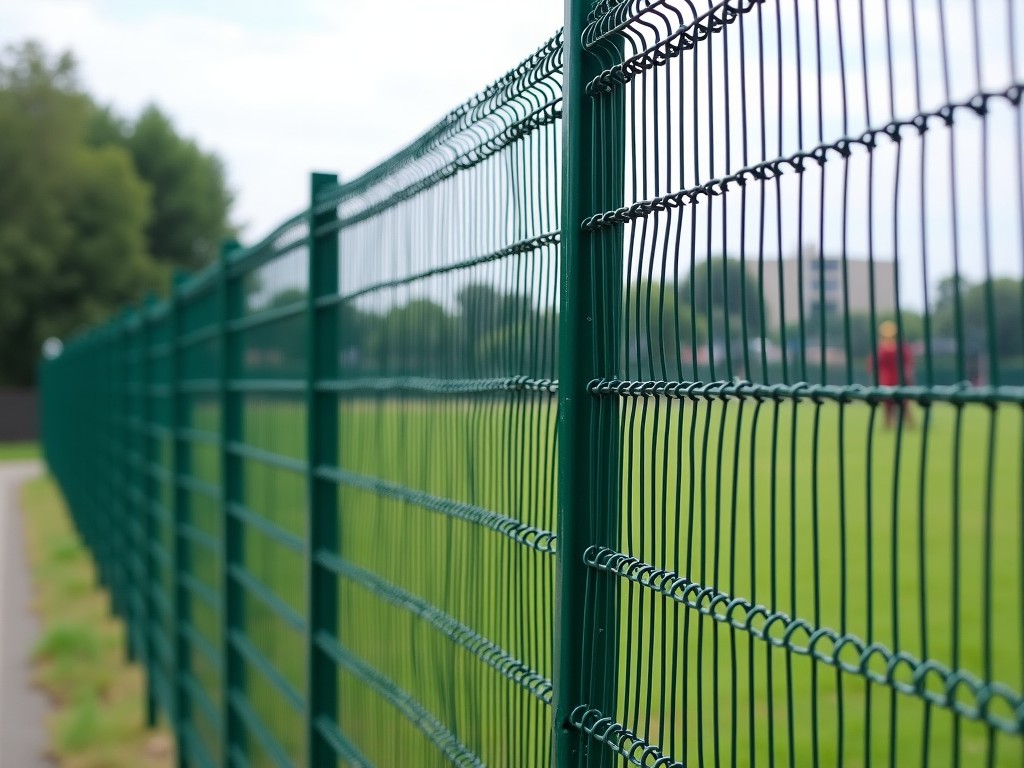
Wholesale Triple Concertina Wire Fence Top Factory
Triple concertina wire consists of three helically wound barbed tapes wrapped around a central high‑tensile steel core. This configuration creates a continuous barrier with overlapping sharp edges
Request a QuoteWholesale Triple Concertina Wire Fence – Top Factory
Triple concertina wire consists of three helically wound barbed tapes wrapped around a central high‑tensile steel core. This configuration creates a continuous barrier with overlapping sharp edges that increase resistance to climbing and cutting.
The core wire is typically cold‑drawn steel with a tensile strength of 1 700 MPa or higher, providing the axial load capacity needed to maintain tension over long spans. The barbed tapes are formed from stainless steel strip, usually 0.5 mm thick, with protrusions spaced at 15 mm intervals.
Construction and Materials
The triple helix is formed by winding three identical barbed tapes in opposite directions around the core, resulting in a balanced torque that prevents unwinding under tension. Each tape features uniformly spaced barbs that are mechanically interlocked with the core during winding.
Core material options include galvanized steel, stainless steel (grades 304 or 316), or aluminum‑alloy for weight‑sensitive installations. Barbed tapes can be supplied in the same material as the core or with a protective polymer coating.
Key Dimensions and Mechanical Properties
| Parameter | Typical Range | Notes |
|---|---|---|
| Core wire diameter | 2.5 mm – 3.0 mm | Cold‑drawn high‑tensile steel |
| Barbed tape thickness | 0.45 mm – 0.55 mm | Stainless steel strip |
| Helix pitch (distance between turns) | 30 mm – 45 mm | Determines barrier height per meter |
| Overall outer diameter | 45 mm – 55 mm | Includes three tape layers |
| Tensile strength of core | ≥ 1 700 MPa | Ensures minimal sag over 50 m spans |
Corrosion Protection Options
Galvanization (hot‑dip Zn) provides a sacrificial layer suitable for most outdoor environments with moderate humidity. For coastal or industrial atmospheres, stainless steel core and tape eliminate the need for additional coatings.
Alternatively, a UV‑stable polymer overcoat can be applied to galvanized wire, extending service life in areas with high solar exposure while maintaining flexibility during installation.
Typical Applications
- Perimeter security for substations, warehouses, and correctional facilities where a low‑profile yet formidable obstacle is required.
- Temporary containment at construction sites, allowing rapid deployment and retrieval without permanent ground works.
- Border and checkpoint augmentation where the concertina’s sharp profile deters unauthorized crossing while remaining visible to patrols.
- Protective wrapping for pipelines and cable trays in remote locations, preventing tampering and animal intrusion.
Installation Considerations
The wire is supplied in coiled lengths, typically 50 m or 100 m per reel, to facilitate handling with standard drum‑type rollers. Tensioning is achieved using turnbuckles or hydraulic tensioners attached to end posts spaced no more than 3 m apart.
Posts should be anchored to resist the lateral load generated when the barrier is deflected; concrete footings with embedded steel plates are common for permanent installations. For temporary setups, driven steel spikes or weighted bases provide adequate stability.
Quality Assurance and Testing
Each production lot undergoes dimensional verification of core diameter, tape thickness, and helix pitch using calibrated laser micrometers. Tensile samples are pulled to failure to confirm that the core meets the specified strength before coating.
Visual inspection checks for uniform barb formation and absence of defects such as cracks or delamination in the coating. Corrosion resistance is assessed via salt‑spray testing per ASTM B117 for coated parts, with results available upon request.
Customization and Ordering
Length, core material, tape geometry, and coating type can be adjusted to match project specifications. Customers provide required span length, expected load, and environmental conditions; the factory then determines the optimal wire diameter and tensioning hardware.
Minimum order quantities are typically one reel (50 m) for stock items, with longer lengths available as custom runs. Lead times depend on material availability and coating complexity, generally ranging from two to four weeks after drawing approval.
Frequently Asked Questions
- Can the helix direction be reversed for specific mounting orientations?
- Yes, the winding direction (left‑hand or right‑hand) can be selected to match the installation hardware and to achieve desired torque balance.
- What information is required before a quotation is issued?
- Project length, core material preference, coating type, end‑post spacing, and any applicable standards (e.g., ISO, ASTM) are needed to calculate pricing and lead time.
- Are samples available for evaluation?
- Sample sections of approximately 1 m can be dispatched upon request, with the customer covering shipping costs.
Contact for Procurement
To discuss technical details, request a formal quote, or arrange sample shipment, please use the inquiry form linked below.
Submit Inquiry


