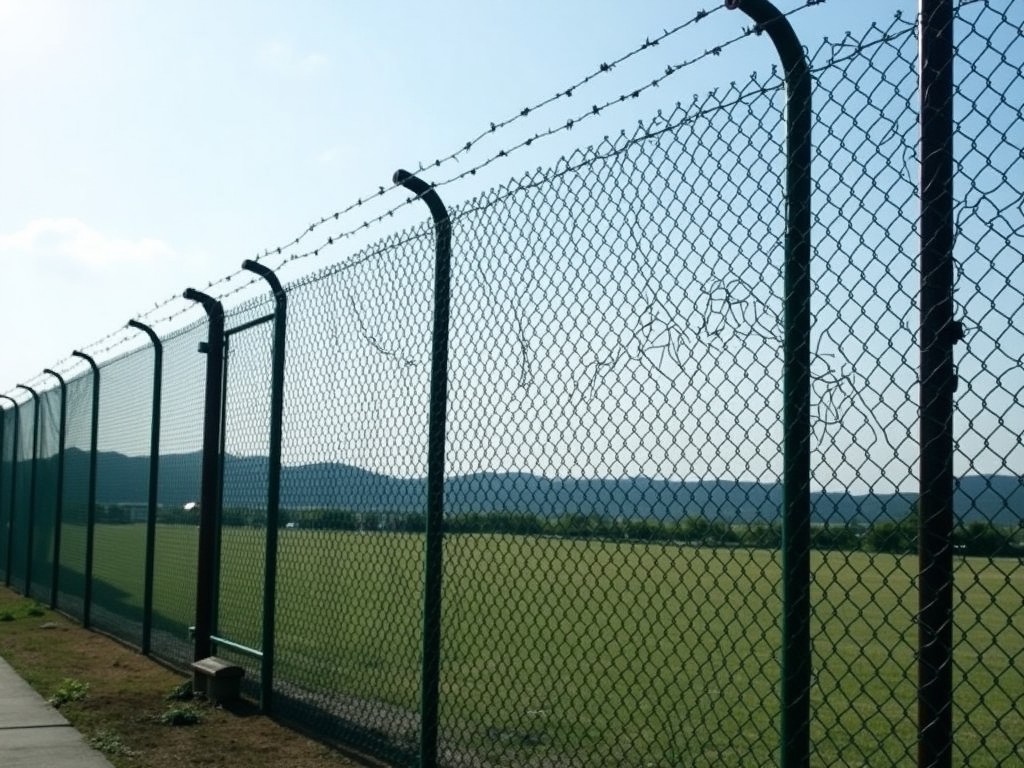
Wholesale Security Fence Barbed Wire Top Factory
Barbed wire tops are installed atop perimeter fences to increase climb resistance and deter unauthorized entry. The effectiveness depends on wire tensile strength, barb geometry, and corrosion
Request a QuoteWholesale Security Fence Barbed Wire Top Factory
Barbed wire tops are installed atop perimeter fences to increase climb resistance and deter unauthorized entry. The effectiveness depends on wire tensile strength, barb geometry, and corrosion protection. This page outlines the engineering parameters that wholesale buyers evaluate when specifying barbed wire for security fencing.
Technical Specifications
Standard barbed wire is produced from low‑carbon steel wire with a nominal diameter of 2.5 mm (12 AWG). The wire undergoes a cold‑drawing process to achieve a minimum tensile strength of 550 MPa. Barbs are formed by twisting two lengths of wire around the central strand, creating spikes that are typically 15 mm long and spaced 75 mm apart along the fence line.
- Wire diameter options: 2.0 mm, 2.5 mm, 3.0 mm (customizable).
- Tensile strength range: 500–700 MPa depending on grade.
- Barb length: 12–20 mm; spacing: 50–100 mm.
- Coating types: hot‑dip galvanized (Zn ≥ 55 g/m²), PVC‑coated (thickness 0.2–0.5 mm), stainless steel (AISI 304).
Manufacturing Process
The process begins with drawing high‑carbon steel rod through a series of dies to reach the target diameter, which improves grain structure and yield strength. After drawing, the wire is cleaned and passed through a molten zinc bath for hot‑dip galvanization, forming a metallurgical bond that provides sacrificial protection. The galvanized strand is then fed into a barb‑twisting machine where two lengths of wire are helically wound around the core at a controlled pitch, producing uniform barb geometry.
For PVC‑coated variants, the galvanized wire undergoes extrusion of a polyvinyl chloride layer, followed by cooling and curing. Stainless steel barbs are produced from annealed austenitic grade wire, which is drawn and twisted without additional coating. Each step is monitored with inline tension gauges and diameter sensors to maintain dimensional tolerances within ±0.05 mm.
Applications in Security Fencing
Barbed wire tops raise the effective fence height by adding a hostile overhang that complicates climbing attempts. The mechanical interlock of barbs with clothing or equipment creates a snag hazard, increasing the time required for an intruder to breach the perimeter. This delay is valuable in facilities where response time is critical, such as power substations, correctional institutions, and storage yards.
In high‑risk environments, designers often combine barbed wire with anti‑cut brackets or angled extensions to prevent leveraging. The wire’s low maintenance cost and long service life—typically 15–20 years in temperate climates when properly galvanized—make it a cost‑effective deterrent compared with active electronic systems.
Quality Control Philosophy
Every coil undergoes tensile testing on a universal testing machine to verify that the actual break strength meets or exceeds the specified minimum. Coating adhesion is assessed by the ASTM D3359 tape test, with a target rating of 5B (no peeling). Diameter and barb spacing are checked using laser micrometers at 1‑meter intervals along the production line.
Visual inspection identifies surface defects such as pits, cracks, or uneven zinc thickness. Coil winding tension is recorded to prevent loose loops that could cause tangling during installation. All test results are retained for traceability, and a material test report (MTR) is available upon request for each lot.
Customization Options
- Wire diameter: 2.0 mm to 4.0 mm.
- Barb length: 10 mm to 25 mm.
- Barb spacing: 30 mm to 150 mm.
- Coil length: 50 m to 500 m (standard 200 m).
- Coating: galvanized, PVC‑coated (various colors), stainless steel.
- Packaging: wooden pallets with stretch film, or steel drums for overseas shipment.
Specification Table
| Parameter | Standard Grade | Heavy‑Duty Grade |
|---|---|---|
| Wire Diameter | 2.5 mm | 3.0 mm |
| Tensile Strength | ≥550 MPa | ≥650 MPa |
| Barb Length | 15 mm | 20 mm |
| Barb Spacing | 75 mm | 50 mm |
| Coating (Zn) | ≥55 g/m² | ≥85 g/m² |
| Estimated Service Life (rural) | 15 years | 20 years |
Frequently Asked Questions
Can the wire diameter and barb spacing be customized? Yes, both dimensions are adjusted according to project requirements; please provide the desired tensile strength and coating type for a quotation.
What information is needed before a quote is issued? We require the intended fence height, total length, coating preference (galvanized, PVC, stainless), and any special packaging or labeling instructions.
How is quality inspected before shipment? Each lot undergoes tensile testing, coating adhesion tests, and dimensional checks; a material test report is supplied with the delivery.
What packaging methods are available for export? Standard export packaging includes wooden pallets with UV‑stabilized stretch film and corner protectors; steel drums are available for high‑volume orders.
What is the typical production lead time? Lead times range from 2 to 4 weeks depending on coil length and coating complexity; expedited options are available upon request.
Contact for Wholesale Inquiry
To discuss specifications, request a sample coil, or receive a detailed quotation, please reach out to our sales team. Provide your project details including required wire diameter, coating type, and total quantity to enable a fast, accurate response.
Send Inquiry


