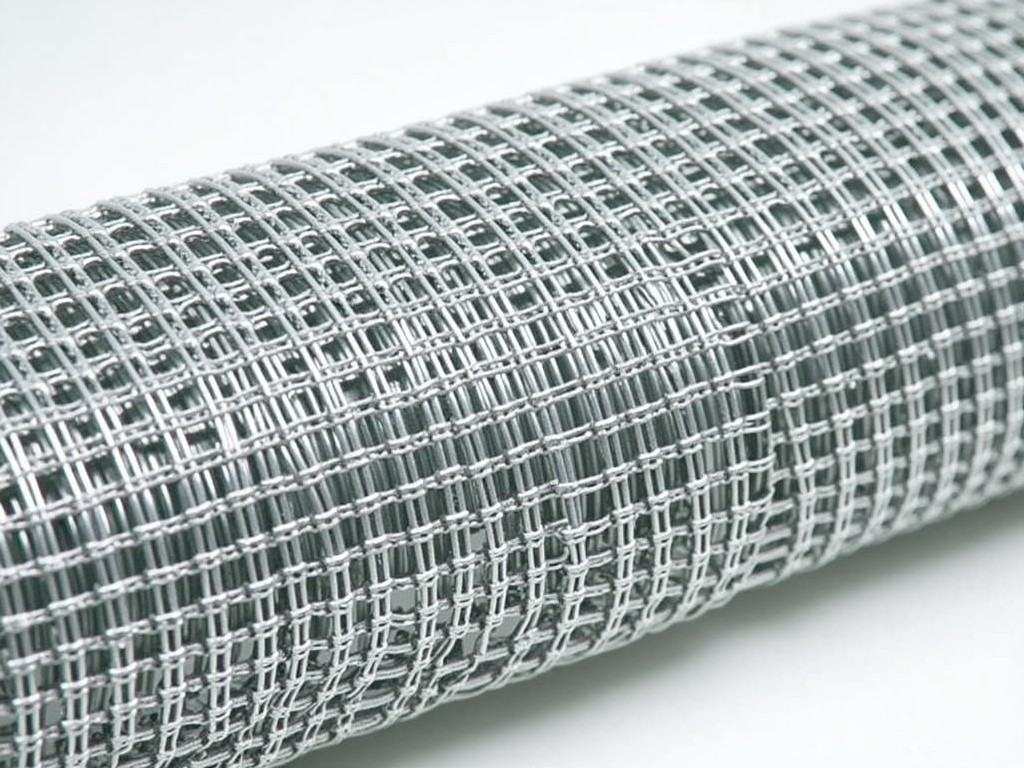
Wholesale Razor Wire Flat Wrap Factory Price
Razor wire flat wrap is a security barrier formed by winding sharp‑edged steel barbs around a high‑tensile core wire, then flattening the coil to a uniform profile. The flat geometry allows tight
Request a QuoteWholesale Razor Wire Flat Wrap – Factory Price Overview
Razor wire flat wrap is a security barrier formed by winding sharp‑edged steel barbs around a high‑tensile core wire, then flattening the coil to a uniform profile. The flat geometry allows tight nesting on pallets, efficient handling with standard lifting equipment, and consistent overlap when installed on fences, walls, or perimeter systems.
Manufacturing begins with cold‑drawn steel wire, which is shaped into a helical barb pattern. The barb spacing, wire diameter, and coating thickness are controlled to meet specific performance targets such as tensile strength, puncture resistance, and corrosion endurance. The final product is supplied in continuous lengths wound on reusable spools or cut to customer‑specified lengths.
Key Technical Specifications
| Parameter | Typical Value | Unit |
|---|---|---|
| Core wire diameter | 2.5 – 3.0 | mm |
| Barb length (effective) | 15 – 20 | mm |
| Barb spacing (center‑to‑center) | 100 – 150 | mm |
| Tensile strength (core) | ≥ 1550 | MPa |
| Coating thickness (galvanized) | ≥ 55 | µm |
| Standard roll length | 50 – 100 | m per spool |
Material Options and Corrosion Resistance
The core wire is typically supplied in low‑carbon steel (SAE 1008/1010) for cost‑effective applications where moderate tensile strength suffices. For environments requiring higher resistance to atmospheric corrosion, the wire is hot‑dip galvanized to a minimum zinc coating of 55 µm, providing sacrificial protection in accordance with ASTM A123.
Stainless steel grades (AISI 304 or 316) are available upon request for marine, chemical, or high‑humidity settings. These alloys deliver intrinsic corrosion resistance without reliance on coatings, though they exhibit slightly lower tensile strength (≈ 620 MPa for 304) compared with carbon steel.
Optional polymer overcoats (e.g., PVC or PE) can be applied over the galvanized layer to enhance UV stability and reduce handling abrasion. The overcoat thickness generally ranges from 80 µm to 150 µm, depending on project specifications.
Flat Wrap Geometry and Performance
Flattening the helical coil reduces the outer diameter to approximately 1.5 times the core wire diameter, producing a ribbon‑like cross‑section. This geometry yields a uniform barrier height when installed, simplifying tensioning and minimizing sag over long spans.
The effective protective width (distance between opposite barb tips) typically ranges from 30 mm to 45 mm, depending on barb length and spacing. The sharp barb edges are angled at approximately 45° relative to the wire axis, optimizing penetration resistance while maintaining manufacturability.
When tensioned to 5 % of the core wire’s tensile strength, the flat wrap exhibits a lateral stiffness sufficient to resist deformation under wind loads up to 150 km/h, as validated by standard fence‑system testing protocols.
Typical Industrial Applications
-
Perimeter security for correctional facilities – the flat profile allows continuous installation on top of existing walls without protruding hardware that could be tampered with.
-
Industrial site fencing – the high tensile core and corrosion‑resistant coating provide a durable barrier against intruders while enduring exposure to oil, grease, and particulate pollutants.
-
Transport infrastructure (railway yards, highways) – the flat wrap’s low profile reduces visual impact and minimizes interference with maintenance equipment.
-
Agricultural and livestock enclosures – the uniform barb spacing prevents animal injury while deterring human trespass.
-
Temporary event security – spools enable rapid deployment and retrieval, with the flat design allowing compact storage in standard logistics containers.
Customization Possibilities
Length – Rolls can be slit to customer‑specified lengths (e.g., 10 m, 25 m, 50 m) to reduce on‑site waste and simplify handling.
Barb spacing – Adjustable from 80 mm to 200 mm to balance material usage with protective density; tighter spacing increases barrier effectiveness but raises weight.
Core wire diameter – Options range from 2.0 mm for lightweight temporary barriers to 4.0 mm for high‑impact permanent installations.
Coating – Besides standard hot‑dip galvanization, alternatives include zinc‑aluminum alloy (Zn‑Al) coating for extended life in aggressive environments, or a duplex system combining galvanization with a polymer topcoat.
Packaging – Spools can be fitted with protective cardboard cores, stretch‑film wrapping, or placed on wooden pallets with corner protection for overseas shipment.
Quality Control and Testing
Each production lot undergoes visual inspection for barb uniformity and coating continuity under 10× magnification. Dimensional checks verify core diameter, barb length, and pitch using calibrated laser micrometers.
Mechanical validation includes tensile testing of the core wire to confirm conformity with the specified minimum strength. For coated samples, coating thickness is measured via magnetic induction or X‑ray fluorescence to ensure compliance with the agreed micron value.
Corrosion resistance is assessed through salt‑spray (ASTM B117) exposure for a minimum of 500 hours for galvanized products, with rust‑rating evaluated per ISO 9223 standards. Stainless steel variants receive pitting resistance equivalence number (PREN) verification based on chemical analysis.
Final product is subject to a pull‑off test where a standardized force is applied to the barb tips to confirm that the edge retention meets the required penetration resistance threshold.
Packaging and Shipping Considerations
Standard spools are constructed from recycled HDPE with a central bore of 50 mm, allowing easy mounting on pneumatic or manual rewinders. The spool width is designed to prevent lateral movement of the flat wrap during transit.
For bulk shipments, spools are stacked on pallets (max height 1.2 m) and secured with PET straps. A layer of water‑resistant kraft paper and stretch film protects the coils from moisture and surface abrasion.
Export containers are loaded with pallets secured to the container floor using lashing bars to prevent shifting. Upon request, a desiccant packet (silica gel, 50 g) can be included per pallet to mitigate condensation during long sea voyages.
Lead Time and Sampling
Standard galvanized flat wrap in 2.5 mm core diameter and 120 mm barb spacing typically ships within 10‑15 business days after receipt of a confirmed purchase order, assuming raw material availability.
Custom specifications (alternative coatings, non‑standard diameters, or special lengths) may extend lead time to 20‑25 business days, as additional tooling or coating line adjustments are required.
Sample lengths of 1 meter are offered free of charge for evaluation; customers cover freight costs. Sample requests should include the desired material grade, coating type, and any dimensional tolerances to ensure the sample reflects the final product specification.
Frequently Asked Questions
Can the barb spacing be adjusted to meet specific security levels?
Yes, barb spacing is a variable parameter in the manufacturing process. tighter spacing (e.g., 80 mm) increases the number of barrier points per meter, while wider spacing (e.g., 180 mm) reduces material weight and cost. The optimal spacing is determined by the threat model and local regulations.
What information is required to obtain a quotation?
To generate an accurate quote we need: required length (total meters or per spool), core wire diameter, barb length and spacing, coating type (galvanized, Zn‑Al, stainless, or polymer overcoat), and any special tolerances or packaging preferences.
Are there minimum order quantities (MOQ)?
Standard products typically have no MOQ; however, custom coatings or non‑standard diameters may require a minimum batch of 500 kg to justify setup changes. This threshold is confirmed during quoting.
How is quality inspected before shipment?
Each lot undergoes dimensional verification, tensile strength testing, coating thickness measurement, and visual inspection as described in the Quality Control section. A test report is available upon request.
What packaging options are available for overseas shipment?
Standard packaging includes HDPE spools, stretch‑film wrap, and palletization with corner protection. Additional options such as wooden crates, moisture‑barrier bags, or custom labeling can be arranged.



