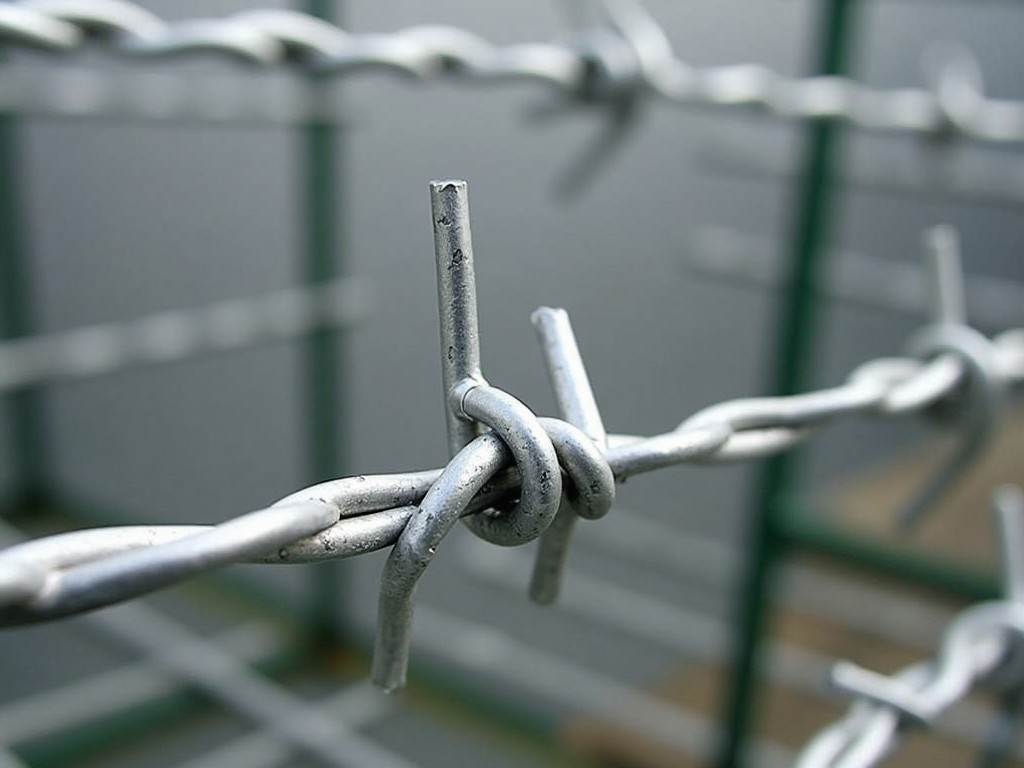
Wholesale Razor Sharp Barbed Wire Manufacturer
Razor‑sharp barbed wire consists of two helically wound steel strands that form a core, with barbs pressed or welded onto the strands at defined pitches. The sharpness of the barb tip and the tensile
Request a QuoteWholesale Razor Sharp Barbed Wire Manufacturer
Razor‑sharp barbed wire consists of two helically wound steel strands that form a core, with barbs pressed or welded onto the strands at defined pitches. The sharpness of the barb tip and the tensile capacity of the core wire dictate the barrier’s effectiveness against intrusion.
Technical Specifications
Core wire diameter typically ranges from 2.0 mm to 2.8 mm, delivering a minimum tensile strength of 1 800 N/mm². Barb length varies between 15 mm and 25 mm, with a barb spacing (pitch) of 100 mm to 150 mm along the wire. Standard roll lengths are 200 m, 250 m, or 300 m, depending on core diameter and barb geometry.
Material Composition and Coating Options
The base steel is usually a low‑carbon, high‑tensile grade such as SAE 1080 or equivalent, selected for its ability to withstand repeated bending during barb formation. Corrosion protection is applied either by hot‑dip galvanizing (zinc coating 55 g/m² to 275 g/m²) or by extruding a PVC layer (thickness 0.4 mm to 0.8 mm) over the galvanized wire.
| Parameter | Typical Value | Notes |
|---|---|---|
| Core wire material | SAE 1080 steel | High‑tensile, low‑carbon |
| Galvanized coating | 55‑275 g/m² Zn | Hot‑dip, adjustable |
| PVC coating | 0.4‑0.8 mm | UV‑stabilized, optional colors |
| Barb tip angle | 30°‑45° | Optimized for penetration resistance |
Manufacturing Process Overview
Wire drawing reduces the rod to the target core diameter, followed by cleaning and annealing to achieve the required ductility. The core strands are then twisted in opposite directions to form a balanced pair. Barbs are produced by cutting and pressing short lengths of the same wire onto the strands at the set pitch, after which the assembly undergoes tensioning to lock the geometry. Finally, the wire passes through a galvanizing bath or PVC extruder, is cooled, and is wound onto reels.
Typical Applications
In perimeter security for industrial facilities, the wire’s high tensile strength resists cutting tools, while the sharp barb geometry increases the force required to breach the fence. Agricultural installations benefit from the wire’s resistance to livestock pressure, as the barbs deter animals without causing excessive injury. Correctional facilities use razor‑sharp barbed wire as a top‑layer deterrent because the combination of tensile load and barb penetration difficulty raises the time and effort needed for escape attempts.
Quality Control and Testing
Each batch undergoes tensile testing on a representative sample to verify that the core wire meets the specified minimum strength. Barb geometry is inspected using optical profilometry to confirm tip sharpness and spacing uniformity. Coating thickness is measured with magnetic‑induction probes for zinc and with ultrasonic gauges for PVC. Visual inspection checks for defects such as nicked strands, incomplete barb formation, or coating holidays before the product is approved for shipment.
Customization Options
Customers can specify core diameter within the 2.0 mm‑2.8 mm range to adjust tensile capacity and weight per meter. Barb length and pitch are tailored to the required security level; shorter pitches increase barrier density. Coating type (galvanized only, galvanized + PVC, or PVC‑only) and color are selected based on environmental exposure and aesthetic preferences. Packaging can be adjusted to standard rolls, palletized coils, or custom‑length cut pieces with protective end caps.
Packaging and Shipping
Finished wire is wound onto steel or plastic reels with a core diameter that prevents deformation during transit. Reels are wrapped in stretch film and placed on wooden pallets, secured with strapping. For overseas shipments, desiccant packs are included to mitigate moisture, and the pallets are fitted with corner protectors. Each pallet carries a label indicating product code, length, coating, and batch number for traceability.
Frequently Asked Questions
- Can dimensions be customized? Yes, core diameter, barb length, pitch, and coating thickness can be adjusted according to project requirements.
- What information is needed for a quotation? Required details include desired core diameter, barb geometry, coating type, total length, and delivery destination.
- Which materials are available? Base steel grades such as SAE 1080, with hot‑dip galvanizing or PVC extrusion as coating options.
- How is quality inspected? Tensile strength, barb geometry, coating thickness, and visual defects are checked per batch.
- What packaging methods are offered? Standard reels, palletized coils, and custom‑cut lengths with protective end caps.
- How are export shipments protected? Stretch‑film wrapping, strapping, corner protectors, and desiccant packs guard against moisture and mechanical damage.
- What is the typical lead time? Production lead time ranges from 10 to 20 working days, depending on order size and customization.
- How are samples arranged? Samples of up to 10 m can be provided upon request, with shipping costs covered by the requester.
Contact for Technical Inquiry
To discuss specific requirements, request a quote, or obtain samples, please use the inquiry form linked below.
Submit Inquiry


