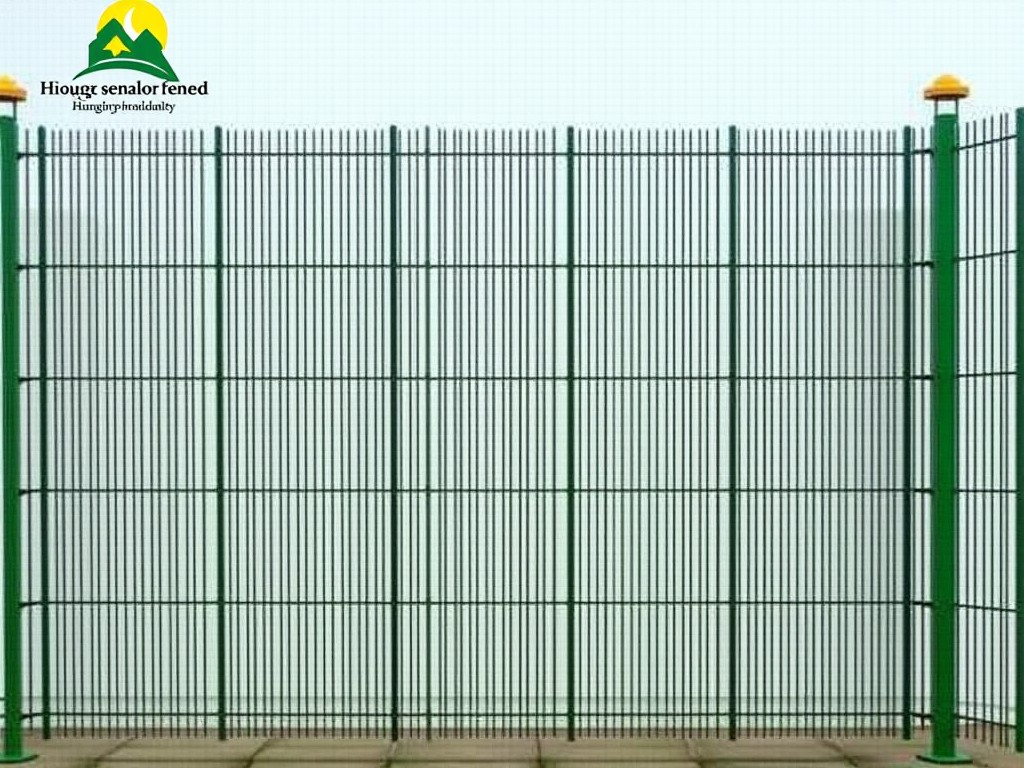
Wholesale High Security Anti Climb Fence Panels Manufacturer
The panels are engineered to deter climbing by limiting accessible hand‑ and footholds while maintaining structural integrity under environmental loads. Standard panel heights range from 2.4 m to 3.0
Request a QuoteWholesale High Security Anti Climb Fence Panels Manufacturer
Product Overview
The panels are engineered to deter climbing by limiting accessible hand‑ and footholds while maintaining structural integrity under environmental loads.
Standard panel heights range from 2.4 m to 3.0 m with a nominal width of 2.5 m, and vertical picket spacing is kept at ≤ 100 mm to prevent a foothold.
Manufacturing uses hot‑dip galvanized steel (typically Zn‑coating ≥ 55 µm per ISO 1461) followed by a powder‑coat layer of 80‑120 µm for corrosion resistance and colour stability.
Technical Specifications
| Parameter | Typical Value | Notes / Options |
|---|---|---|
| Overall Height | 2.4 m – 3.0 m | Custom lengths available upon request |
| Panel Width | 2.5 m | Standard module width |
| Vertical Picket Diameter | 20 mm (round) or 25 mm × 25 mm (square) | Option for reinforced profiles |
| Picket Spacing (clear opening) | ≤ 100 mm | Designed to restrict hand/foothold |
| Horizontal Rail Thickness | 3 mm – 4 mm (wall thickness) | Provides bending resistance |
| Galvanization Coating | ≥ 55 µm Zn (hot‑dip) | Per ISO 1461 |
| Powder‑Coat Thickness | 80 µm – 120 µm | Available in standard colours (RAL 7016, 9005, etc.) |
| Top Anti‑Climb Feature | Angled spikes (45°) or rotating rollers | Increases required grip angle > 45° |
| Wind Load Resistance | Up to 1500 Pa (≈ 150 km/h) | Calculated per EN 1991‑1‑4 |
| Impact Resistance | ≥ 50 J (drop‑weight test) | Typical value; higher grades available |
| Material Grade | S235JR or S355JR steel | Higher grades upon project request |
Design Features for Anti‑Climb Performance
The clear opening between vertical pickets is limited to 100 mm, which is below the average adult hand width, preventing a secure grip.
Top extensions such as 45° angled spikes increase the angle a climber must achieve to gain purchase, effectively raising the required center‑of‑mass shift.
Optional rotating rollers add a low‑friction surface that resists static force, making it difficult to maintain upward momentum.
Typical Applications
Utility substations use these panels to protect high‑voltage equipment where unauthorized access could cause equipment damage or safety hazards.
Data center perimeters benefit from the combination of climb resistance and electromagnetic compatibility, as the steel construction does not interfere with RF shielding.
Correctional facilities rely on the predictable geometry and tamper‑resistant top features to meet regulatory perimeter security standards.
Industrial storage yards install the fence to deter theft of valuable raw materials while allowing clear visibility for surveillance cameras.
Quality Control & Testing
Each production lot undergoes dimensional verification using coordinate‑measuring machines, with tolerances of ± 2 mm on height and width.
Coating thickness is measured by magnetic pull‑off gauges at five points per panel, ensuring the galvanization meets the ≥ 55 µm minimum.
Visual inspection checks for weld continuity, powder‑coat uniformity, and proper alignment of anti‑climb tops before packaging.
Batch samples are subjected to wind‑load simulation and impact testing to validate the specified performance thresholds.
Customization Options
- Panel height: 2.4 m, 2.7 m, 3.0 m or custom lengths
- Vertical picket shape: round 20 mm, square 25 mm × 25 mm, or rectangular profiles
- Top finish: angled spikes, rotating rollers, barbed tape, or flat rail
- Coating colour: standard RAL options or custom paint match
- Infilling options: welded mesh, polycarbonate strips, or privacy slats
- Gate integration: matching leaf design, lock provisions, and automation readiness
Frequently Asked Questions
Yes, panel height, width, and picket spacing can be adjusted to suit site‑specific requirements; custom tooling may affect lead time.
Project location, desired height, length of run, top finish preference, coating colour, and any gate or access control needs.
Standard structural steel grades S235JR and S355JR, with higher‑strength grades available upon request.
Dimensional checks, coating thickness measurement, visual inspection, and batch performance testing as described in the quality control section.
Panels are stacked on pallets with protective corner guards, wrapped in stretch film, and secured with steel straps for container shipment.
Each pallet includes moisture‑absorbent desiccants and is covered with a UV‑stable tarp to prevent corrosion during transit.
Lead time ranges from 3 to 5 weeks for standard configurations; custom features may extend this period.
Sample panels (up to 1 m × 1 m) can be dispatched upon receipt of a formal request; shipping costs are borne by the requester.
Contact for Quote
To obtain a detailed quotation or discuss project‑specific requirements, please reach out via the contact form.
Request a Quote


