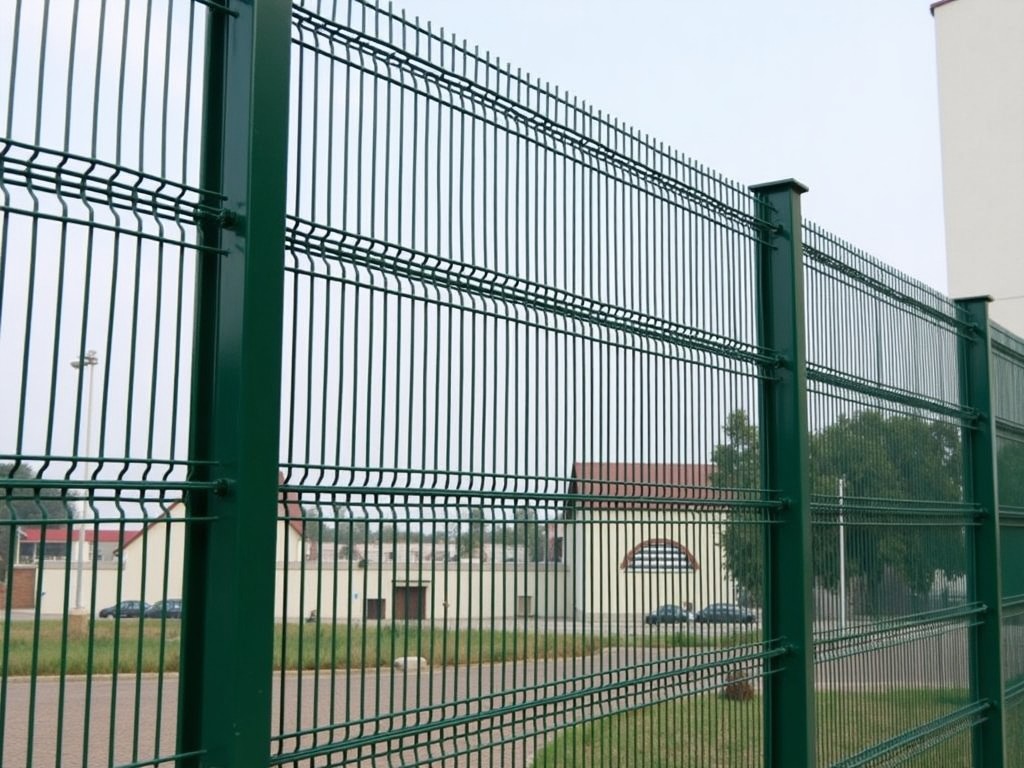
Wholesale Compound Wall Concertina Razor Wire Supplier
Compound wall concertina razor wire is a security barrier formed by helically winding a high‑tensile steel core wire with uniformly spaced, sharp barbs into a concertina (expandable) coil. When
Request a QuoteWholesale Compound Wall Concertina Razor Wire Supplier
Compound wall concertina razor wire is a security barrier formed by helically winding a high‑tensile steel core wire with uniformly spaced, sharp barbs into a concertina (expandable) coil. When deployed, the coils interlock to create a dense, tangled obstacle that resists cutting, climbing, and vehicle penetration. The design relies on geometry rather than sheer mass, allowing a relatively lightweight product to deliver high deterrence performance.
Design and Construction
The core wire is typically cold‑drawn to a diameter ranging from 2.5 mm to 3.5 mm, providing a tensile strength of 1 200 MPa to 1 600 MPa depending on the steel grade. Barbs are formed by pressing or rolling the wire to create triangular or chisel points with a length of 22 mm to 28 mm and a base width of 6 mm to 8 mm. Barb spacing along the core is kept constant at 100 mm to 150 mm, which determines the number of barbs per linear meter.
After barb formation, the wire is coiled under tension to achieve a concertina pitch (distance between adjacent loops) of 70 mm to 100 mm. This pitch allows the barrier to expand to a height of 1.8 m to 2.4 m when stretched, while retaining a compact storage diameter of 450 mm to 600 mm. The interlocking nature of the coils means that any attempt to cut or lift a section forces the surrounding loops to tighten, increasing the effective resistance.
Material Options
| Material | Typical Tensile Strength (MPa) | Protective Coating | Salt‑Spray Resistance (hours) | Common Environments |
|---|---|---|---|---|
| Hot‑dip galvanized steel | 1 300 – 1 500 | Zn ≥ 275 g/m² | 500 – 800 | General outdoor, low‑to‑moderate corrosion |
| Stainless steel 304 | 1 200 – 1 400 | Cr ≥ 18 %, Ni ≥ 8 % | 1 200 – 1 500 | Coastal, industrial, moderate chloride |
| Stainless steel 316 | 1 150 – 1 350 | Cr ≥ 16 %, Mo ≥ 2 % | 2 000 – 2 500 | High chloride, marine, chemical exposure |
| PVC‑coated galvanized | 1 250 – 1 450 | PVC thickness 0.5 mm – 1.0 mm over Zn | 800 – 1 200 | Aesthetic requirements, reduced glare |
Dimensional Specifications
| Parameter | Typical Range | Unit |
|---|---|---|
| Core wire diameter | 2.5 – 3.5 | mm |
| Barb length | 22 – 28 | mm |
| Barb spacing | 100 – 150 | mm |
| Coil outer diameter | 450 – 600 | mm |
| Coil inner diameter | 150 – 250 | mm |
| Length per coil (unstretched) | 10 – 15 | m |
| Concertina pitch (loop spacing) | 70 – 100 | mm |
Applications
The concertina razor wire’s primary value lies in its ability to create a psychological and physical barrier that is difficult to breach without specialized tools. Because the coils expand to form a three‑dimensional tangle, intruders must contend with multiple sharp points while trying to gain a foothold, which increases the time and risk of detection. This makes the product suitable for sites where unauthorized access must be prevented or delayed until a response force can arrive.
- Correctional facilities – provides a high‑security perimeter that deters climbing and cutting attempts.
- Military bases and forward operating bases – offers rapid deployment and low maintenance in harsh environments.
- Industrial storage yards and substations – protects valuable equipment from vandalism and theft.
- Border control and checkpoint zones – creates a visible deterrent that can be integrated with surveillance systems.
- Airside and perimeter fencing at airports – meets ICAO security guidance for tamper‑resistant barriers.
Customization Options
Manufacturers can adjust geometric and protective characteristics to match specific threat levels, installation methods, and logistical constraints. Customization does not compromise the fundamental concertina behavior; rather, it tailors the barrier to the site’s risk profile and environmental exposure.
- Core wire diameter – selected based on required tensile strength and handling weight.
- Barb geometry – length, angle, and point profile can be altered for different penetration resistance.
- Coil length per package – ranging from 5 m to 20 m to suit manual or mechanical laying.
- Coating type – hot‑dip galvanization, galvanneal, stainless steel, or polymer overcoat.
- Packaging – wooden crates, steel‑banded pallets, or reusable reels for rapid deployment.
Quality Control and Testing
Quality assurance focuses on verifying dimensional consistency, mechanical integrity, and coating durability. Each production lot undergoes a series of checks before release, ensuring that the wire will perform as designed throughout its service life.
| Check | Method | Acceptance Criteria |
|---|---|---|
| Wire diameter | Caliper measurement at three points per coil | ±0.05 mm of target |
| Tensile strength | Universal testing machine, strain rate 10 mm/min | ≥1 200 MPa |
| Barb geometry | Profile projector, 10× magnification | Length 22‑28 mm, angle 30°‑45° |
| Coating adhesion | Cross‑hatch test per ASTM D3359 | Rating 5B (no removal) |
| Corrosion resistance | Salt‑spray chamber (5 % NaCl) | No red rust after specified hours (see material table) |
Packaging and Logistics
To prevent damage during transit and facilitate efficient handling, the concertina coils are secured in protective packaging that also optimizes container utilization. Proper packaging reduces the risk of deformation, which could alter the coil pitch and compromise barrier performance.
- Wooden crates – lined with moisture‑barrier film, suitable for long‑term storage.
- Steel‑banded pallets – coils stacked flat, secured with steel straps and corner protectors.
- Reusable reels – for mechanical laying equipment, allowing continuous unwind.
- Shrink‑wrap or stretch‑film overlay – adds an extra layer against abrasion and moisture.
- Labeling – includes material grade, dimensions, coil length, and handling instructions on each package.
Frequently Asked Questions
| Question | Answer |
|---|---|
| Can the coil length be customized? | Yes, coil length is adjusted to match project specifications, typically ranging from 5 m to 20 m per package. |
| What information is required for a quotation? | Required details include desired core wire diameter, barb length, spacing, coating type, total linear meters, and any packaging preferences. |
| Which materials are available for harsh marine environments? | Stainless steel grades 304 and 316 are offered; 316 provides superior chloride resistance. |
| How is product quality verified before shipment? | Each lot undergoes dimensional inspection, tensile testing, coating adhesion checks, and salt‑spray exposure per the QC table. |
| What are the standard packaging options? | Standard options are wooden crates, steel‑banded pallets, and reusable reels, all with protective film overlay. |
| What is the typical lead time for an order? | Lead time depends on order size and material selection, generally ranging from 2 to 4 weeks after receipt of confirmed specifications. |
Contact for Quote
To obtain a detailed quotation, please provide the required technical specifications and delivery destination. Our engineering team will review the request and return a formal offer with lead times and pricing.
Request a Quote


