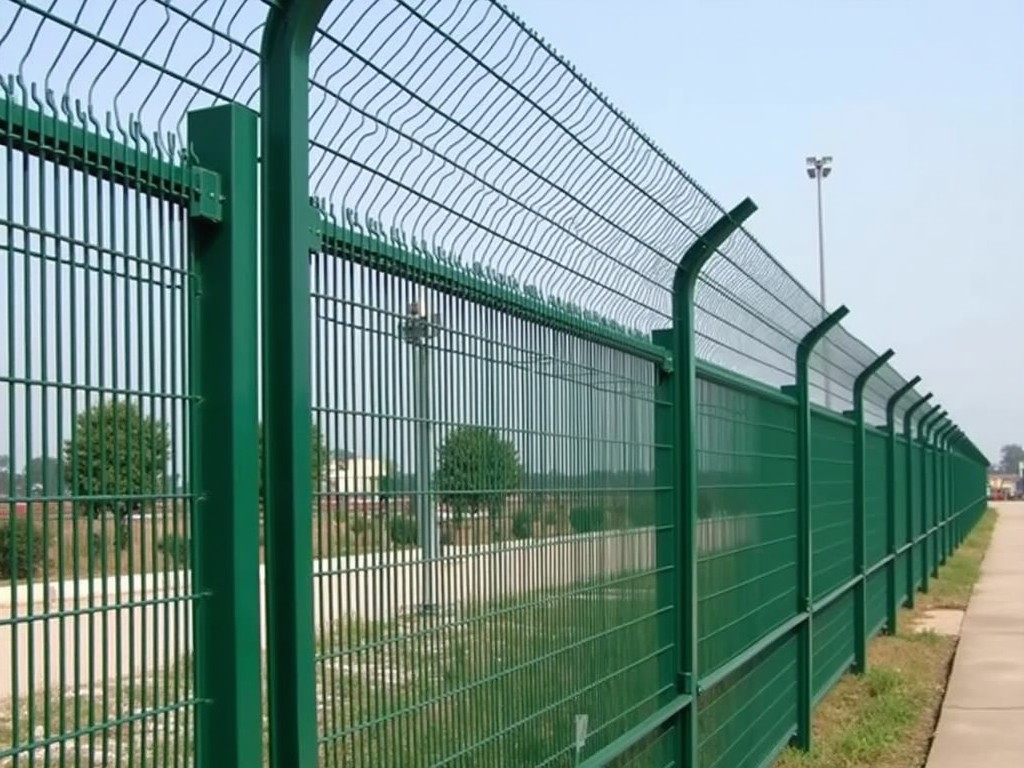
Oem Mesh Razor Wire Security Fence Top Supplier
The product combines high-tensile steel wire with a precision‑welded mesh pattern and integrated razor barbs to create a continuous anti‑climb barrier. The system is engineered for perimeter
Request a QuoteOEM Mesh Razor Wire Security Fence
The product combines high-tensile steel wire with a precision‑welded mesh pattern and integrated razor barbs to create a continuous anti‑climb barrier.
The system is engineered for perimeter protection where deterrence, durability, and low maintenance are critical.
Key Technical Characteristics
Typical wire diameters range from 2.5 mm to 4.0 mm, selected based on required tensile strength and impact resistance.
Mesh openings are commonly 50 mm × 50 mm or 75 mm × 75 mm, providing a balance between visibility and obstacle effectiveness.
Razor barb length varies from 15 mm to 25 mm, with a tip angle optimized for puncture resistance while minimizing handling hazards.
| Parameter | Typical Value | Unit | Notes |
|---|---|---|---|
| Wire Diameter | 2.5 – 4.0 | mm | Selected per load requirements |
| Mesh Opening | 50 × 50 or 75 × 75 | mm | Standard square pattern |
| Razor Barb Length | 15 – 25 | mm | Tip angle 45° typical |
| Tensile Strength | ≥ 1500 | MPa | Cold‑drawn steel |
| Coating Thickness (Zn) | 10 – 20 | µm | Hot‑dip galvanized |
Material Options and Coatings
Base material is typically low‑carbon cold‑drawn steel, chosen for its high yield strength and consistent elongation.
Alternative alloys such as stainless steel grade 304 or 316 are available upon request for environments with elevated chloride exposure.
Coating options include hot‑dip galvanization (Zn), zinc‑aluminum alloy (Zn‑Al), and polymeric powder coatings, each providing different corrosion‑resistance levels measured in salt‑spray hours.
Design Considerations for Installation
Post spacing is generally set between 2.5 m and 3.5 m, depending on wind load calculations and fence height.
The mesh panels are typically pre‑fabricated in lengths of 2 m to 3 m to facilitate handling and reduce on‑site welding.
Barb orientation is angled outward at 10°–15° from the vertical plane to maximize deterrence while maintaining safe installation clearance.
Typical Applications
- In high‑security military installations, the fence provides a continuous anti‑climb barrier that delays intrusion attempts, giving response teams critical time.
- For petroleum refineries and chemical plants, the corrosion‑resistant coating options protect the barrier against harsh acidic vapors and saline atmospheres.
- To secure data‑center perimeters, the low‑profile mesh maintains visibility for CCTV while preventing unauthorized scaling.
- In correctional facilities, the razor‑barb geometry is calibrated to deter climbing without causing excessive injury during controlled handling.
- For airport perimeter zones, the system meets ICAO frangibility guidelines when designed with breakaway posts, reducing aircraft collision risk.
- In industrial storage yards, the fence integrates with existing gate systems and supports electrification add‑ons if required.
Quality Assurance and Testing
Each coil undergoes tensile testing to verify minimum strength before drawing.
Mesh dimensions are inspected using laser‑based gauges with a tolerance of ±0.5 mm on opening size.
Coating thickness is measured by magnetic induction probes, and salt‑spray exposure follows ASTM B117 for a minimum of 500 hours for standard galvanized finishes.
Customization Capabilities
Wire diameter, mesh opening, and barb length can be adjusted in increments of 0.1 mm to meet specific load or regulatory criteria.
Panel lengths and post hole patterns are customized to align with civil‑engineered foundation plans, reducing field fabrication.
Optional integrations include anti‑cut sensor loops, tension monitoring hardware, and powder‑coat colors matched to corporate branding guidelines.
Packaging and Logistics
Finished panels are bundled in steel‑strapped crates with corner protectors to prevent deformation during transit.
Each bundle is labeled with heat‑treated tags indicating specification, batch number, and QC pass status.
For export shipments, crates are fumigated and wrapped in UV‑stable polyethylene film to meet ISPM‑15 requirements.
Frequently Asked Questions
- Can dimensions be customized?
Yes, wire diameter, mesh opening, barb length, and panel length can be tailored to project specifications. - What information is required before quotation?
Required details include fence height, total length, post spacing, coating preference, and any integration needs such as sensor loops. - What materials are available?
Standard low‑carbon steel with hot‑dip galvanizing; stainless steel grades 304/316 and alternative coatings are available upon request. - How is quality inspected?
Each batch undergoes tensile testing, dimensional verification, coating thickness measurement, and salt‑spray exposure per ASTM B117. - What packaging methods are available?
Panels are packed in steel‑strapped crates with corner protectors, labeled, and optionally fumigated for export per ISPM‑15.
Contact for OEM Inquiry
To discuss specific project requirements, submit technical drawings, or request a sample kit, contact our engineering team via the inquiry form.



