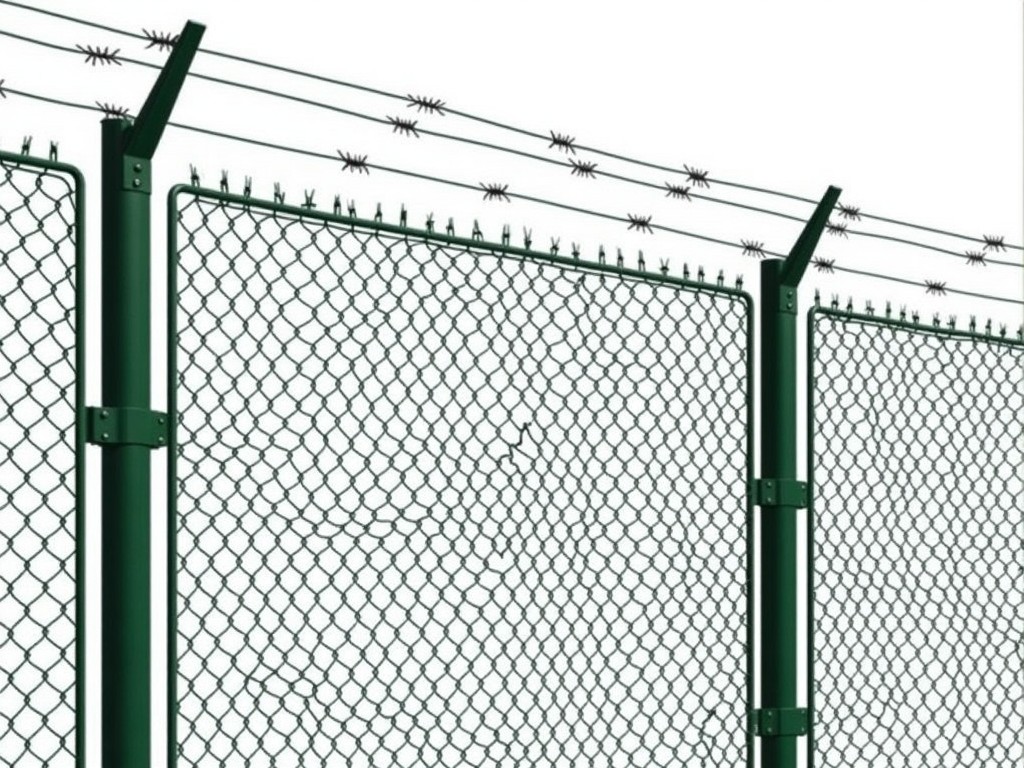
Low Price Price Of Barbed Wire Per Roll
Barbed wire is a cost‑effective perimeter security solution formed by twisting two strands of steel wire together and spacing barbs at regular intervals. The price per roll depends primarily on wire
Request a QuoteLow Price Barbed Wire Per Roll – Technical Overview
Barbed wire is a cost‑effective perimeter security solution formed by twisting two strands of steel wire together and spacing barbs at regular intervals. The price per roll depends primarily on wire gauge, tensile strength, zinc coating weight, and total length wound on the spool.
Material and Construction
Core wires are typically low‑carbon steel with a carbon content between 0.06% and 0.12%, providing a balance of ductility and strength. The barbs are formed from the same wire stock, cut to a length of 15 mm to 20 mm and pressed into a 45° angle to maximize snag resistance.
Tensile strength of the base wire ranges from 350 MPa to 550 MPa, depending on the drawing process. Higher tensile strength allows thinner gauges to achieve the same breaking load, which reduces material cost per meter.
Dimensional Specifications
| Parameter | Typical Range | Notes |
|---|---|---|
| Wire Gauge (AWG) | 12 – 14 | Lower AWG = thicker wire |
| Barb Spacing | 75 mm – 150 mm | Standard spacing for livestock containment |
| Roll Length | 50 m – 200 m | Length per roll affects handling and price per meter |
| Zinc Coating | 100 g/m² – 275 g/m² | Hot‑dip galvanization; higher weight extends service life |
Corrosion Protection
The zinc coating acts as a sacrificial anode; in neutral soils the corrosion rate is approximately 1 µm/year for a 100 g/m² coating. In coastal or industrial environments, a minimum of 200 g/m² is recommended to achieve a service life exceeding 15 years without significant loss of tensile strength.
Alternative coatings such as Zn‑Al alloy or PVC over‑coat are available upon request, providing additional barrier properties for aggressive environments, though they increase the unit price per roll.
Typical Applications
- Livestock enclosures where animal pressure requires a durable barrier with minimal injury risk.
- Perimeter security for warehouses, construction sites, and agricultural facilities where quick deployment and low material cost are priorities.
- Temporary fencing for event venues or land reclamation projects, where the roll length allows rapid installation and removal.
- Reinforcement of existing chain‑link or wooden fences to increase climb‑deterrence without major structural changes.
Pricing Factors per Roll
The base price is calculated as: (wire weight per meter × length per roll × material cost) + coating cost + processing overhead. Wire weight per meter can be estimated using the formula W = 0.00616 × (d²) × L, where d is the wire diameter in mm and L is the length in meters.
For example, a 12.5 AWG wire (≈2.05 mm diameter) with a 150 g/m² zinc coating and a 100 m roll yields an approximate steel weight of 12.5 kg. At a steel scrap price of $0.80 /kg and a galvanizing surcharge of $0.30 /kg, the material cost per roll is roughly $13.80, excluding logistics and profit margin.
Quality Control and Testing
Each production lot undergoes tensile testing on a sample of three wires per coil, with results recorded to verify compliance with the ordered strength class. Barb geometry is inspected using a calibrated gauge to ensure spacing deviation does not exceed ±5 mm.
Coating thickness is measured by magnetic induction on at least five points per roll; average values must meet the specified zinc weight with a tolerance of ±10 g/m². Visual inspection checks for uniform barb formation and absence of wire splits or nicks that could compromise safety.
Customization Options
Buyers can specify alternative gauges, custom barb lengths, or special coatings such as zinc‑aluminum alloy or colored PVC. Roll lengths can be adjusted to match site‑specific logistics, minimizing splice points during installation.
Packaging options include standard kraft paper wrapping, UV‑stabilized polyethylene film, or wooden pallets with corner protection for long‑distance transport. All options are priced per roll and quoted upon receipt of the detailed specification sheet.
For a formal quotation, please provide the required wire gauge, coating weight, roll length, and delivery destination. Our engineering team will return a detailed cost breakdown and lead time within two business days.
Request Technical Quote


