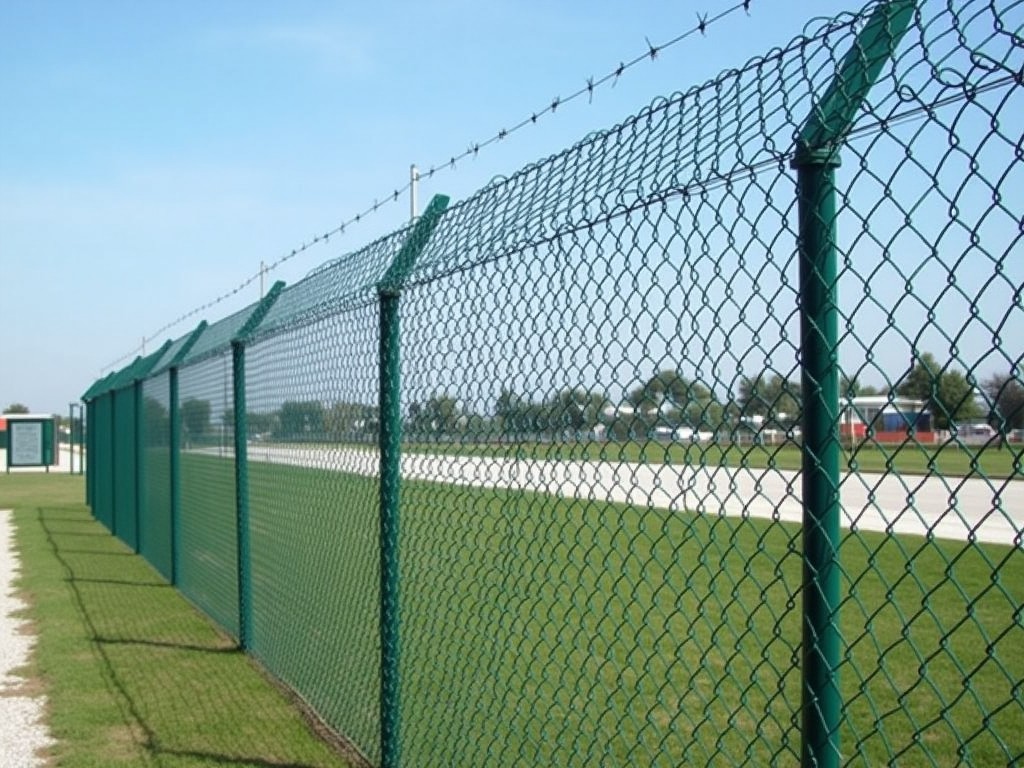
Direct Factory Chain Link Fence With Barbed Wire Exporter
This page outlines the engineering characteristics of factory‑produced chain link fences that incorporate barbed wire toppings, focusing on material specifications, dimensional options, and
Request a QuoteDirect Factory Chain Link Fence With Barbed Wire Exporter
This page outlines the engineering characteristics of factory‑produced chain link fences that incorporate barbed wire toppings, focusing on material specifications, dimensional options, and performance factors that influence industrial procurement decisions.
Product Overview
Chain link fences are created by interlocking steel wires into a uniform diamond mesh, delivering a flexible yet strong barrier that maintains visibility. Adding barbed wire to the top edge introduces a climb‑deterrent feature without compromising the fence’s ability to absorb impact or adapt to uneven terrain.
Technical Specifications
| Parameter | Typical Range | Notes |
|---|---|---|
| Wire gauge (core mesh) | 2.0 mm – 4.0 mm diameter | Cold‑drawn steel; higher gauge for lighter duty |
| Mesh opening | 50 mm × 50 mm – 100 mm × 100 mm | Standard diamond size; custom sizes available |
| Fence height | 1.2 m – 3.0 m | Posts typically spaced 2.5 m – 3.0 m |
| Barbed wire type | Single twist, double twist, or PVC‑coated | Barb spacing 75 mm – 150 mm along wire |
| Coating | Hot‑dip galvanized (60‑80 g/m²) or PVC (0.5 mm‑1.0 mm) | Galvanization per ISO 1461; PVC for colour or extra corrosion resistance |
| Tensile strength of wire | ≥ 350 MPa (galvanized) | Ensures resistance to sagging under load |
| Corrosion resistance | Red rust < 5 % after 500 h salt spray (ASTM B117) | Typical for hot‑dip galvanized finish |
These values represent common factory configurations; actual dimensions can be adjusted to match project‑specific load, height, and corrosion‑exposure requirements.
Industrial Applications
High‑security sites such as data centers, utility substations, and correctional facilities benefit from the combination of transparent mesh and a physical deterrent; the fence allows visual monitoring while the barbed top discourages unauthorized climbing.
In perimeter protection for warehouses and logistics hubs, the fence provides a cost‑effective barrier that can be rapidly installed and tensioned, with the barbed wire addition reducing the likelihood of cut‑through attempts compared to plain mesh.
Customization Parameters
- Wire diameter: 2.0 mm – 4.0 mm (core mesh) and 1.8 mm – 2.5 mm for barbed wire
- Mesh opening: 50 mm – 100 mm (square or diamond)
- Fence height: 1.2 m – 3.0 m, with optional over‑hang for barbed wire
- Barbed wire configuration: single twist, double twist, or PVC‑coated; barb spacing 75 mm – 150 mm
- Coating: hot‑dip galvanized (60‑80 g/m²), PVC (various colours), or aluminized for specific environments
- Post material: galvanized steel, stainless steel, or concrete; spacing 2.5 m – 3.5 m
- Additional components: tension wires, tie‑wires, gate frames, and lockable access points
Quality Control & Testing
Galvanization thickness is verified using magnetic inductance probes on random samples, targeting the 60‑80 g/m² range to ensure long‑term barrier performance.
Tensile strength of the mesh wires is measured on a universal testing machine; specimens must exceed 350 MPa before any signs of necking.
Adhesion of PVC coating is assessed via cross‑hatch tape tests (ASTM D3359) to confirm a rating of 4B or better, indicating minimal delamination under mechanical stress.
For barbed wire, the bend radius and barb sharpness are inspected to guarantee consistent deterrent effectiveness while maintaining safe handling during installation.
Packaging for Export
Finished fence rolls are wrapped in UV‑stabilized polyethylene film to prevent surface abrasion and moisture ingress during transit.
Rolls are placed on sturdy wooden pallets, secured with polyester strapping, and fitted with corner protectors to resist impact forces.
A typical 20‑foot container accommodates approximately 150 m² of 2‑m‑high fence, allowing efficient consolidation for overseas shipments to destinations in Asia, Europe, and Africa.
Frequently Asked Questions
Q: Can the fence height and barbed wire configuration be altered after receiving a quotation?
A: Yes. All dimensions, wire gauges, mesh sizes, and barbed wire types are adjustable before production; final specifications are confirmed in the technical drawing approval stage.
Q: What information is required to generate an accurate price estimate?
A: Required details include desired fence height, total length, wire diameter, mesh opening, coating type, barbed wire specification, post spacing, and any gate or accessory requirements.
Q: Which coating offers the best balance of corrosion resistance and cost for outdoor industrial sites?
A: Hot‑dip galvanized coating at 60‑80 g/m² provides proven corrosion resistance in most climates at a lower lifecycle cost than PVC; PVC is selected when colour coding or extra chemical resistance is needed.
Q: How are sample panels arranged for evaluation?
A: Sample sections measuring 1 m × 1 m, including the selected barbed wire top, can be shipped via express courier; the cost is credited against the first order upon confirmation.
Contact for Technical Inquiry
To discuss project‑specific requirements, request a quotation, or obtain sample specifications, please contact our export department.
Send Inquiry


