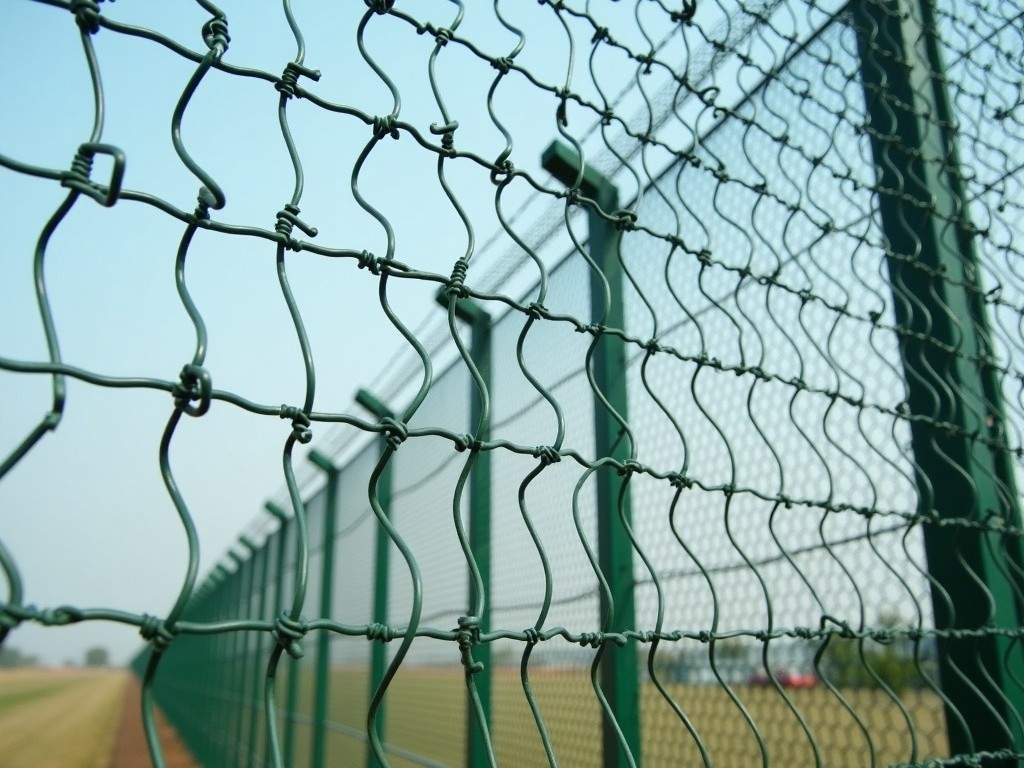
Custom Razor Wire Electric Fence Supplier
A razor wire electric fence combines high‑tensile steel wire with sharp‑edged barbs and an integrated pulse energizer to create a dual‑layer barrier. The mechanical deterrent from the razor profile
Request a QuoteCustom Razor Wire Electric Fence Supplier
Product Overview
A razor wire electric fence combines high‑tensile steel wire with sharp‑edged barbs and an integrated pulse energizer to create a dual‑layer barrier. The mechanical deterrent from the razor profile prevents climbing or cutting, while the electric pulse delivers a non‑lethal shock that discourages contact. This combination is suited for sites where unauthorized intrusion must be stopped before physical breach occurs.
Technical Specifications
| Parameter | Typical Value | Customization Notes |
|---|---|---|
| Wire core diameter | 2.5 mm high‑tensile steel | Available from 2.0 mm to 3.0 mm upon request |
| Barb length & spacing | 15 mm barb height, 100 mm pitch | Adjustable to 10‑20 mm height, 50‑150 mm pitch |
| Coating | Zinc‑aluminum alloy (Zn‑Al 5%) | Optional PVC or polyester over‑coat for color coding |
| Energizer output voltage | 8 kV peak, 10 µs pulse width | Configurable 5‑12 kV, pulse width 5‑20 µs |
| Power consumption | 0.5 W average per 100 m segment | Scales linearly with length; solar‑compatible options |
| Operating temperature range | -40 °C to +85 °C | Extended to -50 °C with special lubricants |
Design and Customization Options
Customization begins with the site‑specific threat assessment. Engineers select wire diameter, barb geometry, and energizer settings to match required delay time and energy dissipation. Mechanical layout defines the number of strands, height above ground, and offset from existing structures. Electrical configuration can be tuned for low‑false‑alarm environments or high‑deterrence zones.
- Number of strands: 1 to 4, adjustable spacing 100‑300 mm
- Fence height: 1.2 m to 2.4 m, with optional over‑hang extensions
- Energizer type: mains‑powered, solar‑battery hybrid, or standalone battery pack
- Monitoring integration: voltage‑loss detection, tamper alarms, SCADA compatibility
- Finish colors: standard galvanized, black PVC, or custom RAL matches
Applications and Industry Fit
Industrial perimeters often face coordinated intrusion attempts where a single mechanical barrier can be compromised quickly. The razor profile increases the time required to cut through the wire, while the electric pulse imposes a painful stimulus that forces the intruder to retreat. This dual action reduces the likelihood of successful breach and provides early alarm activation when paired with voltage‑loss sensors.
Typical deployments include petrochemical storage yards, power substations, correctional facility outer walls, data center campuses, and logistics hubs where high‑value cargo is staged. In each case, the fence is designed to meet local safety regulations regarding shock energy limits and to coexist with existing CCTV and motion‑detector systems.
Quality Control and Manufacturing Considerations
Production starts with cold‑drawn high‑tensile steel wire that undergoes dimensional inspection (±0.02 mm tolerance). The barb forming process is monitored via laser profilometry to ensure consistent height and angle. After coating, adhesion is tested by cross‑hatch tape pull (ASTM D3359) targeting a minimum rating of 4B. Each energizer module is subjected to a 10 kV impulse test and a 24‑hour burn‑in cycle to verify insulation integrity.
Finished coils are measured for tensile strength (≥1 700 MPa) and elongation at break (≥12 %). Random samples are subjected to salt‑spray exposure (ASTM B117) for 500 hours, after which coating weight loss is limited to 5 g/m². Documentation of all test results is retained for traceability and supplied with each shipment upon request.
Frequently Asked Questions
Can the fence dimensions be customized to match existing wall heights?
Yes. The mounting brackets and post lengths are fabricated to the exact elevation required. Provide the desired top‑of‑fence height and we will calculate the necessary post length and offset.
What information is needed before a quotation can be issued?
We need the total perimeter length, number of strands, energizer power source preference, any local voltage limits, and details of corner or gate locations. A site sketch or CAD file helps accelerate the process.
Which materials are available for the wire core and coating?
Core options include plain high‑tensile steel, stainless‑steel grade 304 for corrosive atmospheres, and galvanized steel. Coatings range from zinc‑aluminum alloy to PVC, polyester, or powder‑coat finishes in various RAL colors.
How is quality inspected before shipment?
Each coil undergoes dimensional, tensile, coating adhesion, and electrical insulation tests as described in the quality control section. Test certificates are enclosed with the packing list.
What packaging methods are used for export shipments?
Wire is coiled on corrosion‑resistant reels, wrapped in UV‑stable polyethylene film, and placed in wooden pallets with steel strapping. Energizer units are packed in shock‑absorbent foam cartons labeled with handling instructions.
Contact for Inquiry
To discuss your specific perimeter security requirements and receive a detailed technical proposal, please reach out to our engineering team.
Request a quotation


