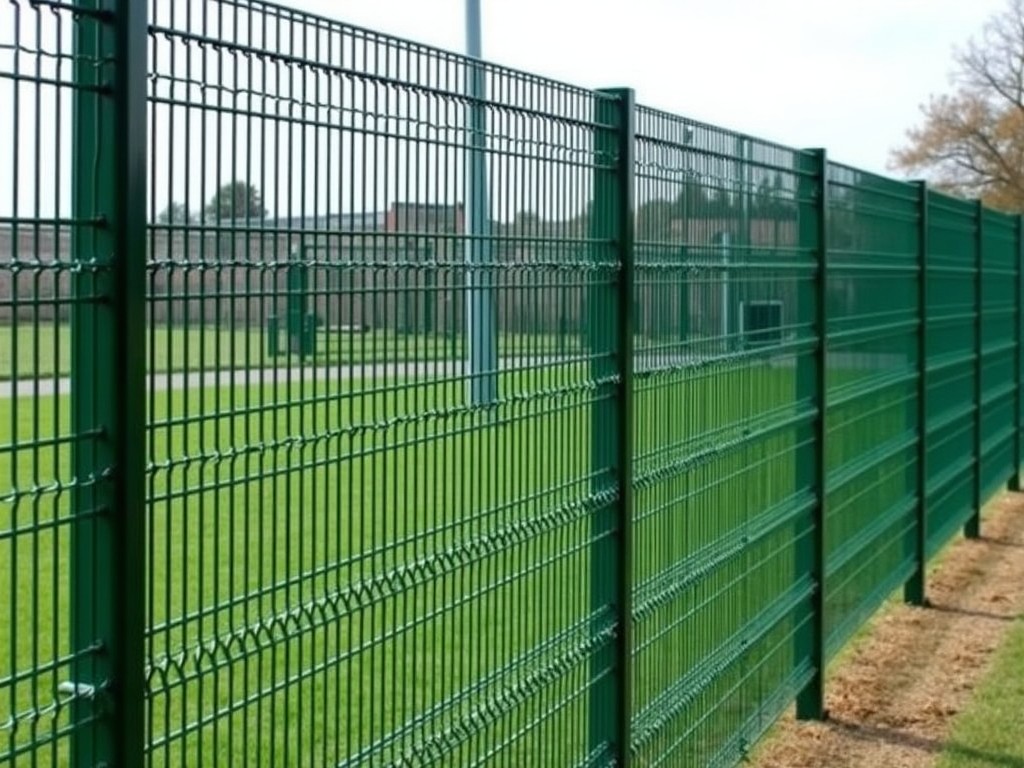
Custom Green Pvc Coated Anti Climb Fence Factory
The fence system combines a steel core with a PVC coating to provide both structural strength and a visual deterrent. A green pigment is integrated into the PVC during extrusion, giving the fence a
Request a QuoteCustom Green PVC Coated Anti-Climb Fence
Product Overview
The fence system combines a steel core with a PVC coating to provide both structural strength and a visual deterrent.
A green pigment is integrated into the PVC during extrusion, giving the fence a low‑visibility appearance that blends with vegetation while maintaining a smooth, non‑abrasive surface.
Material Composition and Coating Process
Galvanized steel wire forms the load‑bearing core, with a minimum zinc coating of 55 g/m² to inhibit corrosion.
The PVC coating is applied via a continuous extrusion line, ensuring uniform thickness and strong adhesion to the wire surface.
Technical Specifications
| Parameter | Typical Value | Notes |
|---|---|---|
| Core material | Galvanized steel wire | Zinc coating ≥ 55 g/m² |
| Wire diameter | 2.0 mm – 3.0 mm | Selected per load requirement |
| Mesh opening | 50 mm × 50 mm – 100 mm × 100 mm | Smaller openings increase climb resistance |
| PVC coating thickness | 0.5 mm – 0.8 mm | Uniform adhesion > 2.5 N/mm |
| Standard heights | 1.8 m, 2.0 m, 2.4 m | Custom lengths available |
| Post spacing | 2.5 m – 3.0 m | Dependent on wind load |
| Tensile strength (wire) | ≥ 550 MPa | Measured per ISO 6892‑1 |
| Salt‑spray resistance | ≥ 1000 h (ISO 9227) | No red rust after test |
Customization Options
The fence can be tailored to match site‑specific security, aesthetic, and installation constraints.
- Height: 1.5 m to 3.0 m in 0.1 m increments
- Mesh size: 30 mm to 150 mm square
- Post type: round, square, or H‑section steel with base plate
- Top rail: angled, rounded, or barbed wire integration
- Coating color: standard green, custom RAL matching
Typical Applications
High‑security perimeters such as utility substations, water treatment plants, and telecommunications sites require a barrier that deters intrusion while remaining visually unobtrusive.
The green PVC coating reduces visual impact in landscaped or environmentally sensitive areas, helping the fence blend with surrounding vegetation.
Because the coating is UV‑stabilized, the fence maintains colour and mechanical properties after prolonged outdoor exposure, reducing maintenance cycles.
Quality Assurance and Testing
Each production run includes in‑line measurement of coating thickness using non‑contact laser gauges, with acceptance limits of ±0.05 mm.
Adhesion is verified by cross‑cut tape tests according to ASTM D3359, targeting a minimum rating of 4B.
Visual inspection checks for uniform colour, absence of pinholes, and proper wire tension before packaging.
Installation Considerations
Posts are typically set in concrete footings with a minimum embedment depth of 0.6 m, or driven directly into suitable soil where conditions allow.
Fence panels are tensioned using strain‑wire or ratchet systems to achieve the design load, preventing sag over time.
Ground clearance of 50 mm is recommended to facilitate vegetation growth and reduce moisture retention at the base.
Frequently Asked Questions
- Can dimensions be customized?
- Yes, height, mesh size, and post spacing are adjusted per project specifications.
- What information is required before quotation?
- Required details include total length, desired height, mesh opening, post type, and any special top‑rail features.
- How is quality inspected?
- In‑line coating thickness, adhesion tests, and final visual inspection are performed on every batch.
- What packaging methods are available?
- Panels are bundled with protective straps and placed on pallets; corner protectors prevent coating damage.
- What is the typical production lead time?
- Lead time ranges from 3 to 6 weeks depending on order volume and customization level.
Get a Quote
To discuss your project requirements and receive a detailed quotation, please contact our technical sales team.
Contact Us


