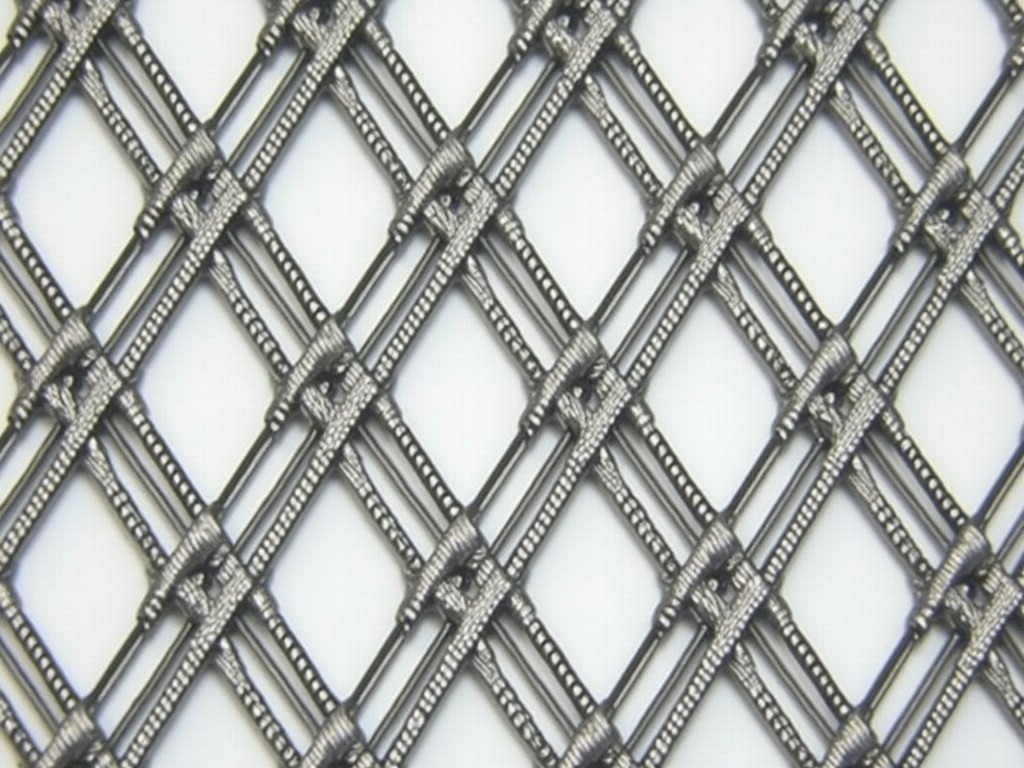
China Stainless Steel Razor Wire Manufacturer
This page details the engineering characteristics of stainless steel razor wire produced for industrial perimeter security, focusing on material selection, dimensional tolerances, and performance
Request a QuoteStainless Steel Razor Wire from China Manufacturer
This page details the engineering characteristics of stainless steel razor wire produced for industrial perimeter security, focusing on material selection, dimensional tolerances, and performance under environmental exposure.
Material Composition and Corrosion Resistance
The wire core is typically made from austenitic stainless steel grades 304 or 316, containing 18‑20% chromium and 8‑12% nickel, with molybdenum added in 316 for chloride resistance.
These alloy levels provide a passive oxide layer that withstands atmospheric corrosion, salt spray, and industrial pollutants, extending service life beyond 15 years in most outdoor installations.
Typical Mechanical Properties
Measured values for the razor wire core and barbs are presented below; actual numbers depend on wire diameter and heat treatment.
| Property | Typical Range | Test Standard |
|---|---|---|
| Tensile Strength | 850–1050 MPa | ASTM A370 |
| Yield Strength (0.2% offset) | 550–750 MPa | ASTM A370 |
| Elongation at Break | 12–20% | ASTM A370 |
| Hardness (Rockwell B) | 85–95 HRB | ASTM E18 |
Design Variations
Razor wire is available in several configurations that affect barrier effectiveness and installation effort.
- Single coil – core wire with barbs wound in one helix, suitable for low‑to‑medium security perimeters.
- Double coil – two interwoven helices increase torsional rigidity and raise climb‑resistance.
- Flat wrap – barbs pressed into a flat strip, reducing profile for wall‑top mounting.
- Concertina – pre‑formed coils that expand instantly, allowing rapid deployment over large openings.
Industrial Applications and Suitability
In petrochemical complexes, the wire’s resistance to hydrocarbon vapors and salt‑laden air prevents degradation that would compromise plain steel barriers.
Military and correctional facilities rely on the high tensile strength and sharp barb geometry to deter intrusion while maintaining structural integrity under repeated impact attempts.
Transportation infrastructure such as railway yards and airport perimeters benefits from the low maintenance requirement; the passive oxide layer eliminates the need for periodic painting or galvanizing.
Data centers and power substations use razor wire as a visual deterrent that does not interfere with electromagnetic shielding, unlike ferromagnetic alternatives.
Quality Assurance and Testing
Each batch undergoes chemical analysis via optical emission spectroscopy to verify chromium, nickel, and molybdenum content within ±0.05% of target.
Mechanical testing includes tensile, yield, and elongation checks on sampled lengths; results must fall within the ranges shown in the mechanical properties table.
Corrosion resistance is assessed using salt spray (ASTM B117) for 500 hours; acceptable specimens show no red rust and maintain barb sharpness.
Visual inspection confirms uniform barb geometry, absence of surface defects, and proper coil tension before packaging.
Customization Options
Manufacturers can adjust several parameters to match project specifications without compromising the core alloy.
- Wire diameter: 1.0 mm to 2.5 mm core, affecting tensile strength and handling weight.
- Barb length: 12 mm to 22 mm, influencing penetration resistance.
- Coil pitch: variable spacing between loops, altering barrier height and rigidity.
- Surface finish: passivated, electropolished, or coated with a UV‑stable polymer for extra chemical resistance.
- Length per roll: standard 50 m, 100 m, or custom lengths to reduce joint points.
Packaging and Logistics
Rolls are wound on corrugated cardboard cores with internal plastic spacers to prevent coil deformation during transit.
Each roll is wrapped in shrink‑film and placed in a weather‑resistant polypropylene bag, then packed into palletized cartons rated for 30 kg load.
For ocean freight, cartons are secured with strapping and corner protectors; optional fumigation‑proof pallets are available upon request.
Lead time typically ranges from 15 to 30 working days after receipt of deposit, depending on order volume and customization complexity.
Frequently Asked Questions
Can dimensions be customized?
Yes, wire diameter, barb length, coil pitch, and roll length can be adjusted to meet specific site requirements.
What information is required before quotation?
Project location, desired barrier height, expected exposure (marine, industrial, indoor), and any required certifications (e.g., ISO 9001, CE).
What materials are available?
Standard grades are 304 and 316 stainless steel; higher alloy variants such as 317L or duplex grades can be supplied upon request.
How is quality inspected?
Inspection includes chemical analysis, mechanical testing, salt spray corrosion testing, and visual geometry checks as described in the quality assurance section.
What packaging methods are available?
Standard packaging uses cardboard cores, shrink‑film, and polypropylene bags; custom options include wooden crates or corrosion‑inhibitor‑treated wraps.
How are export shipments protected?
Cartons are strapped, corner‑protected, and placed on fumigation‑proof pallets; moisture‑absorbing desiccants are added for long sea voyages.
What is the typical production lead time?
Standard orders ship within 15‑20 days; customized designs may require 25‑35 days.
How are samples arranged?
Free sample lengths up to 2 m can be sent via express courier; the recipient covers shipping costs.
Request a Quote or Technical Data Sheet
To receive a detailed quotation, CAD drawings, or material test certificates, please provide your project specifications.
Contact Sales Team


